
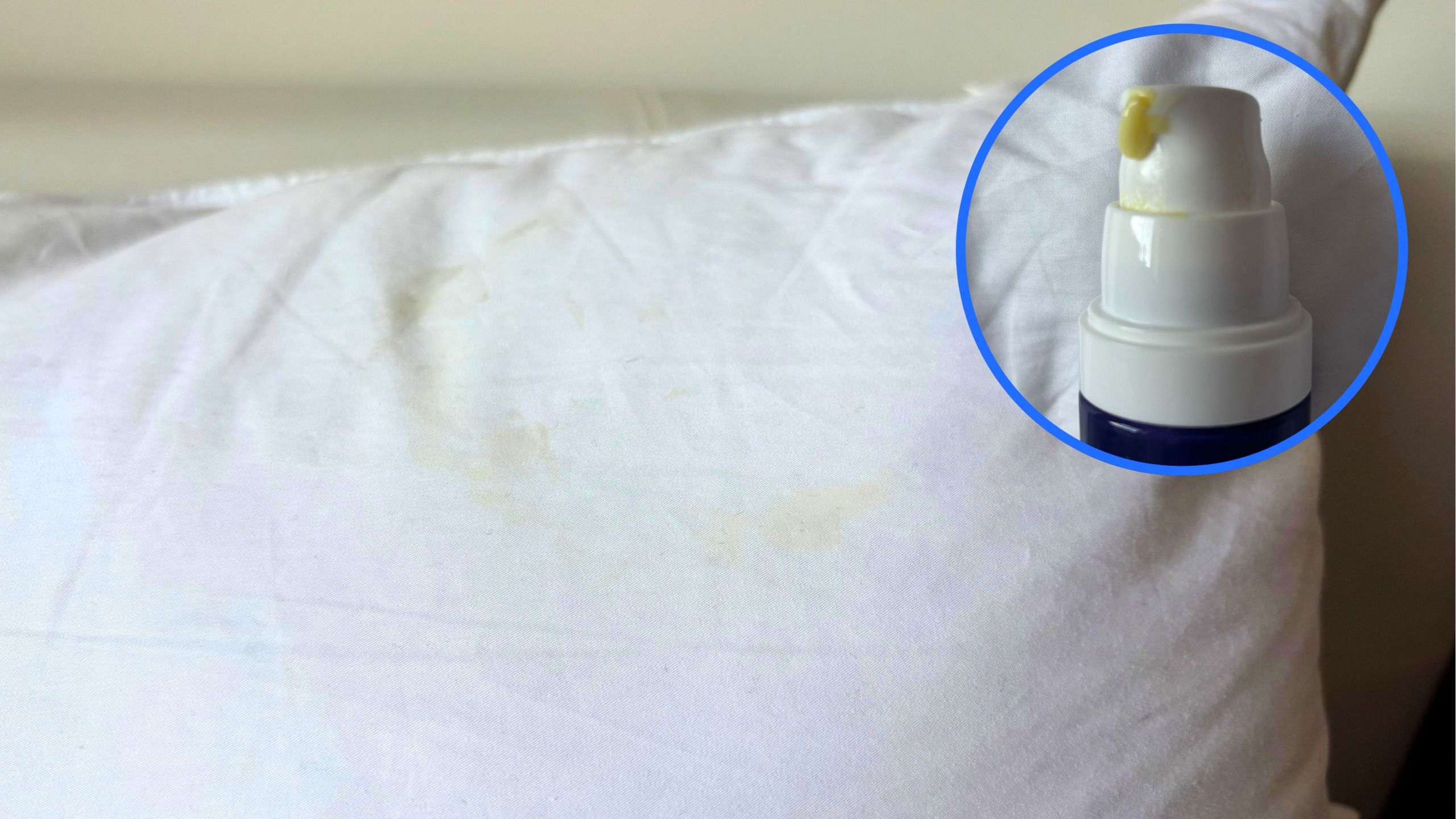
As someone who washes their bedding every week, I was surprised to find a yellow pillow stain on laundry day — but I was even more surprised that my nightly dose of retinol was to blame. Yes, the skincare staple is notorious for leaving yellow or orange patches, which is why it's already discolored my almost-new pillow.Luckily, you can remove a retinol pillow stain as quickly as it forms. After trying a host of viral cleaning methods, I discovered this one-ingredient pre-soak is all you need. A $1 medicine cabinet essential has eliminated the ugly yellow ring left by my skincare routine, restoring my pillow to factory-condition white.Here's the simple one-ingredient pre-wash that removed retinol stains from my pillow, plus the steps I'm taking to prevent my pillow from turning yellow again.Retinol stains and the simple pre-wash ingredient that lifts them Many things can leave yellow stains on pillows, but these unwanted blemishes all boil down to two things: moisture and oil.Over time, oil and moisture build-up can leave older pillows covered in yellow stains. A retinol mark, on the other hand, can appear quickly, usually as a single yellow or orange patch where your face rests against the pillow.That's why my Helix Down and Feather Pillow, which I've only been using for a few months, is bright white expect for a small yellow ring on the right-hand side. (Exactly where my cheek sits, as a side sleeper who sleeps on my left side). (Image credit: Future)Recently I tried viral pillow cleaning methods to remove deep-set yellow stains from old pillows. And when I say "deep-set" and "yellowed", I mean it was near-impossible to tell what the pillows' original colors were.Get instant access to breaking news, the hottest reviews, great deals and helpful tips.After trying these stain-removing techniques — from lemons to dollops of shaving foam — one was the clear winner for restoring yellow stains to bright white: the 3% hydrogen peroxide pre-wash. To use hydrogen peroxide as a safe cleaner, always use a 3% concentration of hydrogen peroxide, avoid mixing it with other chemicals, and protect hands with gloves. As hydrogen peroxide has a mild bleaching effect, avoid using on dark-colored fabrics and delicate materials such as silk, wool and cashmere. The hydrogen peroxide pre-soak was the only method that brought the grubby discolored pillows back to mint condition. Trying the method on a small, retinol-induced patch was a no-brainer.And following this simple pre-wash lifted the yellow ring of retinol and restored my pillow to bright white. Here's what you need to do...How I used hydrogen peroxide to lift retinol yellow pillow stainsAs retinol stains tend to form in small, concentrated patches rather than all over the pillow, I poured a small amount of 3% hydrogen peroxide onto a light-colored cloth and dabbed it on the yellow pillow stain. I then let it sit for 30 minutes. I then worked the hydrogen peroxide into the pillow with an old toothbrush.Following the care label, I placed the pillow into the washing machine on a standard cycle. Once I took the pillow out of the washing machine, I blotted excess water with a towel and made sure it was thoroughly dry by placing it in the dryer on a cool setting.If your pillow is discolored or has more than one retinol stain, you can spray the 3% hydrogen peroxide all over. Here's a quick demo on how the pillow-cleaning hack works:And here's a satisfying look at the retinol stain before and after I gave it the hydrogen peroxide treatment: Image 1 of 2 (Image credit: Future) What you'll need to keep retinol pillow stains at bay How I'm stopping retinol pillow stains from now onWhile the hydrogen peroxide prewash is a simple, low-effort cleaning method, I don't want to add it to my weekly cleaning schedule. After all, while sheets should be washed every week, a pillow deep clean should be scheduled every three to six months. I'm worried frequent hydrogen peroxide applications might start wearing down the fabric. Citrus acid can degrade fabric. (Image credit: Future)To keep my pillows fresh and protect them against the oily residue of retinol, I've invested in a zip-up pillow protector. Used under my pillowcases, the protector provides an extra layer of safeguarding and is slightly thicker than my lightweight cotton and silk sheet sets. Follow Tom's Guide on Google News and add us as a preferred source to get our up-to-date news, analysis, and reviews in your feeds.
Retinol stained my pillow yellow — here’s the 1-step pre-wash that restored it to bright white
Full Article
Original Source
Read the full article at Tomsguide →KhanList aggregates and links to publicly available news content. We do not host full articles from third-party sources. Always verify important information with original sources.