
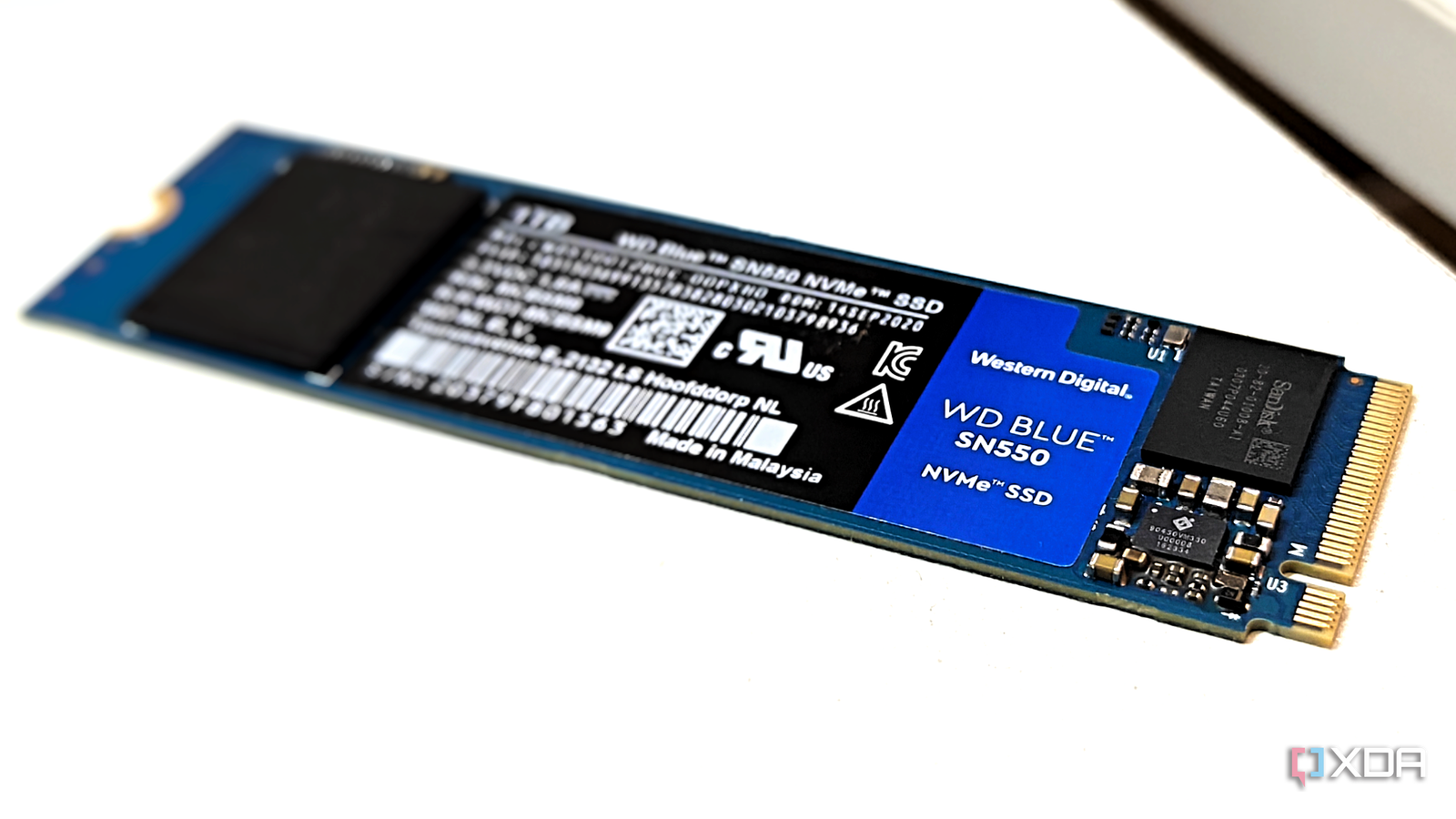
Published Sep 5, 2026, 7:00 AM EDT After a 7-year corporate stint, Tanveer found his love for writing and tech too much to resist. An MBA in Marketing and the owner of a PC building business, he writes on PC hardware, technology, and Windows. When not scouring the web for ideas, he can be found building PCs, watching anime, or playing Smash Karts on his RTX 3080 (sigh). We're used to modern NVMe SSD transfer speeds, which have touched 15,000 MB/s with PCIe 5.0 drives. They eclipse anything that came before — SATA SSDs and hard drives alike. Even if you don't have a high-end Gen5 SSD on your system, your Gen4 SSD is running pretty fast right now. What most people don't think about is the hardware responsible for maintaining these blazing-fast speeds. The controller at the heart of it all is basically a full-fledged computer with embedded CPU cores, ultra-fast RAM, and its own firmware. High-performance SSDs wouldn't exist without these dedicated computers keeping it all afloat. NAND flash is inherently complex It needs a "controlling" hand SSDs have a drastically different storage fabric compared to hard drives. Instead of recording data on magnetized disks, SSDs use tiny NAND flash cells. These cells are grouped into pages, which are further grouped into blocks. SSDs can read data at the page level, but need to clear an entire block to write new data. This makes NAND flash highly unreliable and inefficient, since cells can wear out fast and reads can return corrupted bits. Without an intermediary between the NAND flash and the OS, the communication is bound to be slow and error-prone. That's why a dedicated chip is needed on the drive to manage this communication, keep things snappy, and protect the NAND cells from premature wear. This is the controller, usually supplied to SSD manufacturers by companies like Phison Electronics, Silicon Motion, and Marvell Technology. Vendors like Samsung, WD, SK Hynix, and Micron produce in-house controllers for their consumer and enterprise SSDs. A multi-core CPU powers the controller Your SSD may have a quad-core ARM processor The controller isn't just circuitry shuttling low-level instructions between the SSD and host system. It's a proper computer with a multi-core processor (usually 3–5 ARM Cortex cores) at the core, purpose-built for specific jobs in the storage pipeline. These cores run in parallel, handling everything from host communication and data flow to background maintenance and hardware-level encryption. The controller handles the Flash Translation Layer, whose job is to convert standard file system commands, such as NTFS and APFS, to ones that flash memory can understand. Without the kind of parallel computation that modern controllers are capable of, simultaneous read and write operations on high-speed SSDs would create terrible bottlenecks. Wear leveling delays the inherent cell degradation to which NAND flash is subject. It spreads write cycles evenly across cells, ensuring no single cell wears out early and thereby extending SSD lifespan. Garbage collection is part of background upkeep; it clears stale or deleted data from the blocks, moving valid data to new blocks, so that the drive always has empty blocks to write to. This prevents SSD slowdown during write cycles. And a seriously fast DRAM avoids slowdowns There's a reason DRAM-less drives are inferior While the DRAM cache isn't physically part of the controller chip, it's inextricably linked to the overarching computer powering your SSD. The controller does have a few megabytes of onboard SRAM, but that's only used to run immediate firmware instructions. The external DRAM cache is where the real magic happens. The DRAM holds the entire Flash Translation Layer mapping table, which the controller needs to instantly locate a vacant block to write to. Without this mapping table, the process of finding the right block becomes slow and inefficient, slowing down write operations, which is exactly what happens on DRAM-less SSDs. SSDs with DRAM can maintain fast write speeds over long file transfers, making them superior to DRAM-less options. DRAM cache is significantly faster than the flash memory and system RAM. The latter is what DRAM-less SSDs use as a Host Memory Buffer to store the mapping table, but it's a workaround that doesn't come close to rivaling DRAM drives in sustained speeds. Samsung 9100 Pro SSD $400 $680 Save $280 7.5/10 Storage capacity 1TB, 2TB, 4TB, 8TB Hardware Interface Solid State MTBF 1.5 Million Hours The controller is responsible for keeping your SSD fast Without the controller managing data flow, host communication, and background upkeep, your expensive SSD wouldn't be nearly as fast as it is. High-quality controllers are required to sustain the high-speed transfers users expect from modern NVMe SSDs. With a helping hand from DRAM, the controller keeps things snappy, overcoming the inherent flaws present in flash memory.
Your SSD is running a multi-core computer with its own RAM, and that's the only reason it's fast
Full Article
Original Source
Read the full article at Xda-developers →KhanList aggregates and links to publicly available news content. We do not host full articles from third-party sources. Always verify important information with original sources.