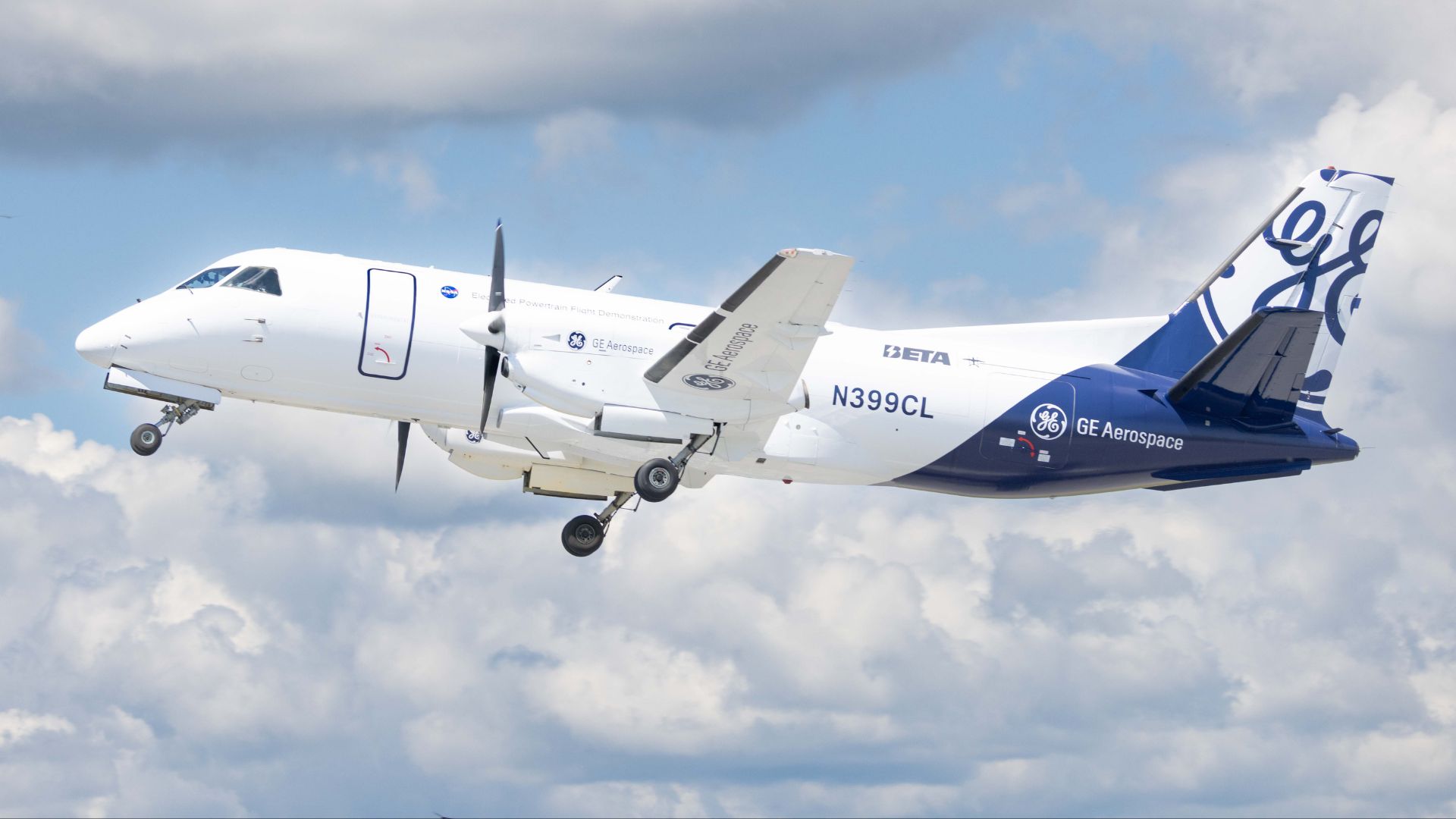
GE Aerospace has pushed hybrid-electric aviation into new territory after completing the first flight of a hybrid-electric aircraft above 30,000 feet, a milestone that moves electrified propulsion closer to commercial aviation. The demonstration took place ahead of the Farnborough International Airshow in partnership with NASA, BETA Technologies and Boeing. Engineers flew a modified Saab 340B at cruising altitudes used by commercial passenger aircraft and kept the hybrid-electric propulsion system operating for more than two hours during its longest test segment. Hybrid system tested The record-setting campaign centered on GE Aerospace’s megawatt-class, multi-kilovolt hybrid-electric propulsion system, developed under NASA’s Electrified Powertrain Flight Demonstration (EPFD) program. Unlike fully electric aircraft, hybrid-electric propulsion combines a conventional gas turbine with an electric powertrain. The system shifts power between both sources depending on the phase of flight, improving efficiency while maintaining the performance required for commercial operations. “The aviation industry’s first high-altitude hybrid electric flight is one for the history books,” GE Aerospace Chairman and CEO H. Lawrence Culp Jr. said. He credited NASA, BETA Technologies and Boeing for helping accelerate technologies designed to improve aircraft efficiency, durability and operating range. Engineers installed the experimental propulsion package inside an inverted nacelle mounted on the right side of the Saab 340B. The design improved ventilation for high-power electrical equipment during flight testing. The system combines GE Aerospace-developed electric motors, power converters, inverters, controllers, gearboxes, propellers, heat exchangers, torque sensors, and engine wiring with a CT7 turboprop engine. BAE Systems supplied the batteries, while Boeing subsidiary Aurora Flight Sciences designed the complete nacelle. Flight campaign results Pilots from GE Aerospace and BETA Technologies conducted flight evaluations in the United States before ferrying the aircraft across the Atlantic to the United Kingdom. The aircraft operated in hybrid-electric mode during every leg of that transatlantic journey. BETA Technologies founder and CEO Kyle Clark said the propulsion system improved climb performance and high-altitude capability while serving as a flying laboratory for future hybrid aircraft. He added that the successful ground and flight test campaigns marked one of several milestones still ahead for the technology. Aurora Flight Sciences Chief Technology Officer Graham Drozeski said the team successfully integrated a high-voltage electric propulsion system capable of operating at commercial cruising altitudes. He called the effort an important step toward practical hybrid-electric aircraft. Path toward commercial aviation The engineering effort focused on solving challenges that do not exist in ground vehicles. Teams addressed heat management, reduced air pressure at altitude, and the need for lightweight, flight-certified electrical hardware. During testing, the electric powertrain both drove the propeller and generated electricity to recharge the onboard battery. GE Aerospace began work on NASA’s EPFD program after securing the contract in 2021. Earlier milestones included megawatt-class propulsion tests inside NASA’s Electric Aircraft Testbed, which simulated flights at altitudes up to 45,000 feet. The company also partnered with BETA Technologies in 2025 to develop hybrid-electric turbogenerators for advanced air mobility platforms and other aircraft.The latest flight also supports technologies under the CFM International RISE program, which explores advanced propulsion concepts such as Open Fan engines and hybrid-electric systems. GE Aerospace said the program has completed roughly 500 test campaigns and more than 3,000 endurance cycles as it targets fuel burn reductions exceeding 20% compared with today’s commercial aircraft engines.Recommended ArticlesGet the latest in engineering, tech, space & science - delivered daily to your inbox.Aamir is a seasoned tech journalist with experience at Exhibit Magazine, Republic World, and PR Newswire. With a deep love for all things tech and science, he has spent years decoding the latest innovations and exploring how they shape industries, lifestyles, and the future of humanity.
World’s first hybrid-electric flight above 30,000 feet sets new aviation record
Full Article
Original Source
Read the full article at Interestingengineering →KhanList aggregates and links to publicly available news content. We do not host full articles from third-party sources. Always verify important information with original sources.