
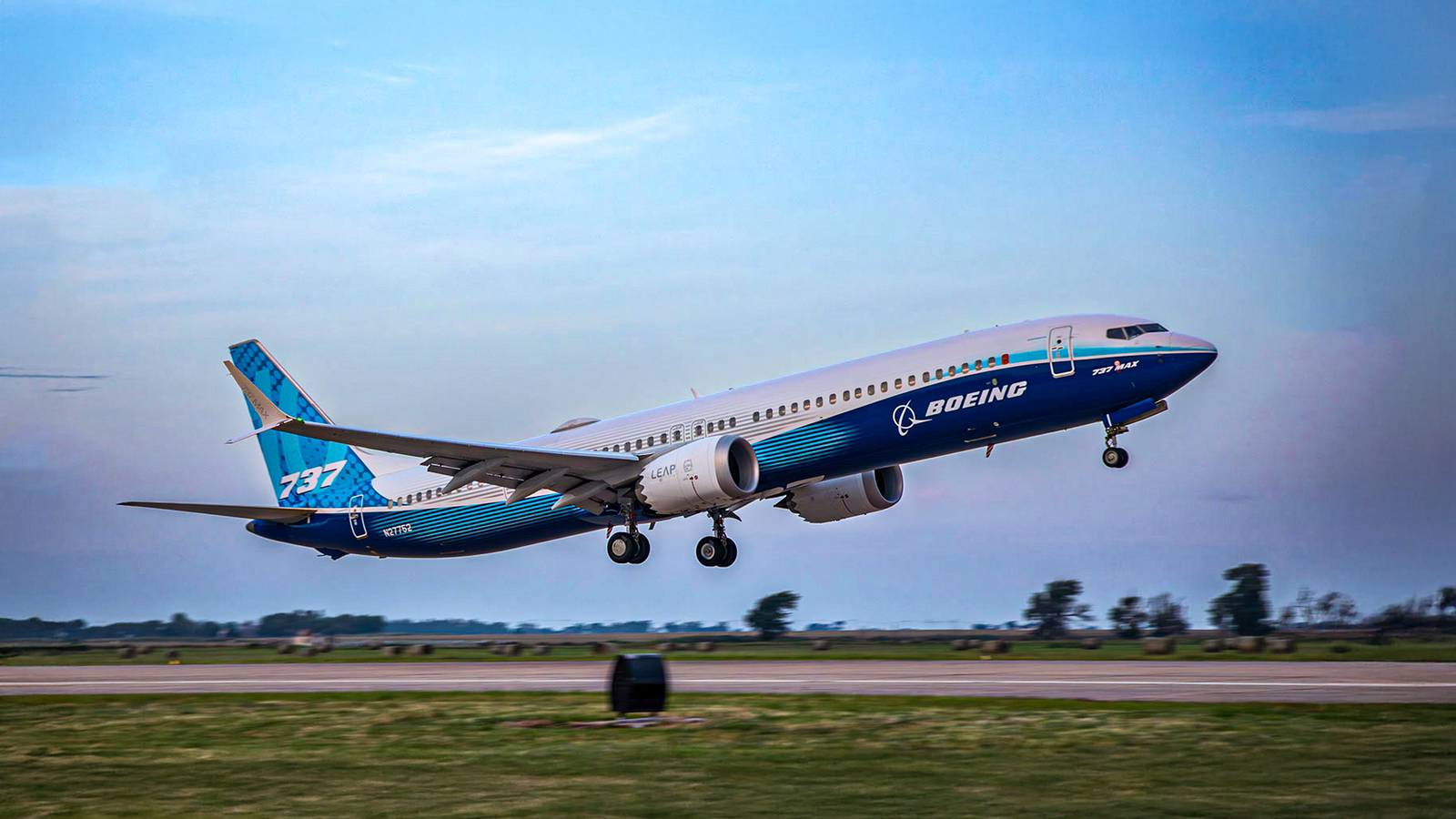
On a crisp morning at a short regional airport or a hot, high-altitude gateway, a commercial jet can touch down on a modest strip of asphalt with complete safety, roll smoothly to the gate, and disembark a full load of passengers. Just two hours later, that same aircraft may be legally barred from taking off for its return journey if it does not leave dozens of seats empty or shed thousands of pounds of cargo. It may seem completely absurd, but it is a fundamental reality built into the physics and airworthiness certification of the longest single-aisle airliner Boeing has ever constructed. The Boeing 737 MAX 10 is the absolute limit of a narrowbody design first debuted in the 1960s. Now stretching the fuselage to accommodate up to 230 passengers, Boeing has created a high-capacity revenue machine tailored for high-density domestic routes. However, pushing an airframe to a maximum takeoff weight of 197,898 lb (89,765 kg) while retaining the exact same wing area and CFM LEAP-1B engines as its smaller siblings naturally brings its own operational trade-offs. Adhering To The Regulations Credit: Boeing The mismatch between where an airliner can land and where it can take off comes down to a basic rule of flight: a jet arrives much lighter than it departs. When the 737 MAX 10 touches down at its Maximum Landing Weight (MLW), it has already burned off thousands of pounds of jet fuel over the course of its flight. Furthermore, landing distance calculations are straightforward: the aircraft touches down at a reduced weight, thrust reversers deploy, wheel brakes apply, and spoilers dump wing lift to bring the airframe to a stop. According to The Boeing 737 Technical Site, at its maximum structural landing weight, the MAX 10 needs a landing distance of approximately 5,900 feet (1,800 meters) under standard atmospheric conditions. Taking off, however, is a far more demanding physics problem governed by strict airworthiness safety margins. At its Maximum Takeoff Weight (MTOW) of 197,898 lb (89,765 kg), the jet is laden with a full payload of passengers, baggage, and thousands of gallons of volatile fuel. Crucially, civil aviation regulations dictate that certified takeoff distances must account for the worst-case scenario of an engine failure at the exact decision speed known as V1. As analyzed by BlackJet, if one of the CFM LEAP-1B engines fails right before V1, the runway must be long enough for the pilot to either abort and bring nearly 99 tons of moving aircraft to a complete stop, or continue the takeoff and climb out safely on a single engine. Civil aviation regulations mandate these stringent single-engine climb and abort safeguards, so EUROCONTROL performance data indicates that a fully loaded MAX 10 requires roughly 8,860 feet (2,700 meters) of runway to depart safely at maximum gross weight. That creates a gap of nearly 2,960 feet (900 meters) between landing and takeoff distances. However, weight and engine-out calculations were only part of the puzzle. When Boeing engineers stretched the fuselage to create the MAX 10, they ran straight into plenty of geometric restrictions on the tarmac. The Longest Of The 737 Variants Credit: Safran To build the MAX 10, Boeing inserted two fuselage plugs, a 40 inches (102 cm) section forward of the wing and a 26 inches (66 cm) section behind it, stretching the overall length by 66 inches (1.68 meters) compared to the MAX 9. Adding extra rows of seats created exceptional unit-cost economics for airlines, but extending the rear fuselage brought an immediate aerodynamic dilemma during takeoff. On a stretched fuselage, pitching the nose upward causes the tail cone to move downward toward the asphalt. The issue is that the 737 family sits notoriously low to the ground, a heritage trait stemming from its original 1960s design to allow ground crews to service the aircraft without needing high-lift equipment, so the elongated tail of the MAX 10 greatly reduced ground clearance. As reported by AeroCorner, if equipped with the standard landing gear of smaller MAX variants, the MAX 10's tail would strike the tarmac at normal rotation angles, leading to a significant risk of structural damage on departure. In order to prevent tail strikes on standard gear, pilots would have had to rotate the aircraft extremely slowly and at shallow pitch angles, demanding even more runway length to get airborne. The choice for Boeing became telling airlines to retrain their pilot groups on a restricted rotation technique, or engineer a mechanical solution inside the wheel wells. So, how did Boeing solve this geometric crisis without redesigning the entire wing box? What To Do When Faced With Potential Tailstrikes Altering pilot flying techniques or redesigning the aircraft's underlying wing structure would not have been the ideal move, so Boeing engineers devised an ingenious mechanical solution within the main landing gear assembly. As detailed by Simple Flying, the MAX 10 features a unique semi-levered main landing gear mechanism. Incorporating a levered link and a telescoping internal strut, the gear lengthens during the critical rotation phase on departure. As the pilot pulls back on the control column to lift the nose, the semi-levered gear extends by approximately 9.5 inches (24 cm). This extension pushes the main landing gear wheels downward and rearward, shifting the aircraft's rotation pivot point further back. According to technical documentation from the Boeing 737 Technical Site, the mechanical trick provides the MAX 10 with the exact same tail clearance angle as the shorter MAX 9. Pilots can fly standard rotation profiles and not worry about scraping the tail cone against the tarmac. Additionally, the entire assembly still retracts neatly into the standard 737 wheel well. The semi-levered gear successfully solved the geometric rotation problem, though it could not overcome basic aerodynamic limitations. Lengthening the landing gear keeps the tail safe, but it does nothing to add aerodynamic lift or static engine thrust. Generally, this would not be considered much of a problem, but in the face of clear and direct competition from Airbus, that lack of added performance sets the MAX 10 back slightly. Faced With Direct Competition The operational trade-offs of stretching the 737 become starkly apparent when comparing the MAX 10 directly to its main European competitor. Boeing added 66 in (1.68 m) of fuselage, but it kept the standard MAX wing and CFM LEAP-1B engines, which produce a maximum thrust of roughly 29,300 lbf (130 kN) per side. Conversely, Airbus built the Airbus A321neo and ultra-long-range Airbus A321XLR with a larger wing area, more sophisticated trailing-edge flap systems, and more powerful CFM LEAP-1A or Pratt & Whitney PW1100G engine set capable of pushing over 33,000 lbf (147 kN) of thrust. Such a difference in wing area and engine power has delivered a noticeable field performance gap. As noted by Leeham News, the MAX 10 has a noticeably weaker runway performance envelope than the A321XLR when operating at full capacity. On hot summer days, at high-altitude airports, or on shorter regional runways, the MAX 10 needs a lot more asphalt to generate the speed and single-engine climb gradients mandated by aviation safety authorities. In daily service, this performance gap does not mean airlines are completely banned from flying the MAX 10 to shorter or more challenging airfields. Instead, dispatchers need to make firm operational compromises. As noted by PlaneRange, when operating out of field-restricted runways, airlines simply cap the aircraft's weight by offloading cargo, restricting fuel loads, or blocking off seats. The aircraft can land at the destination without issue, but it needs to depart lighter to meet single-engine safety margins. The Hot And High Problem Credit: Boeing The real-world consequences of the MAX 10's field performance limits will be felt most acutely at high-altitude airfields and hot-weather hubs across North and Latin America. At airports like Denver International Airport (DEN), Albuquerque International Sunport Airport (ABQ), or El Dorado International Airport (BOG) in Bogotá, thin air drastically reduces both aerodynamic lift and engine thrust output. When summer temperatures climb, air density drops further, requiring even longer takeoff rolls and steeper single-engine climb capabilities to safely clear surrounding terrain. For major operators like United Airlines and Delta Air Lines, sending the MAX 10 into these specific hubs will require careful flight planning. As highlighted in analysis by Simple Flying, while smaller variants like the MAX 8 carry enough excess thrust to handle hot-and-high departures with full loads, the MAX 10 operates much closer to its performance margins. On hot summer afternoons at high-elevation gates, dispatchers will frequently have to choose between capping passenger counts or limiting fuel loads, potentially adding in fuel stops on transcontinental routes that the aircraft could otherwise fly nonstop. It is operational compromises like these that illustrate why fleet planners view the MAX 10 not as a universal widebody replacement, but as a more niche high-density trunk liner. It of course excels on long, sea-level runways between major hub airports like Chicago O'Hare International Airport (ORD) or London Heathrow Airport (LHR), but taking off from shorter or higher elevation strips is where the aircraft truly battles with the physics of weight, temperature, and altitude. What Happens When You Reach Engineering Limits Credit: Boeing The 737 MAX 10 is showing just how far modern engineering can stretch a classic aircraft concept. Pairing a 230-seat passenger cabin with a clever telescoping main landing gear, Boeing successfully found a way to get unmatched seat-mile economics for high-density domestic trunk routes. The semi-levered gear elegantly solved the geometric threat of tail strikes on rotation, but it could not rewrite the uncompromising physics of runway performance, engine thrust, and single-engine climb gradients. On long, unconstrained runways at sea-level hubs, the aircraft delivers exceptional profitability per seat. But at shorter regional strips or hot-and-high airfields, the gap between landing and takeoff distances forces real operational trade-offs, trading cargo capacity, fuel load, or passenger counts for the required single-engine safety margins on departure. The MAX 10 is really the ultimate expression, and the definitive limit, of the twinjet narrowbody era. Aircraft design is a series of calculated engineering compromises, and that is perfectly represented by the MAX 10, an aircraft that serves a very specific purpose. In all, the MAX 10 is a truly impressive aircraft, but no amount of engineering know-how can push through the defined limits set out by nature.
Why The Boeing 737 MAX 10 Can Land At Some Airports It Can’t Leave Fully Loaded
Full Article
Original Source
Read the full article at Simpleflying →KhanList aggregates and links to publicly available news content. We do not host full articles from third-party sources. Always verify important information with original sources.