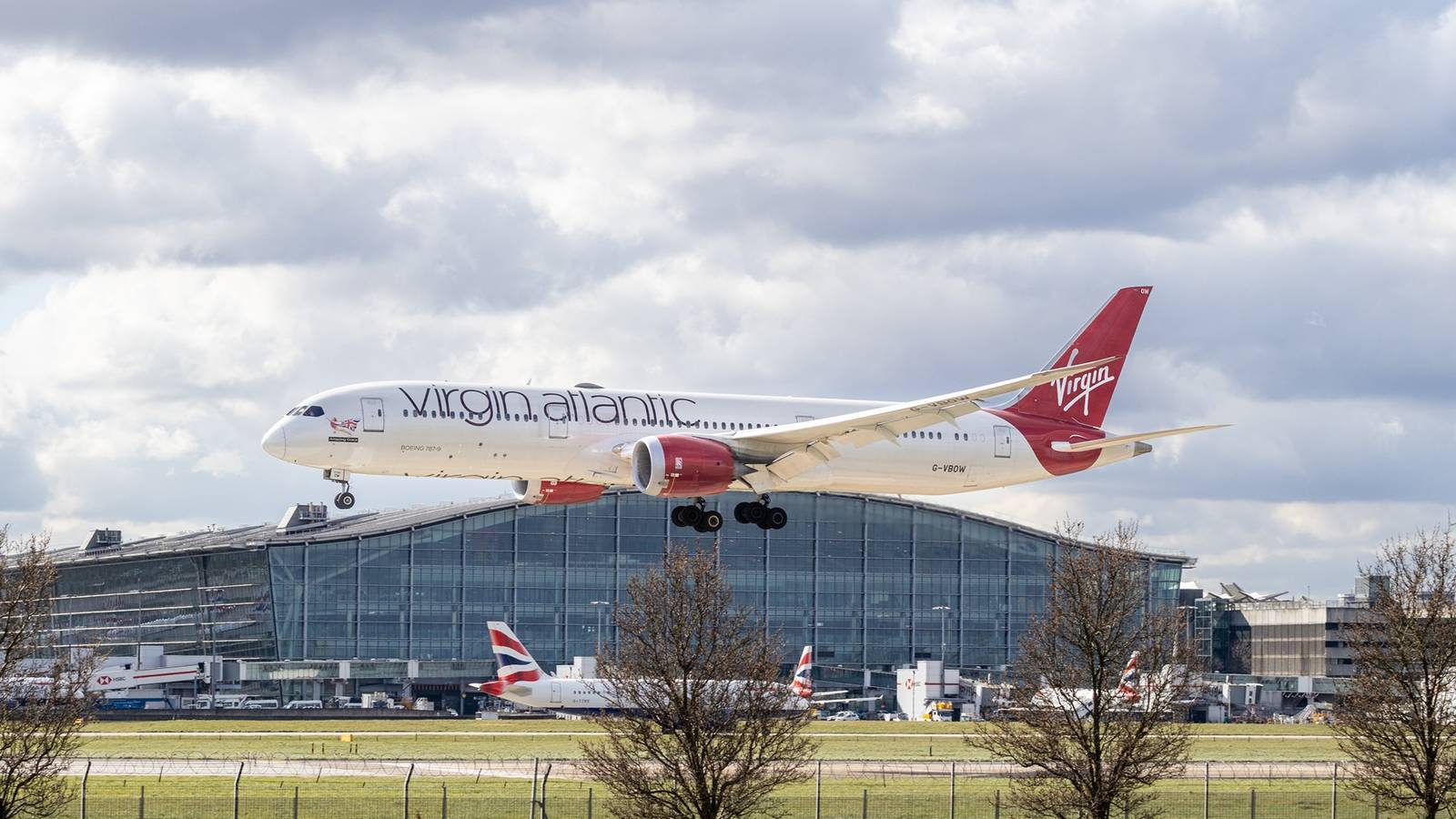
Published Jul 28, 2026, 4:07 AM EDT Journalist – Aaron is an aviation and travel journalist with 14 years of experience in the travel and tourism industry. His background spans airport operations, aviation infrastructure, and travel consulting, having worked with global organizations across New Zealand, Europe, and North America. Combining industry expertise with firsthand travel experience across more than 52 countries and five continents, Aaron covers airlines, airports, aviation policy, and the wider travel sector. He is based in Canterbury, New Zealand. His work has been published in Simple Flying and featured by MSN, SAM CHUI Aviation & Travel, EIN News, Pakistan Defence, and Climate Depot. An investigation is underway at Virgin Atlantic after an aircraft engineer sadly died after they were 'crushed' while working on the Boeing 787-9 at London Heathrow Airport(LHR). Simple Flying spoke with Virgin, who confirmed that the individual was a 'much-loved member' of the team. The 23-year-old engineer died after almost a month in hospital after being crushed while at work. The individual was performing maintenance testing at the UK's busiest airport. Virgin is already providing support to the team member's family and loved ones, and following the devastating incident, the airline is working with local authorities and Boeing to support a full investigation as to what occurred. 23-Year-Old Virgin Atlantic Engineer Killed Due To Incident At London Heathrow Credit: Shutterstock According to a report by the Daily Mail, the engineer was named Georgie Buxton, and the machinery he was working on is believed to have 'suddenly' collapsed on him. Buxton was then transported to hospital, where he has remained in intensive care on life support, and it was then determined after four weeks that the life support was to be turned off. It remains unclear what immediately caused the death of Buxton, and as a result the aircraft has remained grounded while the investigation is ongoing. An inquest has been launched into his death, and will be adjourned later this week in London. Simple Flying spoke with Virgin about the incident, who confirmed that the individual was not killed by an engine, and he passed away in hospital. A full statement is below: “We are heartbroken to confirm that a much-loved member of our engineering team, has passed away. Our thoughts are firmly with Georgie’s family, loved ones, friends and colleagues at this incredibly sad and challenging time. We’re providing support to loved ones wherever we can and sharing our heartfelt condolences to everyone affected. Georgie’s family has asked for privacy at this very difficult time. “The safety and wellbeing of our people is always our top priority, and we are devastated by this incident. We are working closely with relevant authorities and the aircraft manufacturer on the investigation to establish all facts. Out of respect for those involved and while the investigation is ongoing, we are unable to provide any further information at this stage." Boeing 787-9 Remains Grounded While Investigation Is Ongoing Credit: Shutterstock Virgin confirmed that the aircraft involved has been removed from service while the investigation is ongoing. The carrier is already undertaking its own safety investigation to understand the root cause of the incident, and will continue to work with the relevant authorities to fully understand what happened, and what additional controls will be required for this type of work in future. The British carrier operates a total of 17 787-9, of which the remaining 16 remain in regular service, and the registration of the aircraft involved has not been publicly released. A search of flight data shows that there are three aircraft that are currently out of service, with no flights recorded in the past week. Virgin's largest base is that of London Heathrow Airport (LHR); following Buxton's confirmed death, Heathrow Airport has shared a statement: 'We were very sorry to hear of this tragic accident. Our thoughts are with Georgie’s family and friends, as well as all of our colleagues in the wider Virgin Atlantic family who feel this loss. Virgin Atlantic Operations At London Heathrow Airport Credit: Shutterstock Heathrow is Virgin's largest base, and the airline maintains a network of 23 year-round destinations with an additional three seasonal destinations (which will grow to four with the addition of Phuket beginning on October 18). Alongside Heathrow, Virgin also maintains a base at Manchester Airport (MAN). Data from ch-aviation identifies that Virgin has a total fleet of 43 airplanes, all of which are widebodies. The airline's largest aircraft type is the 787-9 Dreamliner, with 17 in total; this is followed by the Airbus A330 family, with a total of 14, and two variants being the A330-300 and A330-900. Virgin also operates 12 A350-1000. A full breakdown is providedbelow: Aircraft Type Number In Fleet Airbus A330-300 Six Airbus A330-900 Eight Airbus A350-1000 12 Boeing 787-9 17 Historically, VS operated the A320-200, A321-100, A340-300, A340-600, A330-200, Boeing 747-100, 747-200, 747-400 and 767-300. The carrier has another 11 A330-900 on order, which are set to replace aging A330-300s by the end of 2027. It remains unclear when the 787-9 involved in Buxton's death will return to service. Simple Flying extends its condolences to the family, friends, and colleagues affected by this terrible accident.
Virgin Atlantic Pulls Boeing 787 From Service After Heathrow Engineer's Death
Full Article
Original Source
Read the full article at Simpleflying →KhanList aggregates and links to publicly available news content. We do not host full articles from third-party sources. Always verify important information with original sources.