
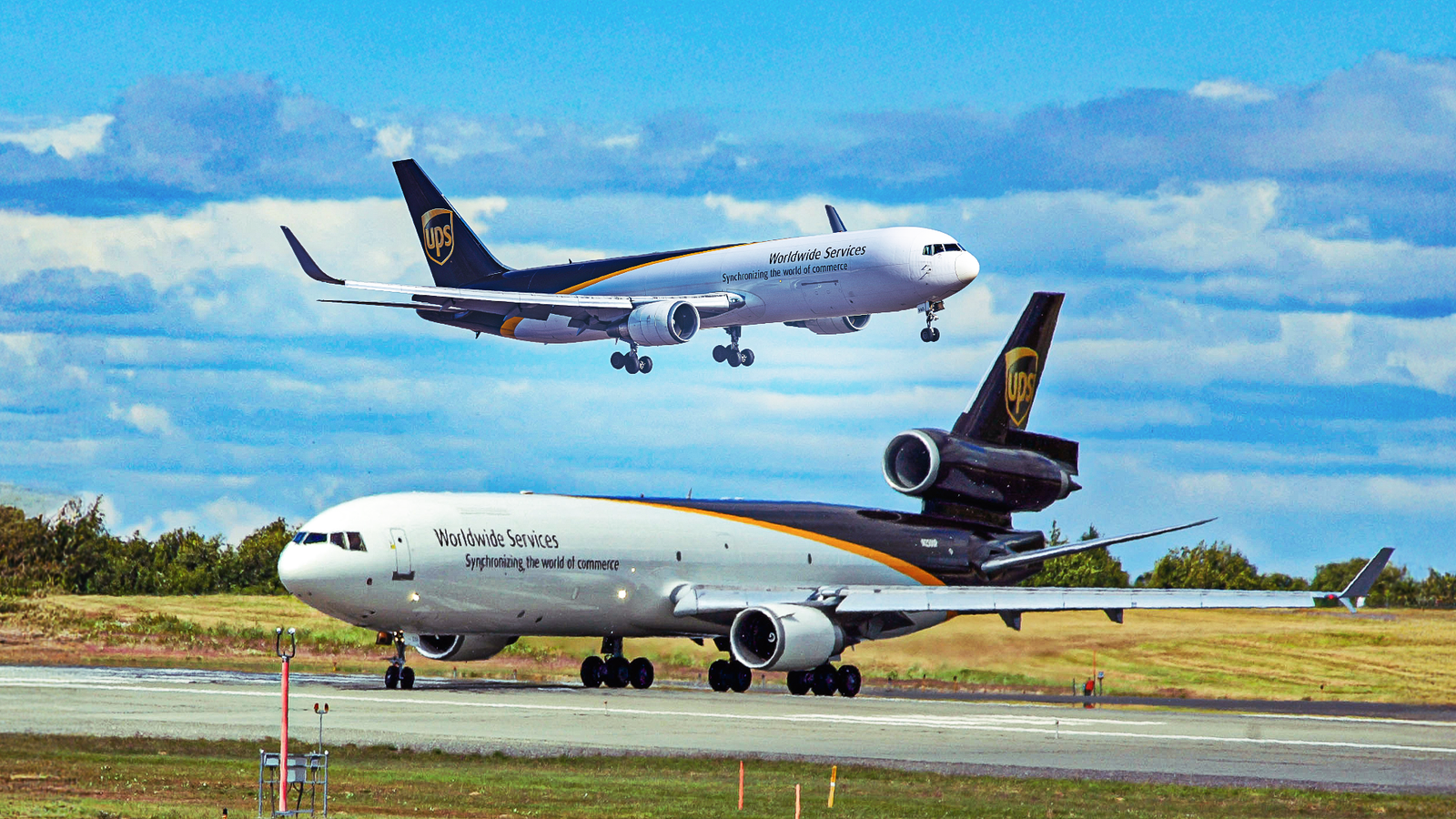
Published Oct 26, 2026, 6:00 PM EDT Luke Diaz is a freelance military writer with experience with active duty experience in the US Navy as well as defense and industrial engineering. He is a former Naval Flight Officer who performed tactical air control on the carrier-based E-2 Hawkeye. In January, UPS Airlines announced that it would retire its entire fleet of 27 McDonnell Douglas MD-11 widebody cargo jets to be replaced by the newer Boeing 767-300F. The decision was made in the aftermath of the crash at Louisville Muhammad Ali International Airport (SDF) in November 2025 that took the lives of the air crew as well as bystanders on the ground. The safety of flight was certainly a primary concern, yet the final decision regarding the aging trijets was based on business. The investigation of UPS flight 2976 revealed a critical failure of the left-wing engine pylon that would have required extensive non-destructive testing of the remaining jets in the fleet, which left UPS without more than two dozen planes in the meantime. Unlike FedEx, which has returned its examples to service, UPS wrote off the entire fleet of MD-11s at a loss of nearly $140 million. Bringing the MD-11s back would arguably have lost nearly as much money due to months of downtime. Then there was the added risk of discovering more faults and scrapping airframes anyway. However, the more modern 767 carries a considerably lower total weight and smaller overall volume in payload than the older trijet. Yet, in the present air freight market of the post-COVID-19 eCommerce boom, the 767's superior fuel efficiency outweighs both of those disadvantages. Trading 30% payload for 35% better fuel efficiency will make the emergency fleet reorganization an investment in the future in more ways than one. What The Smaller Freighter Gives Up Credit: Markus Mainka | Shutterstock While the heavy MD-11 trijet was built for massive intercontinental payloads, the 767 makes it vastly superior for high-volume, low-density cargo thanks to its fuel-saving design features. The core reason the 767 dominates today's air freight market comes down to cargo density. In the current era dominated by e-commerce, almost all the packages packed in the fuselage are very lightweight despite their volume. The MD-11F offers roughly 25% more volume than the 767-300F, but it requires three engines and a significantly higher fuel burn at every phase of flight just to get from point A to point B. The 767 cargo variant boasts a 35% lower fuel consumption than the older trijet. That figure alone has been enough to make it the 'champion' of express air shipping in the post-COVID-19 Marketplace. The 767 also boasts near-perfect mechanical reliability and a streamlined maintenance program thanks to more modern technology, ensuring aircraft spend less time in the hangar and more time in the air. E-commerce requires near-perfect dispatch reliability to meet delivery guarantees. Additionally, the smaller twinjet is quieter and requires a smaller footprint at any given airfield. This allows operators like UPS, FedEx, and Amazon Prime Air to fly the 767 into smaller airports closer to end-consumers, bypassing congested international mega-hubs. Why Parcels Rarely Need The Full Payload Credit: The Bold Bureau | Shutterstock Express freight behaves differently from bulk cargo. Packages tend to fill up cabin space before they reach a jet's weight limit, so a freighter's container positions often decide how much it carries rather than its weight rating. This is where one of the notable similarities between the two jets severely undercuts the payload advantage of the MD-11 once again. That is the nearly equal size of the two cargo planes' main deck areas. Despite being a substantially larger aircraft, the MD-11 only carries two more pallets than the 767 for a total of 26 compared to the twinjet's 24 maximum. Losing just two pallet positions represents a minimal volume sacrifice for express logistics operators. The minor reduction in floor space is completely eclipsed by the 767's superior efficiency. Specification McDonnell Douglas MD-11F Boeing 767-300F Engine Configuration 3 High-Bypass Turbofans (GE CF6-80C2 or PW4000) 2 High-Bypass Turbofans (GE CF6-80C2 or PW4000) Maximum Structural Payload 200,151 lb (90,787 kg) 116,800 lb (52,980 kg) Total Cargo Volume 17,606 cubic feet (498 cubic meters) 15,469 cubic feet (438 cubic meters) Main Deck Volume 15,530 cubic feet (440 cubic meters) 11,884 cubic feet (336.5 cubic meters) Main Deck Pallet Positions 26 Positions (88" x 125" or 96" x 125" ULDs) 24 Positions (88" x 125" ULDs) Belly Capacity 4,660 cubic feet (132 cubic meters) 3,410 cubic feet (96.5 cubic meters) Maximum Takeoff Weight 630,500 lb (285,993 kg) 412,000 lb (186,880 kg) Empty Operating Weight 254,741 lb (115,550 kg) 190,000 lb (86,183 kg) Design Range at Max Payload 4,350 nautical miles (8,056 km) 3,300 nautical miles (6,110 km) Average Hourly Fuel Burn ~2,200 to 2,400 US gallons (~8,300 to 9,100 liters) ~1,500 to 1,600 US gallons (~5,700 to 6,000 liters) E-commerce packages consist largely of lightweight goods, protective bubble wrap, and oversized cardboard boxes. Because this type of freight lacks density, an aircraft completely fills its physical cabin space, known as 'cubing out,' long before the weight of the cargo approaches a jet's limit. Loading an MD-11F with light e-commerce parcels means carrying empty, unutilized weight capacity while paying a massive fuel and maintenance penalty for a third engine. The economic case for a leaner aircraft footprint has been further bolstered by a universal cooling of global shipping volumes and cargo network downsizing in 2025. Following a multi-year post-pandemic boom, global e-commerce demand began to contract, forcing mega-carriers to reset their logistics footprints. UPS implemented a sweeping network reorganization, intentionally moving to reduce its daily Amazon parcel volume by over 50% through this year. A Crash That Rewrote The Fleet Plan Credit: Mason Brighton | Shutterstock UPS Flight 2976 was an MD-11 freighter bound for Honolulu when it crashed after taking off from Louisville on November 4, 2025. Tragically, 15 people lost their lives in the mishap. The left engine separated during the takeoff roll, and the FAA ordered UPS, FedEx, and Western Global to ground their MD-11s on November 8 until inspections and potential fleetwide follow-on repairs. The NTSB's preliminary report found fatigue cracks in the left engine mount, crucially including a spherical bearing. According to Aviation Safety News, the failed bearing matched a part Boeing had flagged in a 2011 service letter after failures occurred on three separate aircraft. The NTSB said it is still examining how those inspections were handled, so final conclusions on the cause have not been published. FreightWaves reported that the company would not bring the jets back even if regulators cleared them. UPS, meanwhile, reported roughly $50 million in extra lease costs to cover the gap in the fourth quarter due to the capacity loss of its downed jets, according to Supply Chain Dive. UPS made its announcement on January 27; the type's retirement was official. A Retirement That Came Before The Repair Credit: Mariusz Klarowicz | Shutterstock The Federal Aviation Administration and the National Transportation Safety Board fully examined the wreckage of flight 2976 and the data from its flight recorders in the aftermath of the terrible accident. After exhaustive analysis, the FAA and NTSB determined interim mechanical corrective actions to be taken by MD-11 operators to avoid the same catastrophic failures. Unfortunately for the UPS jets, this solution came too late. Specifically, fatigue cracks developed and went unnoticed in the spherical bearing race parts and the aft mount lugs of the engine pylon. Subsequent maintenance reviews across the industry exposed similar untracked bearing defects on multiple other airframes. Even as MD-11s are returning to service, the NTSB has not published its full and final report on the accident, and there may yet be more information that could impact the remaining global fleet. The FAA did mandate accelerated maintenance schedules for all critical systems that are in adjacent aerostructures around the pylons and instituted more intensive inspections beyond visual checks to eliminate the possibility of stress fractures being overlooked. While the mechanical fix successfully restored the airworthiness of the MD-11, it prompted a permanent shift in how cargo carriers manage the type. UPS chose to entirely bypass the retrofits, deciding instead to accelerate permanent retirement and focus on fleet modernization. Conversely, FedEx implemented the comprehensive replacements and inspections across its fleet, successfully resuming commercial flight operations with the updated tri-jets. A Replacement Line That Is Closing Credit: Matheus Obst | Shutterstock Boeing has locked in a definitive deadline of 2027 to officially close down the commercial 767 production line once current orders for UPS and FedEx are filled. It will only continue making the 767 2C variant, which is used to make the KC-46 Pegasus aerial tanker for the US Air Force. The decision marks the end of an era for the Everett, Washington assembly facility. UPS was the launch customer for the 767-300F, and now it expects to be one of the very last as well, with its final deliveries scheduled for 2027 as the line prepares to shutter for good. The silver lining to the untimely departure of its MD-11s is that the air freight giant is investing in a future fleet that will endure for decades. Even as new airframes stop rolling through the doors, the production of military variants and a steady supply chain will keep the jets stocked with spare parts with an active service network to support them for many years. Adding the benefit of much more efficient operating costs, the new 767 Freighters will be an upgrade for UPS as it fights for market share. The expanding e-commerce air express business shows no signs of slowing down anytime soon.
UPS Replaced Its McDonnell MD-11s With 18 Boeing 767Fs That Carry Roughly 65,000 Pounds Less Cargo Each
Full Article
Original Source
Read the full article at Simpleflying →KhanList aggregates and links to publicly available news content. We do not host full articles from third-party sources. Always verify important information with original sources.