
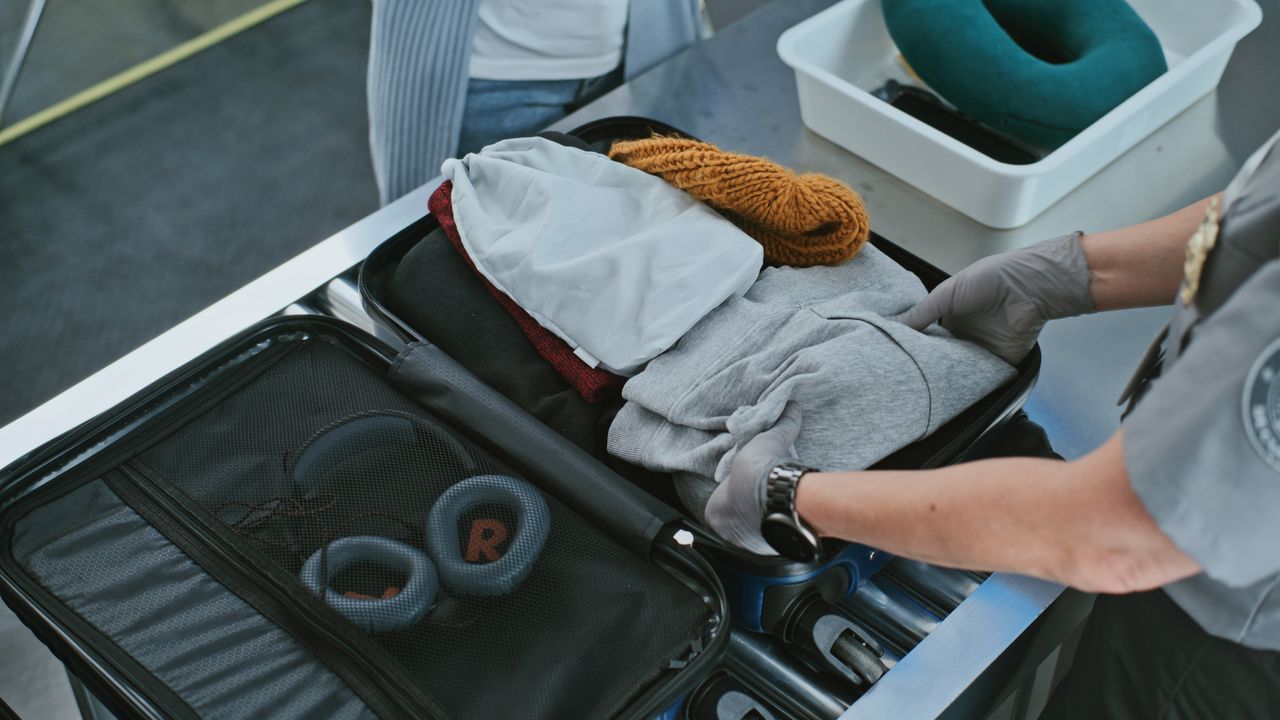
For years, travelers have become accustomed to meticulously packing liquids ranging from shampoo to sunscreen in their carry-on bags in order to meet the TSA liquid limit—and avoid getting that expensive perfume confiscated.Internationally, this rule is known as “3-1-1." Liquids, gels, and creams packed in a carry-on must be in containers no larger than 3.4 ounces (100 mL). All containers must fit in a single, clear, quart-sized bag. (Larger liquids can still be brought along on your travels but must be packed in checked luggage.)While commonly referred to as “liquids,” these regulated substances are technically known as LAGs, an abbreviation for liquids, aerosols, and gels. This category also encompasses creams or pastes—essentially anything that can be cut through or spread with a butter knife—from common travel necessities like shampoo, face wash, and sunscreen, to toothpaste, hairspray, and even peanut butter.The Transportation Security Administration (TSA) first introduced the rule in August 2006, after British police foiled a terrorist plot to detonate explosive liquid in soda cans on flights from London to the US and Canada—prompting countries around the world to adopt the new airport security measure.Today, most countries abide by the rule, though it has loosened in recent years, as more airports install advanced CT scanners with the capability to identify hazardous liquids. Some UK airports, including London Heathrow (LHR), now allow liquids of up to 2 liters (about 67.6 ounces).In the US, a TSA spokesperson tells Condé Nast Traveler they “anticipate the limit on liquids will be lifted in the coming years." However, with the roll-out of the new scanners varying by terminal, the limit still remains in effect nationwide.In this transitional period, the decisions are ultimately up to the individual officers, but it turns out there are certain exceptions to the 3-1-1 rule. The TSA currently allows travelers to take 10 common full-size liquids through airport security in the US.To bring approved oversized liquids through security, travelers need to declare these items to a security officer prior to screening and place them in a separate bin. Anything that triggers the alarm while going through security is subject to further inspection. Here's what you need to know.This story has been updated with new information since its original publication date.To bring approved oversized liquids through security, travelers need to declare these items to a security officer before screening. GettyPrescription liquids, gels, and aerosolsMedication prescribed specifically for you is perhaps the most common item that qualifies as an exception. TSA recommends that it’s clearly labeled so there is no question about what's inside. Depending on the situation, medication may be screened visually or with an X-ray machine and may also be tested for traces of explosives. If security officers are unable to adequately screen an item, you may be asked to open the container for vapor analysis. However, according to the TSA, officers will never place anything inside medically necessary liquids.In cases where you would like to make sure the medication isn’t opened or X-rayed, simply inform the TSA officer. “Additional steps will be taken to clear the liquid, and you or the traveling guardian will undergo additional screening procedures, which may include AIT screening, a pat-down, and screening of your carry-on property,” the site says. Note that prescription wet pet food does not count as an exception and must abide by the 3-1-1 rule and must abide by the 3-1-1 rule, even for service animals.Liquid medications and contact lens solutionIn general, liquid medications that are not prescriptions are limited to 3.4 ounces, but TSA does allow “larger amounts of medically necessary liquids, gels, and aerosols in reasonable quantities for your trip"—such as inhalers, insulin (which should be placed in a separate bin for X-ray screening), and nebulizer liquid—with the caveat you must declare them to security officers first. It's also advised that all medications are labeled to further ensure the security process goes smoothly. Contact lens solution also falls into this category. However, the agency notes that “some contact lens solutions contain chemicals that typically alarm and may not permitted through the checkpoint,” and therefore recommends packing contact lens solutions over 3.4 ounces in your checked baggage.Ice packs, including frozen water bottlesIf you're somebody who likes to bring your own cooler filled with food on the plane, know that gel ice and freezer packs are permitted. This includes frozen water bottles, as long as they are frozen solid when they pass through, and liquid-filled teethers—a helpful note for parents with young children. However, any portion that has been partially melted and slushy, or any liquid at the bottom of the container, will count toward the 3-1-1 limit. The only exception is medically-necessary gel ice packs—for items such as breast milk, IV bags, pumps, and syringes—which are allowed in “reasonable qualities,” even if they are melted or slushy.Breast milk and infant formulaTraveling with infants is challenging enough already. It's a good thing, then, that breast milk and baby formula are categorized as “medically necessary liquids" permitted by the TSA. (The child does not need to be present for this exception.)The TSA suggests—but doesn't require—that the liquids be transported in clear and translucent bottles, so they can be screened by the Bottle Liquid Scanners (those in pouches may not be able to). While there is a chance you may be asked to open them, nothing will ever be placed in the liquid. The agency also adds that the screening process shouldn't affect the formula, but if you prefer they not be X-rayed, alternative testing means can be requested. While baby powder is not a liquid, note that powder-like substances that are more than 12 ounces do need to be placed in a separate bin for screening. However, if you can, TSA suggests putting them in checked baggage.Baby and toddler food and drinksIn addition to breast milk and formula, food and drinks for babies and toddlers are allowed, including juices and puree pouches since they technically fall into the “medically necessary” category. Water for babies is also allowed in “reasonable quantities," but needs to be removed and screened separately from other belongings.Baby foods like breast milk and formula are categorized as “medically necessary liquids" and are permitted by the TSA. GettyNon-spillable wet batteriesThere are some portable electronic devices which require non-spillable batteries with absorbed electrolyte, like a gel cell, absorbed glass mat, and the like. As long as the equipment is protected against accidental activation or evolution of heat, and the battery's voltage is 12 volts or less with less than 100 watt hours, then it makes it cut. But no more than two spare batteries can be carried.Fresh eggsYes, you can put all your eggs in one basket—or your one carry-on bag without abiding by 3-1-1 rules. Even liquid yolks can be taken through security but may need to be removed from the carry-on bag for proper inspection, to make sure the X-ray machines show they’re truly what they're cracked up to be. It's suggested to pack them separately and keep them “uncluttered” ahead of time to ensure a quick screening.Live fish and coral in waterAssuming your live fish and live coral in water need more than 3.4 ounces of water to survive, they can be taken in your carry-on—but not in checked bags. They do need to be in a clear transparent container and properly inspected by the TSA officer. Certain airlines also permit live lobster, but the agency suggests checking your carrier's website ahead of time to avoid being caught in a pinch.Biological specimensLiquid exceptions can be made in the name of science. Non-infectious specimens in preservative solution, which can include formaldehyde, ethanol, isopropanol, or other alcohols, can be carried through if they're for scientific research—but they’ll need to be packed quite specifically. There can be up to 30 milliliters of free liquid in a heat-sealed inner plastic bag and no more than one liter in the entire outer packaging, which needs to be marked: "Scientific research specimens, 49 CFR 173.4b applies." Specific instructions can be found here.Duty-free items in officially sealed bags on inbound international flightsPlenty of airports lead you through a massive duty-free shop before the departure gate, tempting you with local products and international brands. Whether they're Canadian maple syrup, French wine, or South African sauces, liquid souvenirs can be taken home so long as they are properly sealed by the retailer in a security tamper-evident bag (STEB) and show no signs of being tampered with.The purchase must've been made within 48 hours—and make sure to hold onto your original receipt as necessary proof. The global system was developed in 2008 “to allow an exemption" to liquid volume rules for items purchased at duty-free airport retailers or on board an aircraft, according to the International Civil Aviation Organization. For US travelers, this is limited to inbound international flights, according to the TSA. Note that not every airport shop offers the STEB option.
Here are 10 Full-Sized Liquid Items That You Can Actually Carry On Board a Flight
Full Article
Original Source
Read the full article at Cntraveler →KhanList aggregates and links to publicly available news content. We do not host full articles from third-party sources. Always verify important information with original sources.