
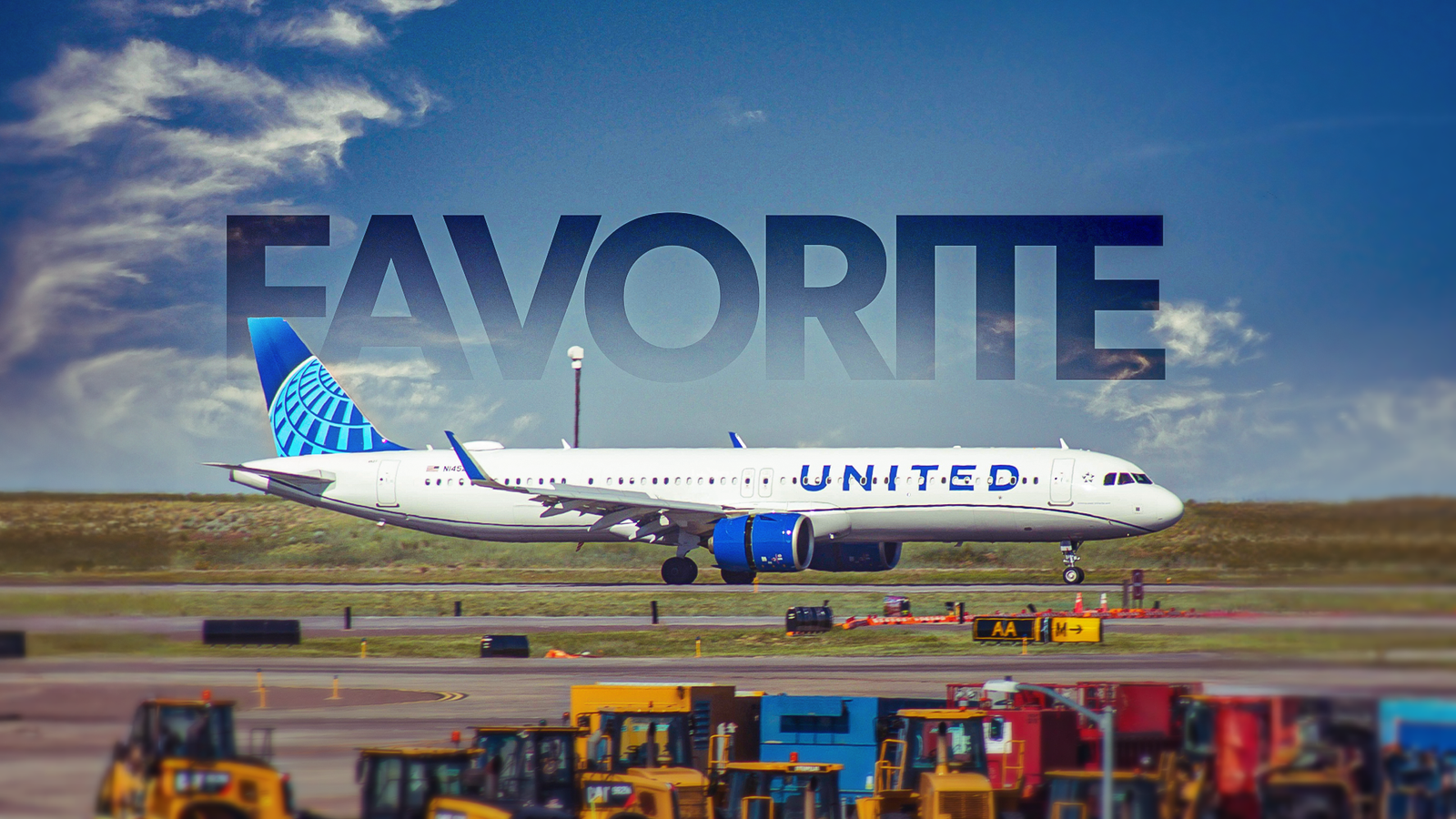
United Airlines has built much of its domestic operation around Boeing narrowbodies, operating hundreds of 737s alongside its long-serving 757 fleet. But the aircraft the airline says earns its highest customer satisfaction scores is an Airbus: the A321neo, a relatively new addition to United's fleet that is winning over passengers’ hearts despite a cabin configuration that prioritizes capacity. The contrast raises an interesting question about United's fleet strategy. If Boeing aircraft remain the backbone of its narrowbody operation, why has the airline singled out the A321neo as its best-performing aircraft for customer satisfaction, and what does that reveal about the features travelers value most? The answer involves more than seat pitch; onboard entertainment, connectivity, thoughtful cabin amenities, and Boeing's delivery challenges all play a part. Why United's Airbus A321neo Is Winning Over Passengers Credit: Walter Cicchetti | Shutterstock United's endorsement of the A321neo is unusually direct. According to our previous report on United's best domestic aircraft, Toby Enqvist, United's chief global operations officer, described the aircraft as the airline's highest-scoring aircraft for customer service satisfaction. The assessment is particularly notable because United operates far more Boeing narrowbodies than Airbus aircraft, so the A321neo has a much smaller presence across the airline's network. The A321neo's success also challenges the assumption that passenger satisfaction depends primarily on cabin space. United configures the aircraft with 200 seats, including 20 in first class, 57 in Economy Plus, and 123 in standard economy. That is a relatively dense layout compared with Delta Air Lines' 194-seat configuration and American Airlines' 196-seat arrangement, as discussed in our coverage of United's A321neo. Although these layouts differ in their precise cabin allocations, the comparison shows that United's highly rated aircraft isn't a low-density premium product. Instead, the A321neo seems to benefit from the cumulative effect of small features that enhance the journey. Large seatback entertainment screens, an extensive content library, onboard WiFi, and a self-service snack area all contribute to the experience. These features can make a flight feel more comfortable and convenient without requiring the airline to sacrifice many seats. For an airline with a vast domestic network, aircraft must appeal to passengers while remaining economically viable to operate. If United can improve customer satisfaction without giving up a relatively high seat count, the A321neo could be a strong fit. To see why, it helps to look at the aircraft that still make up most of United's fleet. United's Boeing Narrowbody Fleet Remains Much Larger Credit: Markus Mainka | Shutterstock United Airlines' Airbus A321neo may be its highest-rated aircraft for customer satisfaction, but Boeing still dominates the carrier's narrowbody fleet. According to Planespotters.net's United Airlines fleet database, the airline's fleet includes 40 Boeing 737-700s, 141 737-800s, 136 737-900ERs, 123 737 MAX 8s, and 182 737 MAX 9s. United also operates 12 Boeing 737-900s and 61 Boeing 757s, demonstrating how extensively the manufacturer is represented across the airline's domestic and transcontinental operations. Airbus nevertheless has an established presence at United, with 69 A319-100s and 64 A320-200s in the fleet, alongside 77 A321neos. The A321neo is the newest of these three Airbus narrowbody types and offers additional passenger capacity for routes where demand justifies a larger single-aisle aircraft. As Aerospace Global News reported in its 2026 fleet review, United is pursuing a broad fleet modernization and expansion strategy. The A321neo's growing role is part of that process, although Boeing's 737 family remains the backbone of its narrowbody operation. United Airlines' Narrowbody Fleet Aircraft type Current total Airbus A319-100 69 Airbus A320-200 64 Airbus A321neo 77 Total Airbus narrowbodies listed 210 Boeing 737-700 40 Boeing 737-800 141 Boeing 737-900 12 Boeing 737-900ER 136 Boeing 737 MAX 8 123 Boeing 737 MAX 9 182 Boeing 737 MAX 10 Total Boeing 737s listed 634 Boeing 757-200 40 Boeing 757-300 21 Total Boeing 757s listed 61 The figures put the scale of the difference into perspective. United has 634 Boeing 737s listed, compared with 77 Airbus A321neos, meaning the A321neo remains a relatively small part of its overall narrowbody operation. The airline's favorable customer satisfaction assessment is particularly interesting: an aircraft operating in far smaller numbers has earned stronger passenger feedback than the Boeing types that carry much of United's domestic traffic. The A321neo stands out not simply for its size, but for how United has equipped its cabin and designed the onboard experience. Big Screens, WiFi & Snacks: The Details Behind The Scores The explanation may lie in the details passengers encounter throughout a flight. In its April 2026 analysis, Cranky Flier argued that United's onboard experience demonstrates how seemingly modest amenities can collectively influence customer satisfaction. Instead of relying on one standout luxury feature, the airline can improve the overall journey through entertainment, connectivity, and easy access to refreshments. Seatback screens are a particularly visible part of that proposition. Passengers can access entertainment without relying solely on their own phones or tablets, and a substantial content library gives them more options during a flight. On longer domestic sectors, where travelers may spend several hours in the same seat, that convenience can make a meaningful difference to the perceived quality of the journey. Connectivity is another important factor. United is rolling out Starlink satellite internet across its fleet, and in its second-quarter 2026 results, the airline reported that it had installed Starlink on 450 United mainline and United Express aircraft at the time of the announcement. The carrier also reported that customer satisfaction scores on Starlink-equipped flights were twice as high as on other flights. That fleet-wide finding doesn't prove connectivity alone explains the A321neo's ranking, but it reinforces the importance of the onboard digital experience. . The A321neo's and XLR’s self-service snack bar at the rear of the cabin adds another practical touch. Instead of treating refreshments as something available only through a conventional service interaction, the arrangement gives passengers a convenient way to access snacks. Combined with entertainment and improved connectivity, these amenities help explain why passengers might rate the aircraft highly even without the most spacious economy cabin. However, a successful onboard product is only part of the story. United also needs aircraft that can support its network plans, replace older jets, like the once-popular Boeing 757, and arrive on schedule. That brings the airline's purchasing decisions and Boeing's delivery challenges into sharper focus. Boeing's 737 MAX 10 Delays Helped Airbus Gain Ground Credit: Ian Dewar Photography | Shutterstock United's growing commitment to Airbus is not simply a response to passenger preferences. Aircraft availability and certification uncertainty have also shaped its fleet decisions, especially as the airline plans the next phase of domestic growth. The Boeing 737 MAX 10 was intended to add capacity within the 737 family, but certification delays left airlines uncertain about when the aircraft would be available. That uncertainty encouraged United to secure more Airbus capacity. When United's previously undisclosed order for 40 A321neos became public, the airline had expanded its commitment to the European manufacturer's single-aisle aircraft. The A321neo offers a higher-capacity alternative to many existing narrowbodies, making it attractive on routes where demand justifies carrying more passengers. United's fleet plans also include the A321XLR, a longer-range version designed to serve routes that might otherwise require larger aircraft, or the Boeing 757. The XLR's extended range and single-aisle configuration make it relevant to United's transcontinental network and certain thinner long-distance markets. According to Aviation Outlook's 2026 fleet analysis, the airline's Airbus commitments form part of a broader effort to modernize its fleet while balancing growth, replacement requirements, and aircraft availability. Despite their visual similarities, the A321neo and A321XLR differ in important ways. The neo is already carrying passengers and building a customer-satisfaction record, while the XLR is intended to expand United's operational options on longer routes. Airbus therefore offers both an immediate passenger-experience proposition and a longer-term network-planning opportunity. The question is how far these commitments will reshape United's fleet. Even with a growing Airbus order book, the airline still has significant Boeing deliveries planned, so the next stage of its strategy will depend on both manufacturers' ability to deliver aircraft in time. The A321neo Is Growing Fast, But Boeing Still Has The Numbers Credit: Markus Mainka | Shutterstock United's Airbus expansion is substantial, but it should not be mistaken for an imminent reversal of its Boeing-heavy narrowbody strategy. According to our report on the airline's 69th and 70th A321neo deliveries, United had recently received those aircraft and had another 135 on order during the reporting period. The deliveries marked continued progress in building a fleet that remains relatively small compared with its Boeing 737 operation. The planned delivery mix underlines that distinction. United's two-year planning window, running from March 2026 to April 2028 in the figures provided, includes 119 additional Boeing 737 MAX deliveries, alongside planned Airbus A321neo and A321XLR deliveries. The precise totals can change as manufacturers adjust delivery schedules, but these figures do not guarantee every aircraft will arrive on time. The A321neo's role will likely grow alongside the Boeing fleet, but will not immediately displace it. For United, having aircraft from both manufacturers also offers some flexibility when production schedules or certification timelines change. However, operating two major narrowbody families creates its own demands, including fleet planning, maintenance arrangements, pilot training, and cabin consistency. Another important consideration: customer satisfaction is not the only measure of success. United must also assess aircraft economics, route suitability, reliability, and how efficiently each configuration uses available capacity. The A321neo may currently lead on customer satisfaction, but the broader test is whether it can deliver that experience at scale while meeting the airline's financial and operational objectives. Can Airbus Turn Passenger Preference Into A Bigger Role At United? Credit: Avi Johnson | Shutterstock United's experience with the A321neo shows a growing gap in airline fleet planning: the aircraft passengers like most isn't always the one an airline operates in the greatest numbers. Boeing remains central to United's narrowbody strategy, but Airbus has carved out a strong position with a competitive cabin and aircraft that fit the carrier's evolving network needs. The next milestone will be the A321XLR's introduction into service. United's second-quarter 2026 results indicated that its first A321XLR, featuring the airline's Born to Explore branding, was expected to enter domestic service in fall 2026, with international operations planned for early 2027. The aircraft is intended to replace United's aging Boeing 757s, potentially opening new long-distance routes without requiring a widebody jet. The XLR's performance will be worth watching alongside the established A321neo. If United can combine the NEO's strong customer satisfaction results with the XLR's longer range, Airbus could become even more important to the airline's future route strategy. At the same time, Boeing's 737 MAX deliveries will continue to shape the carrier's overall fleet composition. The A321neo, an aircraft operating in much smaller numbers, has earned the airline's strongest customer satisfaction endorsement. Whether that advantage persists as the fleet expands will depend on maintaining the small details passengers appreciate while delivering the reliability and economics United needs from its next-generation narrowbodies.
United Airlines Flies Far More Boeing Narrowbodies, But Says The Airbus A321neo Is Its Passengers' Favorite
Full Article
Original Source
Read the full article at Simpleflying →KhanList aggregates and links to publicly available news content. We do not host full articles from third-party sources. Always verify important information with original sources.