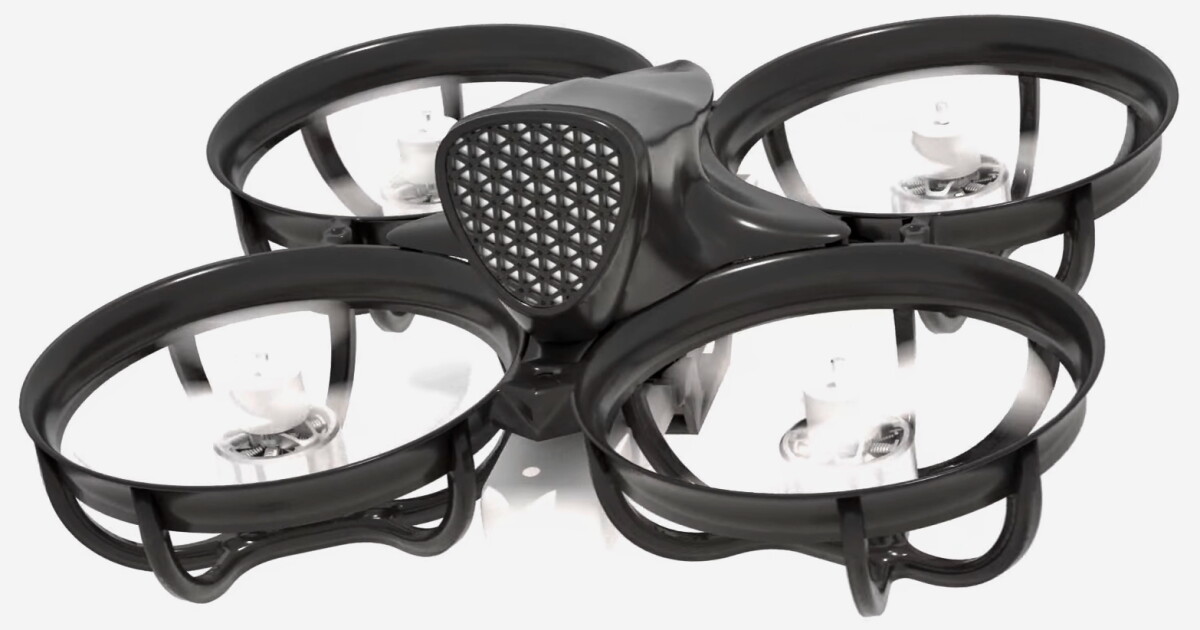
The deadliest animal to have ever roamed the earth is not the great white shark, or snakes, or even rats that caused three great plagues in history, decimating the human population at the time. It’s the tiny 5-mm (0.2-inch) Anopheles mosquito, which has accounted for billions of deaths in history. One company is taking the battle against these deadly insects directly to the skies with tiny air-to-air killer drones.Y-Combinator-backed French startup Tornyol is proposing a 40-gram autonomous drone as a solution to the mosquito problem. The drone monitors its surroundings for insects, continuously patrolling a defined area and returning to charge when necessary. Once it detects a target in the air, it launches towards it and “neutralizes” it mid-air – simply by chopping it up with its propellers.According to statistics by the World Health Organization, mosquitoes kill 700,000 to 1 million people every year, mostly by spreading malaria but also through yellow fever, dengue fever, and Zika virus. Humanity has developed several ways to try and tackle the issue, including genetic modification, sterilization of disease-carrying species, electronic traps, and most commonly, insecticides. Naturally, each one of these has drawbacks and limitations. Insecticides, for example, can be harmful to humans, pets, and the environment in general, while traps are usually passive. Buyers can choose between color choices of black, red and orangeTornyol The Tornyol drone aims to actively hunt and kill the mosquitoes in mid-air. The company says the drone uses “ultrasonic phased array sonar and clever digital signal processing for mosquito detection and elimination.” Basically, it combines ultrasonic sonar (similar to the technology bats use) and intelligent control algorithms to detect its environment and the movement of insects.Tornyol’s latest model, LeSonar2, features 32 ultrasonic emitters that produce ultrasonic pulses (inaudible to humans) which reflect off nearby objects or insects. The drone features 380 smartphone microphones that pick up the reflected pulses, and an Artix-7 FPGA processor that processes the sound to create a real-time 3D map of its surroundings and detect any changes or presence within that environment. This use of sonar over cameras contributes to the drone’s compact form factor and its ability to “see” at night. The hardware is backed by proprietary software and algorithms, and comes with dedicated app and web interfaces for things such as drawing the coverage area, updating firmware, and creating flight schedules. Tornyol - Micro-drone that kills mosquitoes In case you were wondering how the killer drone differentiates between enemy mosquitoes and flying friendlies, it uses an ingenious tracking technique. Every insect has a distinct sonar signature that’s determined by its wingbeat frequency and its harmonic structure. The drone processes these characteristics to differentiate between various types of insects. The company also says the drone is completely safe around children and pets.“Tornyol is designed with multiple safety features including collision avoidance, lightweight construction, and enclosed propellers. The drone automatically maintains safe distances from people and pets, and its small size and weight minimize any risk in the unlikely event of contact,” the company says on its website.The project is still undergoing development and some fine-tuning, according to the founders. The latest demo shows the drone eliminating a moth mid-air. When fully launched, the drone will cost US$1,100 for a one-time payment deal and $50 per month for the subscription option. Subscribers can cancel but will have to return the drone in good condition. Tornyol says it will replace damaged drones for subscribers, while full owners get a one-year warranty. The company is currently taking on early adopters for a spot-reservation fee of $100. The drone comes with its own base stationTornyol Now, the idea of a killer drone that quickly and safely kills mosquitoes in a defined area while avoiding other insects and eliminating the need for harmful insecticides is truly ingenious. It works great in many scenarios such as camping, in a garden, and on a porch, among others. However, the company’s claims, as well as the technical and cost realities of the drone, do raise some important questions.The company sets some ambitious targets for its drones, which it describes as small, fast, inexpensive, and capable of killing mosquitoes at an unprecedented scale and cost.“Our early calculations show we’ll be 100x more cost-effective per square kilometer of covered surface than fixed traps. We’ll also be cost-competitive with mosquito nets from periurban to urban areas (more than 500 people per square kilometer) while offering a 100% reduction in malaria mortality, compared to 50% for mosquito nets,” Tornyol claims. “A single Tornyol unit should be able to protect areas up to 5 acres.”These may be lofty claims for a drone with a flight time of three minutes and a recharge time of 30 minutes.“It [the drone] is a great idea for some specific scenarios, but it’s not practical in the regions where the mosquito problem is most critical,” says Uduak Lawrence, postgraduate genetics researcher at the University of Lagos. “These regions are unlikely to consider $50 a month inexpensive. The drone also requires constant electricity, plus a 3-minute flight time and relatively long recharge time may not be enough to deal with infestations.”There is also the issue of the noise. Quadcopters are notoriously loud, and can be disruptive when deployed at night. That said, the drone does feature some clever engineering and has the potential for effective vector control in many scenarios. The team is actively working on solutions to existing limitations, including battery swapping for extended flight times.Source: Tornyol
Tornyol drone uses sonar to hunt and destroy mosquitoes
Full Article
Original Source
Read the full article at Newatlas →KhanList aggregates and links to publicly available news content. We do not host full articles from third-party sources. Always verify important information with original sources.