
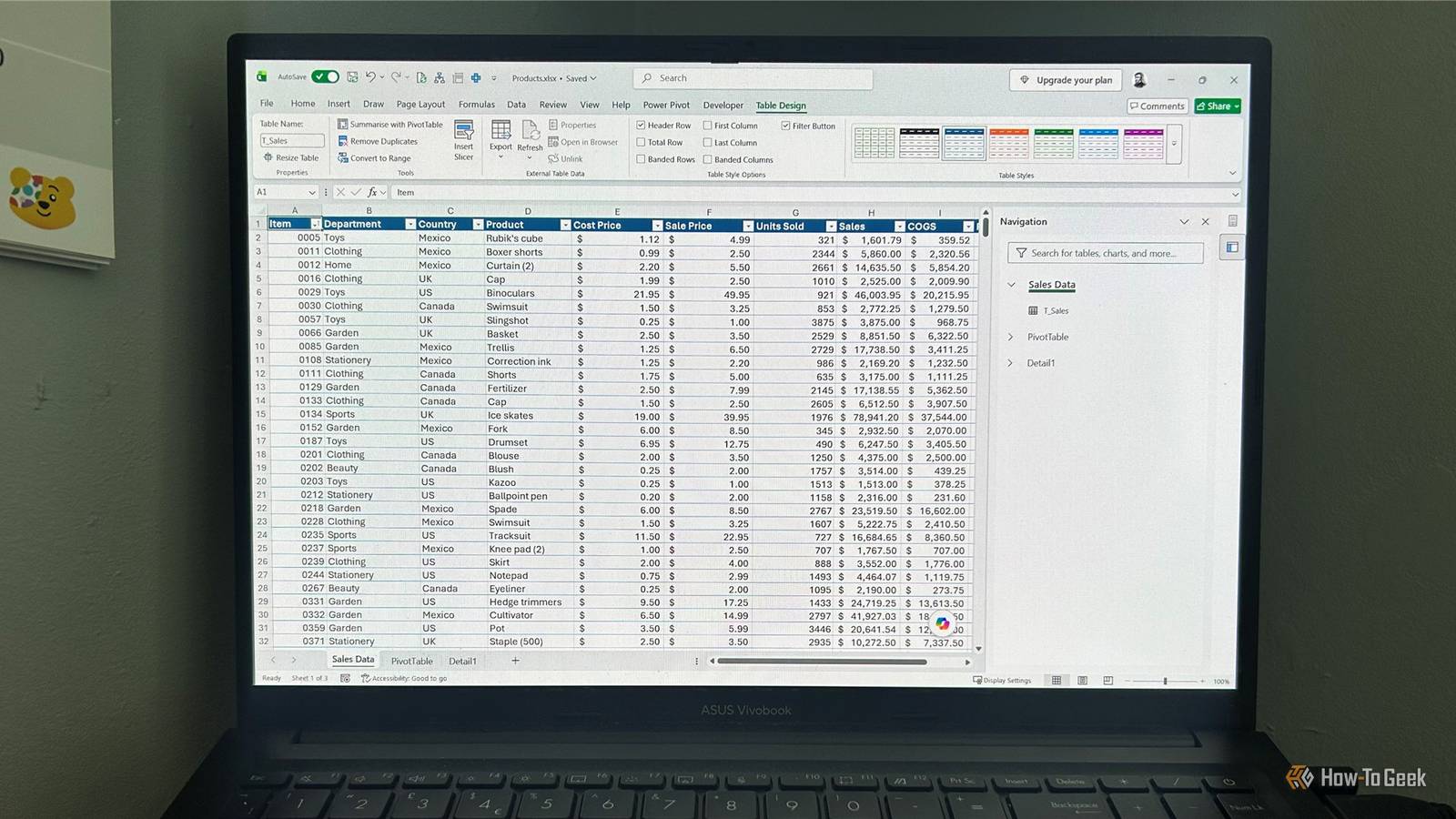
Published Aug 30, 2026, 8:30 AM EDT Tony Phillips is an experienced Microsoft Office user with a dual-honors degree in Linguistics and Hispanic Studies. Prior to starting with How-to Geek in January 2024, he worked as a document producer, data manager, and content creator for over ten years, and loves making spreadsheets and documents in his spare time. Tony is also an academic proofreader, experienced in reading, editing, and formatting over 3 million words of personal statements, resumes, reference letters, research proposals, and dissertations. Before joining How-To Geek, Tony formatted and wrote documents for legal firms, including contracts, Wills, and Powers of Attorney. Tony is obsessed with Microsoft Office! He will find any reason to create a spreadsheet, exploring ways to add complex formulas and discover new ways to make data tick. He also takes pride in producing Word documents that look the part. He has worked as a data manager in a secondary school in the UK and has years of experience in the classroom with Microsoft PowerPoint. He loves to encounter problems in Microsoft Office and use his expertise and legal-level training to find solutions. Outside of the Microsoft world, Tony is a keen dog owner and lover, football fan, astrophotographer, gardener, and golfer. Some of Excel's most useful features aren't hidden behind complicated menus or obscure keyboard shortcuts. They're built into controls you probably pass over without a second thought. Here are some that can save you time every day. Make Excel's interface work harder Useful controls hiding in places you might overlook The Excel ribbon has more useful controls than the obvious buttons and menus suggest. Some can change how much of the worksheet you can see, while others give you faster access to settings and commands you use regularly. Make more room for your worksheet If you're working with a large spreadsheet, the ribbon can take up a surprising amount of useful screen space. Open a tab, then double-click it to tuck the ribbon away. Click a tab once when you need a command, and Excel will temporarily bring the ribbon back. Double-click a tab again to restore it permanently. Open hidden settings with the tiny arrows The little arrows in the bottom-right corners of some ribbon groups are dialog launchers. Click one and Excel opens a more detailed settings window for that group. The Font, Number, and Alignment launchers all open the Format Cells dialog, which contains controls for many common formatting tasks, including some you won't find elsewhere, such as cell protection. Make your favorite tools more accessible There's no reason to keep visiting a particular tab just to use one command. For some commands, you can right-click them and select Add to Quick Access Toolbar. They then sit at the top of the Excel window, giving you one-click access wherever you happen to be working. If you want to go further, you can also create your own toolbar buttons with VBA, giving you quick access to custom macros alongside Excel's built-in commands. Give long formulas more space A complicated formula can become a game of horizontal scrolling when the formula bar is only one line tall. Hover over its lower edge until the pointer changes, then drag downward to give yourself more room. Get more out of your formulas Excel's formula tools can do more than you expect The formula bar and the little ToolTips that appear as you type contain several interactive features. They're useful not only for entering formulas, but also for getting help, understanding unfamiliar functions, and inserting references without typing everything yourself. Get help when writing a formula As you type a function, Excel displays its syntax in a ToolTip underneath the cell. If you click the function name in that little pop-up, Excel shows you more information in the Help sidebar. You can also click an argument name to select that part of the formula, making it easier to check that you've used the right references in the right parts of the formula. See plain-English explanations of each function and its arguments Need help finding or understanding a function? Click the fx button beside the formula bar to open Insert Function. You can search for a function by describing what you want to do, select a function from a category, or see all the functions. Clicking a function displays an explanation underneath, and double-clicking one opens the Function Arguments dialog, which is useful when you've stumbled upon a function that looks familiar, but you're not quite sure what its arguments are supposed to do. Insert a table reference with a click When you're entering a formula that uses an Excel table, you don't have to type the column reference yourself. With the formula active, position your pointer over the column header you want to reference. When the pointer becomes a black arrow, click the header to insert the structured reference. Work faster with your data Skip the repetitive stuff Some of these tricks are useful because they remove tiny bits of repetitive work. You might only save a few seconds each time, but those seconds add up when you're working in Excel every day. Autofit every column at once Instead of resizing columns one at a time, click the triangle in the top-left corner of the worksheet to select everything. Then double-click the boundary between any two column headers. Excel adjusts all the columns to fit their contents in one go. Control what the fill handle does The fill handle at the bottom-right of a selected cell offers more than just copying a value down a column. Drag the fill handle with your right mouse button, and Excel displays a menu when you release it. From there, you can choose how the cells should be filled, including Fill Without Formatting when you want the formula but need to preserve the existing formatting. Clean up a table style with a single click Applying a table style to a table that already has manual formatting can mean you don't get the full benefit of the preset layout. Rather than simply clicking the style you want, right-click it and choose Apply and Clear Formatting. Excel removes the existing manual formatting and applies the table style cleanly. Navigate large workbooks faster You don't have to scroll through Excel to find what you need As workbooks grow, finding a particular sheet or the information behind a summary can become surprisingly time-consuming. Excel has a few overlooked navigation tricks that can get you where you need to go without hunting through tabs or menus. Jump straight to any worksheet When you have more worksheets than will fit comfortably along the bottom of the window, right-click either of the sheet-navigation arrows. Excel opens a list of the worksheets in the workbook, and you can double-click the one you want to jump to. Navigate to anything in a Microsoft 365 workbook Excel for Microsoft 365 gives you another way to find your way around a busy workbook. Click the sheet count beside the navigation controls to open the Navigation pane. From there, you can see your worksheets and objects such as tables, shapes, PivotTables, and charts, then jump straight to whichever one you need. You can also use the Navigation pane's search bar to find things more quickly. Turn a PivotTable result into a detailed sheet A PivotTable can tell you a total, but sometimes you also want to know which records make up that number. Double-click a value in the PivotTable and Excel creates a new worksheet containing the underlying records behind that number. It's a surprisingly useful way to go from a summary to the data supporting it. Don't overlook the small things When you're looking to upgrade your Excel workflow, it's easy to focus on the "big" features, such as new functions, Power Query, and complex dialog boxes, while missing the little controls that can make everyday work smoother. These tricks take seconds to learn but can save you repeated clicks every time you use them. And if you're looking for more ways to speed things up, get to know some useful Excel keyboard shortcuts that many people overlook.
These little-known Excel clicks can save you time every day
Full Article
Original Source
Read the full article at Howtogeek →KhanList aggregates and links to publicly available news content. We do not host full articles from third-party sources. Always verify important information with original sources.