
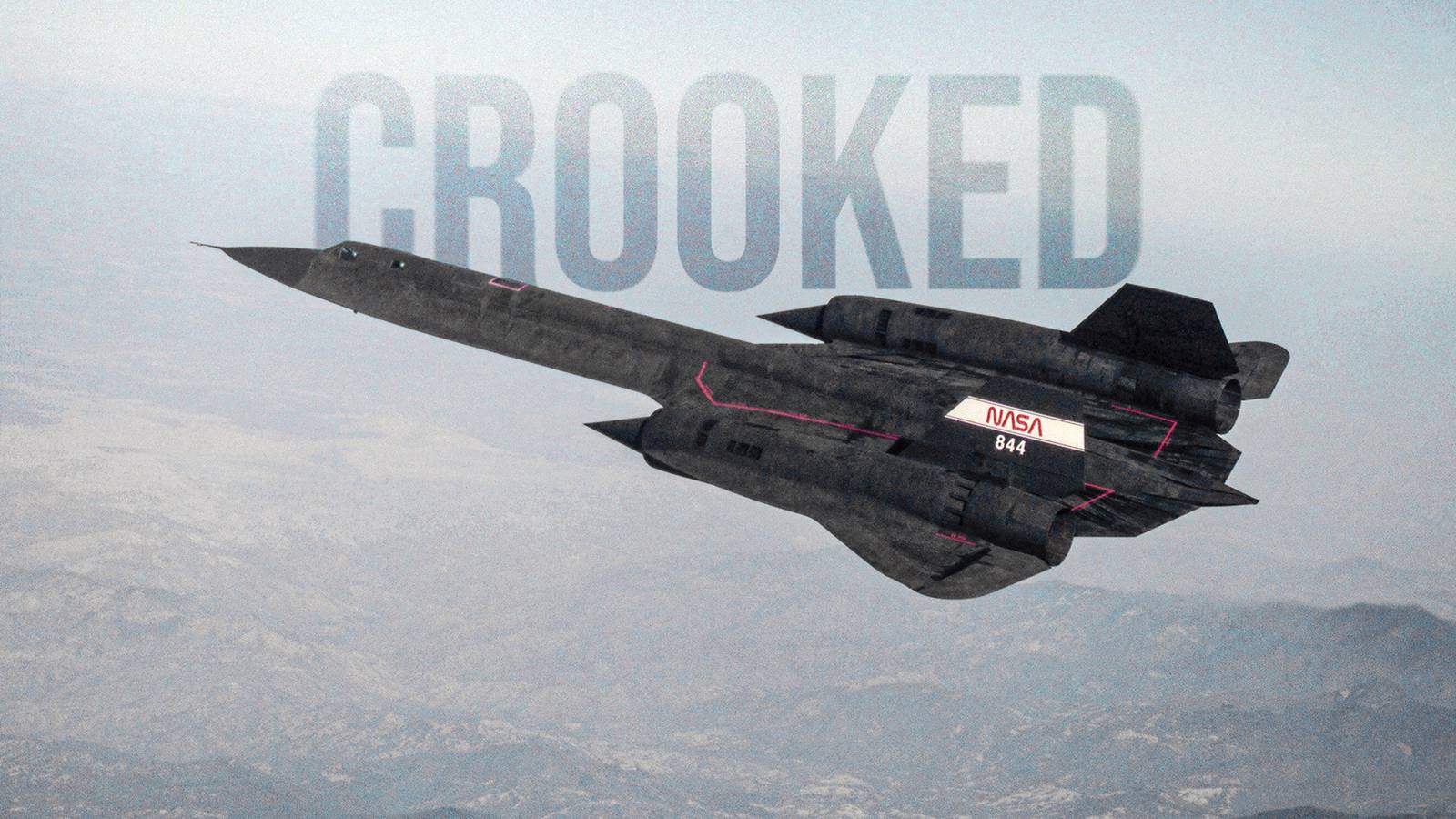
Published Aug 30, 2026, 3:00 PM EDT Daniel comes to Simple Flying with a business focused approach to the aviation world. Daniel enjoys analyzing strategy and how companies move against each other to gain a step ahead in the skies. Besides strategy, Daniel also has a passion for aircraft design and the history of aviation. Based in New York The Lockheed SR-71 Blackbird is one of the most famous aircraft in all of history. It's one of the few aircraft to move beyond the industry and become a cultural icon, and it remains the fastest air-breathing manned aircraft ever built. Although the aircraft first flew over 60 years ago, it represents the pinnacle of aerospace engineering for many people, and no other aircraft fully matches its capabilities. What fewer people know about is the breakdown of SR-71 variants and aircraft related to the SR-71. The design traces its roots to the earlier Lockheed A-12, which was similar to the SR-71 and used by the CIA, along with the YF-12 prototype designed as an interceptor and the M-21 variant equipped with a drone. Then there was the SR-71, developed for the US Air Force, which included the primary SR-71A and the SR-71B trainer. Then, you have the SR-71C, which was the most unusual SR-71 variant, and of which only one was ever made. The Lockheed SR-71C Credit: Hill Aerospace Museum In January 1968, a Lockheed SR-71B trainer aircraft was lost after performing an emergency landing. Both pilots ejected safely, but the plane, 61-7957, was destroyed in the accident. Lockheed built only two SR-71Bs, which meant the USAF had only one trainer aircraft for pilots. Production of the SR-71 was set to end that same year, and Lockheed was ordered to destroy the tooling for the SR-71, A-12, and YF-12 the month after the crash. The USAF needed another trainer, but couldn't ask Lockheed to build another example. Instead, the two parties looked through their inventory bin. They found the remains of 60-6934, a Lockheed YF-12A interceptor prototype that was damaged beyond repair after a landing accident in 1966 at Edwards Air Force Base. The aircraft, also the first YF-12, never flew again, but its parts were usable. As such, the aircraft's rear fuselage was mated to an SR-71 static test unit used as an engineering mockup to create the 32nd SR-71: 61-7981, the world's only SR-71C. This 'Frankenstein' aircraft took its first flight in 1969, and it was the final SR-71. Like the SR-71B it replaced, the SR-71C served as a trainer until its retirement in 1976. From the outside, you'd be hard-pressed to find any visible differences from the SR-71B, although the SR-71C had five fuel tanks rather than the six found on the SR-71B. However, conjoining an engineering mockup of an SR-71 with the rear of a crashed YF-12A created problems. Flying The Crooked SR-71C Nicknamed 'The Bastard', the SR-71C suffered severe technical issues and became the most problematic aircraft in the Blackbird fleet. The plane took significantly longer to pass acceptance testing than usual, in large part because of problems with the engine inlets. The aircraft had a habit of 'unstarting' in inflight, when the supersonic shockwave that usually forms at the engine cowl breaks down violently, causing the engine to essentially spit the shockwave out of the inlet throat. Pilots kept reporting that, according to the aircraft's instruments, the SR-71C would consistently yaw four degrees to the left. As some have said, the aircraft flew 'crooked'. To determine whether this was actually happening, engineers installed a 'yaw string' made out of Nomex in front of the cockpit. During flight testing, pilots observed that, when the aircraft was flying straight and level, the yaw string was perfectly centered, despite the indications of four degrees of yaw. The inlets still wouldn't match in position, and it was found that a pitot boom was four degrees out of alignment. It was this part of the aircraft that was crooked, rather than the plane as a whole, as was initially thought. In addition, the pitot boom was feeding the same faulty data to the computers controlling the engine inlets, causing them to operate incorrectly. Once the pitot boom was realigned, the aircraft operated as normally as a Frankenstein Blackbird could, and its career was fairly unremarkable afterward, apart from how short it was. The Retirement Of The SR-71C Credit: Hill Aerospace Museum The SR-71C flew without indicating four degrees of yaw after its initial issues were sorted, even though it essentially consisted of an engineering mock-up welded to the rear section of a crashed YF-12. However, 61-7981 was removed from service in 1976, about seven years after taking its first flight with only 556.4 hours logged. Although the plane no longer 'flew crooked', it still suffered from maintenance issues, and it was notoriously trickier to fly than the other SR-71s because of how it was constructed. The SR-71C was built during what was more or less the height of the SR-71 program, when the USAF needed two aircraft to train pilots for SR-71 operations. Just a few years later, however, the USAF had more or less all the pilots it needed for the type, and by 1976, SR-71 operations had already peaked. By this point, 11 SR-71s had been lost in accidents, further reducing the scale of Blackbird operations (six of which occurred after the January 1968 crash of the second SR-71B that the SR-71C replaced). Year Number Of SR-71 Accidents 1966 1 1967 3 1968 2 1969 2 1970 2 1972 1 1989 1 At this point, the United States Air Force (USAF) needed only one trainer, so it kept the aircraft designed for that role while retiring the Frankenstein SR-71C. 61-7981 was moved into long-term storage at Lockheed's plant in Palmdale, California, before Utah senator Orrin G. Hatch advocated for the plane to be sent to the Hill Aerospace Museum. The aircraft was later disassembled, and the pieces were transported to the museum, where they were reassembled. The aircraft has been on display at the Hill Aerospace Museum since 1991. The End Of The SR-71 Blackbird Credit: Shutterstock The SR-71C was retired after a fairly short service life, while the SR-71 as a whole remained in service until the 1980s. Calls to retire the aircraft began, and the USAF initially removed the Blackbird from service in 1989. Several reasons were cited for the aircraft's retirement, but the biggest sticking point was that this small fleet of aircraft was simply too expensive and specialized to use effectively. By this point, the SR-71s were over 20 years old, based on an even older design. These aircraft were immensely complex, and each flight cost tens of thousands per hour. They required specialized fuel and dedicated aerial refuelers, while maintenance and repairs came with an immense bill. What's more, while no SR-71 was ever shot down, a total of 12 were lost in accidents. The aircraft pushed the boundaries of what was possible, but by the end of their lives, they became pricey relics of the 1960s. The SR-71s were reactivated in the 1990s because no other aircraft could perform surveillance and reconnaissance missions as well as the Blackbird. However, after a brief revival, the USAF retired the SR-71s again in 1998, with NASA operating the final airworthy Blackbirds until 1999. Although no single aircraft could do everything the SR-71 could, the aircraft's role became unnecessary as the world moved on to other surveillance technologies like spy satellites and stealth aircraft designs. What Made The Blackbird So Special Credit: Shutterstock The SR-71 followed the Lockheed U-2 Dragon Lady, a spy plane designed to overfly the Soviet Union and remain invulnerable by flying higher than Soviet air defenses could reach. However, the plane was slow, and the USSR had, in fact, detected U-2 overflights, eventually shooting down a Dragon Lady in 1960. The Pentagon had already been looking at a replacement for the U-2 before this turn of events, and the selected aircraft would not only fly higher than the U-2, but faster as well. The A-12 was the original variant developed, intended for the CIA, while the SR-71 Blackbird was a later derivative developed for the USAF. The SR-71 could cruise above Mach 3.2 for long periods while flying above 85,000 feet, thanks to innovations like a hybrid engine design that blended elements of turbojets and ramjets. 92% of the aircraft was built out of titanium, while the aircraft's shape and distinctive black paint reduced its radar signature. Aircraft Variant Number Built Lockheed A-12 18 A-12 12 A-12 Trainer 1 YF-12A 3 M-21 2 Lockheed SR-71 Blackbird 32 SR-71A 29 SR-71B 2 SR-71C 1 Enemy radar detected the aircraft, but opposing interceptors and surface-to-air missiles couldn't catch up to the Blackbird. The plane flew too high and too fast for any enemy to shoot down. Eventually, technology caught up, and the planes became prohibitively expensive to operate; modern surveillance technology has moved away from such an aircraft. However, it still stands today as a benchmark in aircraft engineering, and it remains one of the most brutally invulnerable aircraft ever to take to the skies.
How Lockheed Turned A Wrecked YF-12 And A Test Fuselage Into The Only SR-71C
Full Article
Original Source
Read the full article at Simpleflying →KhanList aggregates and links to publicly available news content. We do not host full articles from third-party sources. Always verify important information with original sources.