
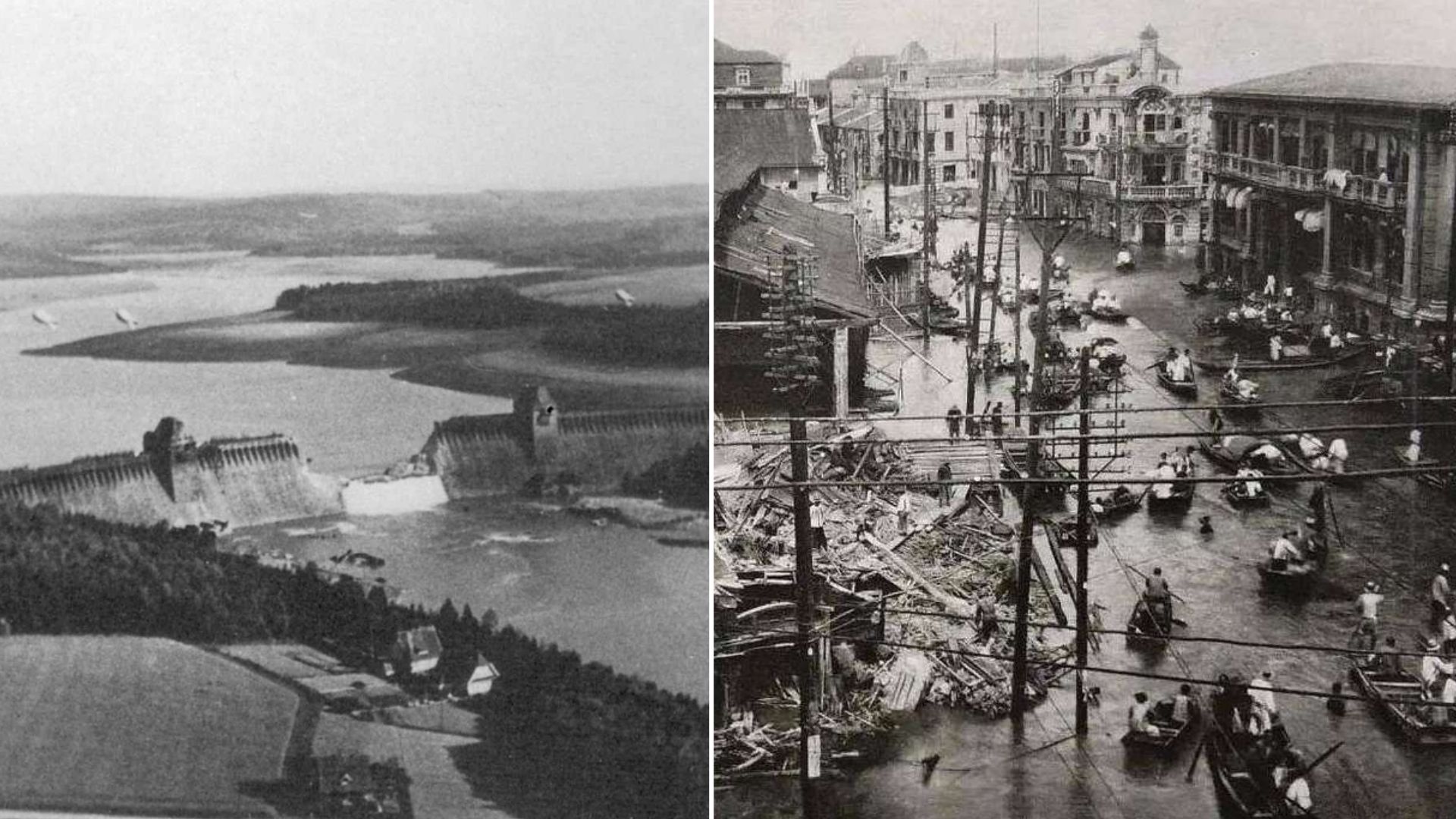
Floods have repeatedly reshaped cities, destroyed communities, and caused some of the largest death tolls ever recorded from natural disasters. Exact rankings are difficult to establish because historical records are incomplete, and estimates often include deaths from famine and disease that followed the flooding. For this list, we include major floods and related disasters, including storm-surge flooding and dam failures from recorded history. Death tolls are presented as estimates rather than exact figures. 1. 1931 China floods – up to 4 million deaths The 1931 floods across central China are widely regarded as the deadliest flood disaster on record. The Yangtze, Yellow, and Huai River systems all experienced severe flooding after months of extreme rainfall, snowmelt, and multiple storms. Estimates of the death toll range from roughly 1 million to 4 million, with later deaths attributed to famine and disease as well as drowning. The flooding affected tens of millions of people and inundated an area larger than England. 2. 1887 Yellow River flood – up to 2 million deaths In September 1887, the Yellow River breached its dikes in Henan, sending water across the densely populated North China Plain. Estimates put the death toll between 900,000 and 2 million, although the exact figure remains uncertain. The disaster was made worse by the river’s enormous sediment load, which raises its bed and makes catastrophic breaches possible. Researchers at Caltech identify the 1887 event as one of history’s deadliest floods. 3. 1938 Yellow River flood – up to 900,000 deaths The 1938 Yellow River flood was unusual because it was deliberately created during the Second Sino-Japanese War. Chinese Nationalist forces breached the river’s dikes near Huayuankou to slow advancing Japanese troops. The resulting flood spread across roughly 54,000 square kilometers (20,800 square miles), affecting Henan, Anhui, and Jiangsu. Estimates suggest between 500,000 and 900,000 people died, making it one of history’s deadliest human-caused flood disasters. 4. 1970 Bhola cyclone and storm surge – up to 500,000 deaths The Bhola cyclone struck what was then East Pakistan on November 12–13, 1970, causing a devastating storm surge that swept across the low-lying Ganges-Brahmaputra delta. The World Meteorological Organization (WMO) estimates that 300,000 to 500,000 people died, most from the surge flooding coastal islands and tidal flats. WMO considers Bhola the world’s deadliest known tropical cyclone. Its enormous death toll became a catalyst for major improvements in disaster preparedness and cyclone warning systems in the country. 5. 1642 Kaifeng flood -about 300,000 deaths The 1642 Yellow River flood destroyed Kaifeng, then one of China’s major cities. Historical records indicate that dikes were deliberately breached during a military conflict, allowing the swollen Yellow River to inundate the city. A study published in Scientific Reports found archaeological evidence supporting historical accounts that around 300,000 people were killed. The flood buried parts of Kaifeng under meters of sediment, effectively destroying the city. 6. 1975 Banqiao Dam disaster – up to 171,000 deaths In August 1975, extreme rainfall associated with Typhoon Nina overwhelmed the Banqiao Reservoir Dam in China’s Henan Province. The dam failed, triggering a catastrophic flood and contributing to failures at other dams downstream. The World Bank says the disaster killed tens of thousands of people, with estimates reaching 171,000 deaths when subsequent impacts are included. The event remains one of history’s most devastating dam-related disasters. 7. 1935 Yangtze River flood – about 142,000 deaths The 1935 Yangtze flood was one of the most destructive floods during a decade of major flooding across China. According to figures compiled by the Yangtze River Water Resources Commission and published by the Chinese government, approximately 142,000 people died, while more than 10 million were affected. The flood inundated more than 20 million mu (5,148 square miles ) of land across several provinces. It followed the even deadlier 1931 Yangtze disaster by just four years. Why the numbers can never tell the whole story Putting a precise number on historical flood deaths is difficult. Records from older disasters are often incomplete, and some estimates include people who died from famine, disease and displacement in the months that followed, while others count only deaths directly caused by the flood. That makes the ranking less definitive than it may appear. But the uncertainty itself is revealing. A flood does not necessarily stop being deadly when the water recedes. The destruction of homes, crops, roads, and food supplies can turn a few days of flooding into a longer humanitarian disaster. In that sense, these figures are best viewed not as perfectly precise scores, but as reminders of how quickly forces of nature can overwhelm entire societies.Get the latest in engineering, tech, space & science - delivered daily to your inbox.Kaif Shaikh is a journalist and writer passionate about turning complex information into clear, impactful stories. His writing covers technology, sustainability, geopolitics, and occasionally fiction. A graduate in Journalism and Mass Communication, his work has appeared in the Times of India and beyond. After a near-fatal experience, Kaif began seeing both stories and silences differently. Outside work, he juggles far too many projects and passions, but always makes time to read, reflect, and hold onto the thread of wonder.
The world’s 7 deadliest floods and the devastation they caused
Full Article
Original Source
Read the full article at Interestingengineering →KhanList aggregates and links to publicly available news content. We do not host full articles from third-party sources. Always verify important information with original sources.