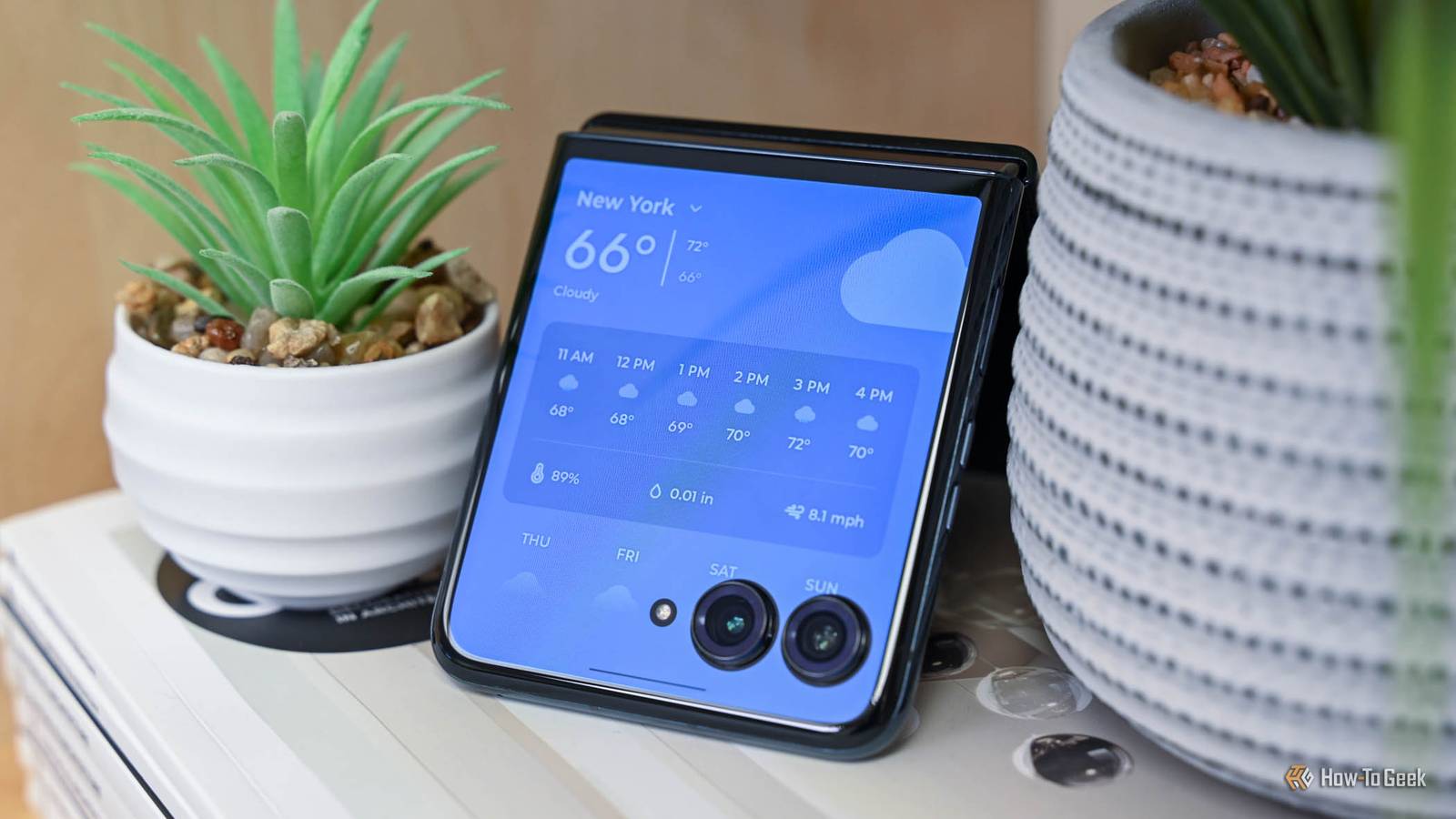
Published Jul 25, 2026, 12:15 PM EDT Ismar is a Senior Author at How-To Geek. He previously worked as a writer, editor, and general manager at a content agency before joining the team in 2023. He began his writing career in 2021 after completing a BA in English Language and Literature. Beyond How-To Geek, Ismar has contributed to Red Stag Fulfillment and Authority Hacker. He has also worked on various SEO projects to help clients improve their search visibility. Ismar has been around Windows PCs since the age of three, so friends and family naturally chose him as the resident tech support. His projects often involve tinkering, such as disassembling mechanical keyboards and gaming mice to mod his beloved gear. He also enjoys pushing hardware to the max through overclocking while staying on a reasonable budget. An avid gamer, Ismar has logged thousands of hours across various genres, including first-person shooters, RPGs, racing games, and roguelites. When he is not at his desk, he is probably exploring other people’s phones to discover their quirks and features or experimenting with the latest AI tools. In his free time, Ismar enjoys spending time with his wife, working out at the gym, playing guitar and bass, cooking gourmet meals, and traveling. Above all else, he’s a proud cat owner. Motorola is the oldest phone brand that's managed to stick around to this day, so it's impossible to write off its success as mere luck. As our telecommunications needs have evolved over the years, so has the brand that's built these phones. Today, we'll just focus on modern smartphones, an area in which Motorola has had more than its fair share of hits. Many of these phones were revolutionary when they were released, while others simply offered a compelling device for the money. 6 Motorola Droid Razr Maxx (2012) The battery life was out of this world Motorola revived the Razr name several times throughout history. When the Motorola Droid Razr was released in 2011, it was the thinnest phone in the world, measuring only 7.1mm throughout most of its body. However, the uniquely slim profile was accompanied by a tall camera bump at the top, and my first immediate thought was, "Why couldn't they just fill the empty space with battery?" Motorola must've read my mind because that's exactly what happened with the release of the Droid Razr Maxx. While the Droid Razr had a fairly typical battery size of 1780mAh at the time, it was completely dwarfed by the chunky 3300mAh unit in the Droid Razr Maxx—a figure that would take mainstream flagships several years of battery technology improvements to catch up to. Given how little power phones demanded back then, the Droid Razr Maxx was easily a two-day phone for most people who bought one. 5 Motorola Razr+ (2023) The flip phone formula, finally perfected Credit: Motorola Many phones on this list were first-generation devices because they did something revolutionary at the time, but if you remember the early foldables, it was sort of the opposite. Nobody bought into those early folding phones, and as iconic as the 2020 revival of the Motorola Razr was, it just wasn't that good of a phone. However, by 2023, Motorola had managed to iron out all of the more egregious kinks, which leads us to the Razr+ 2023. The massive 3.6-inch external display was finally large enough to be genuinely useful rather than a gimmick, completely changing the user experience. There's no shortage of things you could do without having to flip the phone open now: use the camera viewfinder for high-res selfies, respond to messages, read emails, check the weather, use navigation, and so much more. And when you needed the bigger screen, the 6.9-inch foldable screen was better than ever. The nail on the head was the phone's fairly reasonable $999.99 price point at launch. The specs weren't as good as what you'd find in a traditional device, but given how big of a premium folding phones typically charge, this was fairly reasonable. Motorola Razr+ (2026) Brand Motorola SoC Qualcomm Snapdragon 8s Gen 3 The Razr+ 2026 builds on Motorola's successful foldable formula with a large 4.0-inch external display, a 6.9-inch 165Hz internal display, and a 4500mAh battery. With improved durability and smarter AI features, it's another impressive example of Motorola refining the modern flip phone. Display 6.9-inch 165Hz Extreme AMOLED internal display + 4.0-inch external display RAM 12GB Storage 256GB Battery 4500mAh 4 Motorola Moto G (1st Generation) (2013) The cheap phone that didn't suck Credit: Motorola When the first-generation Moto G launched in 2013, it completely transformed the budget segment. Priced at $179 for the 8GB model and $199 for the 16GB variant, with frequent and heavy sales, it was one of the cheapest but still decent unlocked Android phones you could buy at the time, costing a fraction of the price of a flagship. Its specs might not be impressive today, but when it launched, most other cheap Android phones were terribly laggy and poorly built. The Moto G had a fairly capable quad-core CPU, a large-for-the-time 4.5-inch 720p HD display protected by Corning Gorilla Glass 3, a selfie camera, solid battery life, and a bloat-free software experience. If you or a relative didn't want to spend much on buying a brand-new Android phone, this was the one to get. Put simply, it struck the perfect balance of features that matter most to the average person: a good screen, reasonable performance, and clean software in an era of heavily skinned devices that would force even more powerful models to grind to a halt. 3 Motorola Droid Turbo (2014) The Droid that refused to compromise Credit: Ismar Hrnjicevic / How-To Geek The Motorola Droid Turbo was a Verizon-exclusive flagship Motorola phone beloved by enthusiasts. It's certainly one of my favorite phones I've ever owned. The Droid Turbo was released in October 2014, a month after the 2nd-generation flagship Moto X that everybody was talking about. But just from looking at the specs on paper, the Droid Turbo outclassed the 2nd-gen Moto X by a mile. It had a more powerful processor, 3GB of RAM instead of just 2GB, a massive 3900mAh battery with Qi wireless charging, and, best of all, a 1440p display when almost nobody else was doing it. With a screen size of only 5.2 inches, it gave the phone an impressive pixel density of 565ppi that puts my OnePlus 15's 450ppi to shame. In many ways, the Droid Turbo was one of the pioneers of exceptional battery life and high-resolution displays. Specs aside, the Droid Turbo was also quite a quirky phone. The black variant had a unique ballistic nylon back that gave the phone a rugged feel, and the SIM card tray was hidden behind the volume buttons. It also stubbornly kept the capacitive buttons at the bottom while many other brands, except for Samsung, were moving toward on-screen ones. It was successful enough that Motorola followed it up with the Droid Turbo 2, which brought even more unusual back materials like leather and soft-touch plastics. 2 Motorola Droid (2009) The Droid that saved Android Credit: Verizon/ Motorola The Motorola Droid (aka the Motorola Milestone) was one of the most historically important Android phones to ever hit the market. It was released in 2009, at the height of the early iPhone and BlackBerry hype, and it might just have saved Android. Since the Droid had a sliding physical keyboard, as well as a fairly large and high-resolution 3.7-inch display, it was effectively the perfect fusion of the two. You could get your fancy new smartphone form factor while still getting the benefits of a keyboard for those lengthy email-writing sessions and prolonged web surfing. It's also worth noting that the Droid was the first Android phone to ship with Android 2.0, which featured a long list of major improvements to the OS. Another big feature upgrade was the inclusion of Google Maps Navigation, which you could use for free on your phone instead of spending a large chunk of change on a dedicated GPS navigation unit. Fortunately for the future of Android, the Droid was an instant success that sold millions of units—and it achieved this by not copying Apple's formula, but rather, reinventing what a smartphone could be. 1 Moto X (1st Generation) (2013) Google's first mark on Motorola Credit: GSMArena The 1st-generation Moto X was a truly special phone that came out in 2013. It was the first Motorola phone to be fully developed under Google's new ownership, and it showed in the completely revamped ergonomic design that felt great in the hand. There was a unique customization program that happened before you even bought the phone in the form of Moto Maker, which allowed you to create a custom Moto X by picking the back, front, and accent colors, as well as a signature to complete your custom design. The specs were fairly respectable for the era, but what made the Moto X really shine was the software. Apart from Google's own Nexus lineup, the Moto X was one of the few Android phones that came with mostly stock Android software—except it was even better in some ways. A highly popular example was Active Display, which was essentially an early interpretation of what would later become the Always-On Display that virtually all Android phones now have. Yet another feature that only some phones like the Moto X had was the "Google Now" feature that actively listened for the "OK Google" activation phrase, something we all take for granted today. In simple terms, the Moto X acted as a playground for many features that Google would later make standard across Android—and if you owned one of these phones back then, you got early access to all of it. Motorola still knows how to make a great phone As we've seen today, Motorola has had plenty of hits throughout its history, and the good news is that it's still churning out incredible phones to this day. The various Razr flip phones, as well as the Fold, have some of the best software adaptations for foldable designs that make the most of their unique form factors, while phones like the Motorola Edge and Moto G continue to offer incredible value for money in their respective price segments.
The 6 best Motorola smartphones of all time, ranked
Full Article
Original Source
Read the full article at Howtogeek →KhanList aggregates and links to publicly available news content. We do not host full articles from third-party sources. Always verify important information with original sources.