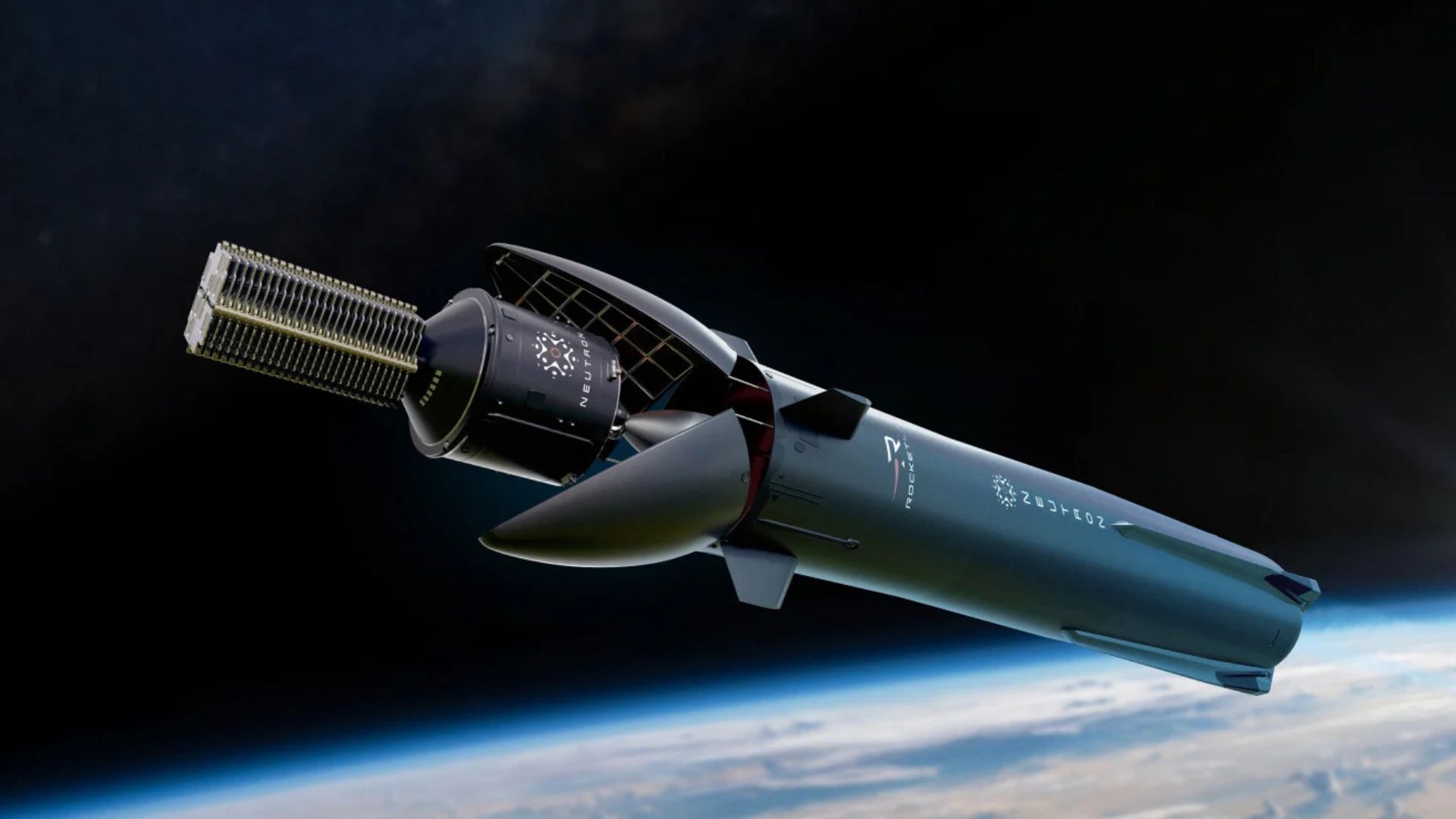
California-based Rocket Lab announced that it has been awarded a new contract by the United States Space Force for a space-based flatellite system to detect and track airborne threats in real time. The company, which deals in launch services and space systems, has been awarded a $397 million contract by the US agency under the Space-Based Airborne Moving Target Indicator (SB-AMTI) program. The initiative is led by the Portfolio Acquisition Executive (PAE) for Space-Based Sensing and Targeting (SBST). The US Space Force is the sixth branch of the U.S. Armed Forces and the most recent one, established in 2019. The agency’s goal is to protect the US and its allies’ interests in space. Flatellites – next-gen flat satellites from Rocket Lab The contract awarded to Rocket Lab includes developing, launching, and operating multiple flatellites in space. Flatellites are a new-generation flat satellite design that is optimized to ensure efficiency in large constellations. The flatellites launched by the firm will have space-based sensors and low-latency, high-bandwidth communication links. It plans to launch the flatellites on the upcoming Neutron rocket. The contract also includes an option for increasing the number of flatellites deployed for the use of Space Force. The contract includes launch, spacecraft, and mission operations – which Rocket Lab claims is recognition of its vertical integration model that delivers end-to-end space capabilities. “Our vertically integrated, constellation-class satellite capabilities, mission operations, and launch services uniquely position us to deliver innovative solutions that meet the urgent needs of the Space Force,” said Peter Beck, Rocket Lab founder and CEO. He went on to add that the company is proud to “contribute to the deployment of a resilient space-based sensing layer that will enhance the Joint Force’s ability to operate in contested airspace.” More about the Neutron rocket and past accomplishments Earlier this year, Rocket Lab completed a launch and on-orbit satellite tracking mission for the Space Force’s VICTUS HAZE mission in record time. The mission required the company to design, build, and test a Pioneer spacecraft. The spacecraft was then launched on the Electron rocket within 24 hours’ notice and commissioned within 72 hours. The Pioneer spacecraft then performed a series of complex orbital maneuvers to pursue, monitor, approach, and photograph a target satellite in orbit. During the mission, the company kept a track of the target and demonstrated precision navigation and control that is essential for space domain awareness operations. Meanwhile, Neutron – which the company intends to use for fulfillment of the new contract – is a reusable medium-lift rocket tailored for deploying satellite constellations, and enabling planetary exploration of the Moon, Mars, and beyond. The Neutron rocket will have a height of 141 feet (43 meters) and a 22-foot diameter. The rocket will have a lift-off mass of 1,058,218 pounds (480,000 kilograms) and can carry a 28,660-pound (13,000 kg) payload to low-Earth orbit. The rocket will draw power from the company’s Archimedes engine– which is a 3D-printed liquid oxygen and methane rocket engine. Archimedes is capable of delivering 165,000 pounds of thrust (733 kilonewtons) per engine. Recommended ArticlesGet the latest in engineering, tech, space & science - delivered daily to your inbox.Abhishek brings a wealth of experience in covering diverse stories across different beats. Having contributed to renowned wire agencies and Indian media outlets like ANI and NDTV, he is keenly interested in Tech, Business and Defense coverage.
Next-gen flatellites from Rocket Lab to help US Space Force track airborne threats
Full Article
Original Source
Read the full article at Interestingengineering →KhanList aggregates and links to publicly available news content. We do not host full articles from third-party sources. Always verify important information with original sources.