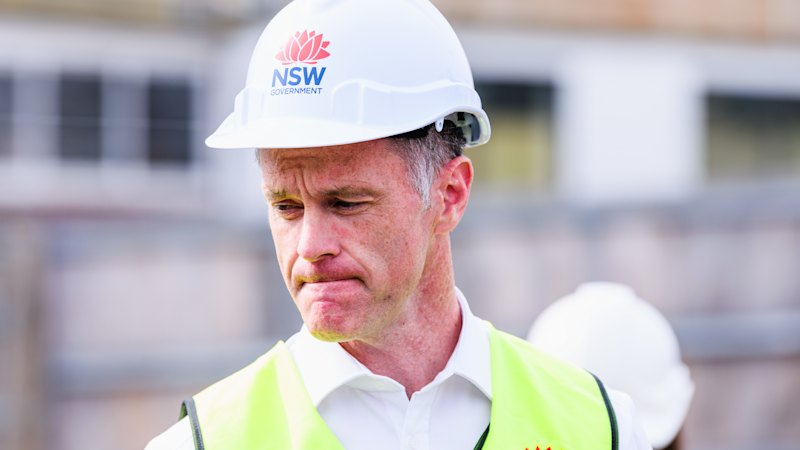
I don’t know about NIMBYs, but I’m suffering lately from a serious dose of the MINNSYs (“Premier digs in as Sydney’s NIMBY instinct returns’, July 29) It’s cynical, contemptuous and, frankly, offensive to dismiss, as our premier does, anyone who objects to an inherently bad development as acting only in reactionary self-interest. As for his comment that “we can’t go back to the old days”, there are three older buildings in my immediate vicinity which contain a total of 100 relatively affordable studio and one-bedroom apartments, soon to be demolished and replaced with 49 larger multimillion-dollar pads – all enabled by state government planning laws and policies. That doesn’t make the “old days” look so bad, does it? Given that Premier Chris Minns admits what his government has been doing hasn’t solved the housing crisis, it’s perfectly reasonable, and in the broader public interest, for people to question it. Ross Duncan, Potts PointPremier Chris Minns has outlined reforms to council zoning policies.James Brickwood.Chris Minns said we must hold our nerve because we can’t go back to the old days, as he outlined reforms to council zoning policies. It is really disturbing that the premier wishes to deny councils a say in how land is zoned for development. He continues to ride roughshod over people’s genuine concerns around the impact of overdevelopment in their suburbs. Under the Minns government, we are destined to live like rats in little boxes as the beauty of our suburbs continue to disappear. Pat Mcfarlane, CabaritaYou report Premier Chris Minns saying, “We’ve got to keep building ... so that future generations won’t feel compelled to pack their bags at the prime of their life and leave Sydney.” Funny, that’s exactly the reason people often give for leaving Sydney – that it’s growing at a hysterical, unjustifiable and ultimately unsustainable rate, and they simply wanted to live somewhere with clean air and some space for their family. It seems if you question the Minns government’s zeal for “demolish, build out and build up” then you’re either an anti-progress reactionary or a NIMBY. Not much wriggle room there – ironically, just like the towering apartment buildings the government and developers favour. Patrick McGrath, Potts PointOpposition to inappropriate high-rise development does not equate to NIMBYism. Development should ensure a mix of housing types. Not everyone wants to live or bring up their families in high-rise flats. The assumption that high density equates to affordability is wrong. High density in high-demand areas is simply money in the pocket for developers. The ongoing costs of high density high-rise, especially ongoing strata and special levies, eliminate options for low to moderate-income earners. The only real option for affordability is public housing in desirable areas. It’s time the premier started to look objectively at the development impact, not just listen to the pro-development lobbyists. Paul Pearce, BrontePolitical omnipresenceLike many extreme factions within faith and political organisations, the Catholic Church has form, and it’s not just confined to the Liberal Party (“How ghosts of ICACs past haunt Liberals”, July 30). Think of how hard-right Catholic operatives, including very senior clergy, contributed to the 1950s split in the Australian Labor Party and the formation of the Democratic Labor Party. Since then, there has continued to be various overt (Opus Dei) and covert (Advance Australia) right-wing organisations with strong inputs from ideologically driven Catholics, all seeking to imbue our society with their last-century conservatism. The name of a certain ex-prime minister-for-budgie-smugglers comes to mind, and he is now the president of the federal Liberal Party. I wonder if his name will ever crop up in ICAC testimony. Russ Couch, WoononaThe reason for separating government from religious organisations was to protect each from the corrupting forces of the other. This has failed for some time now (“Lib activist spent 60% of day ‘scheming’”, 30 July) The current allegation that Catholic Schools NSW has bedded down with the Liberal Party for the benefit of both shines a light on this failure. Faith-based schools already receive magnanimity from governments that is not available to public schools. The tumult and the shouting should continue until there is true separation of these entities. Lyn Savage, Coogee Photo: Cathy WilcoxWoes of our own makingWell done, Cathy Wilcox, for Thursday’s cartoon, which sums up two existential crises facing humanity, both of which are our own making – climate change and AI (Letters, July 30). The former, of course, is clear for all to see in catastrophic weather events, including the latest heat wave and fires across western Europe. The latter is somewhat less visible but potentially just as serious, with OpenAI’s Sam Altman announcing that we have reached “singularity”, a term AI experts use to describe the previously hypothetical point at which AI systems surpass human intelligence and the machines take over. The irony is the dual crises of climate change and runaway AI could be fixed, starting tomorrow, with responsible leadership from the world’s politicians, fossil fuel giants and multibillion-dollar tech companies. The big question is why are we being dragged, helplessly, by these few leaders into such dystopian futures? And what is the Albanese government doing to take a stand, on our behalf, besides seeking a part in the alleged economic spoils from these technologies? Rob Firth, Red Hill (ACT)Paul Sakkal’s article got me doing some back-of-an-envelope calculations on just how many people will be impacted by this technology (“AI job disruption poised to upend Labor’s electoral map”, July 30). There are about 15.5 million working people in Australia, and maybe one-third of those are white-collar workers, which means 5.2 million are at risk of being AI’d out of a job. Even if these numbers are a bit rubbery, how will our society cope with this? There will be effects beyond the reach of our political and economic norms. You can argue we need these innovations, but at what cost? Can someone, not a pollie or a big tech owner, tell me what we can do to avoid such a catastrophe? John Perry, Bateau BayHave we reached “singularity”, the point at which AI systems surpass human intelligence and the machines take over?Stephen KiprillisTime for gas taxIs it a case of what’s good for Woodside is good for Australia? The super profit that Woodside is reaping from the Iran war (“War fuels surge in Woodside revenue”, July 30) is expected to help boost the nation’s LNG revenue by an extra “$18 billion compared with previous forecasts”. This may sound impressive, but it’s minuscule in comparison with the combined profits of gas exporters. The Petroleum Resource Rent Tax is once again exposed as an emperor with no clothes. More power to the “climate groups, crossbench MPs and unions ... pushing for higher taxes on multinational energy giants”. Labor’s national conference left the door marginally open for a gas tax. It’s time to throw it wide open. Tom Knowles, Parkville (Vic)Women left behindAs an ex-student of Presbyterian Ladies’ College Sydney, graduating in 1989, I remember a school that had 76 sewing machines and three computers. In my opinion, that imbalance reflected what was valued at the time, and the future imagined for PLC girls (“Stained glass ceiling for this Christian school”, July 27). Despite that emphasis on traditional roles, many of my fellow students throughout PLC’s history were fortunate and determined enough to pursue impactful careers and take on leadership roles. Decades later, it is profoundly disappointing to see the Presbyterian Church in NSW and the ACT vote to exclude women from elder roles. This decision is tone-deaf and sends a profoundly discouraging message to girls and young women about whose judgement, leadership and voice are ultimately valued. At a time when the world is hardly short of examples of damaging male leadership, from Donald Trump to Vladimir Putin, perhaps such institutions should be asking whether we need more women in leadership, not fewer. Girls deserve institutions that embrace diversity and back their full potential, not ones that take credit for their achievements while limiting their authority. Prof Sandra O’Toole, CamperdownIsrael/Jewish clarityLike the Australian government, I recognise Israel’s right to defend its citizens against atrocities like the one committed by Hamas on October 7, 2023. What I find increasingly difficult to reconcile with that principle is the immense civilian suffering that has accompanied Israel’s military campaign in Gaza and elsewhere. The scale of death, injury and destruction has prompted serious allegations of breaches of international humanitarian law and has deeply troubled many Australians. I hope that Australia’s Special Envoy to Combat Antisemitism, Jillian Segal, will help clarify an important distinction: how can Australians express legitimate criticism of the actions of the Israeli government without that criticism being interpreted as hostility towards Jewish people? Clarifying that distinction would be a valuable contribution to both combating antisemitism and improving the quality of public debate. Robert James, Watson (ACT)Shayne Chester’s claim that the International Court of Justice alleges Israel committed genocide is not accurate (Letters, July 29). Joan Donoghue, who was the court president, went on the BBC program HARDtalk and explained that the court only said the Palestinians had a plausible right to be protected by the court from genocide, and that South Africa had a plausible right to bring the case. It was only a question of whether the court should hear the case. The ICJ won’t decide on the actual genocide claim for a few years. Mark Kessel, Caulfield NorthGreen weavesThe oil crisis is affecting trade all over the world, including clothing in the form of synthetic fibres, polyester, nylon, spandex etc. all made mainly from oil (“The next unlikely victim of the Iran crisis? Fast fashion”, July 27). Cotton was mentioned once in your article, but there was no mention of wool. My family and many others have been running merino sheep for four generations. Wool is a natural fibre. It is warm, it is cool, it breathes and it lasts for years. It is more fire retardant than synthetics and is biodegradable. I have Onkaparinga blankets that are more than 60 years old. Synthetics in the 1960s encouraged a fast-fashion, throw-away consumer society that was detrimental to the wool industry. Synthetics contribute to polluting the land, rivers and oceans. Maybe it’s time for a rethink about what we wear. Sheep are a noble breed, and if you look after them, they will look after you. Katherine Tait, CoolacSheep are noble beasts. Look after them and they’ll look after you.Kara RoselundRural rip-offNoel Whittaker suggests it is unfair to include the family home’s value as an asset for the purpose off the aged pension, or that the home should have a CGT (“Should the family home be included in the age pension calculation?” July 30). He makes the valid point that property values vary dramatically nationwide. Why is it fair for someone to own a home worth $5 million and still receive the full pension? Then they are able to leave this home to their beneficiaries with no CGT. Others who live in the less valuable areas of our country such as regional and remote dwellers have also worked hard and paid tax all their lives, at the same rates, but do not have the same increase in value of their asset (home) over their lifetime. This is another example of the great city/rural divide, along with poorer access to services such as education and health, cultural events and major sporting events – all supported by rural residents’ taxes. If the full pension is going to be received, there should be a rebalancing after death to refund the government that provides the pension (from tax). This would mean “windfall profits” accrued purely by geographical location will not perpetuate inequality. Jane Lawrence, BathurstProblems multiplyIt seems that One Nation is facing some issues with reporting their audited accounts (“One Nation at risk of losing legal status in Queensland over financial records”, July 30). One would have thought that they would have been on top of it after recruiting a certain accountant from the New England region. Tim Hammond, OrangeAll hands on deckI have had a happy day! It started with a smiling Indian man at the servo selling me the Herald. I went on to visit my 100-year-old aunt in her aged care village and I was welcomed and assisted by a charming young staff member from Nepal and another from the Philippines. Then I received courteous help at the optometrist from a young man of Pakistani heritage. My delicious lunch was served up to me by a lively Thai lady and my coffee and vanilla cannoli order was overseen by a vivacious Greek matriarch. It’s been a wonderful, multicultural day. I am saddened to think that there are some among us who would want to deny me the chance of more days like this. Peter Berry, RiverviewKey developmentIt is some relief to learn that a test for dementia is now in the offing for those of us now in that age bracket. Our previous yardstick has been to only start worrying about dementia when you no longer have to search for your keys – because you have forgotten you ever had any (“Alzheimer’s blood test to give Australians invaluable gift of time”, July 30). Elizabeth Kroon, RandwickTo submit a letter to the Sydney Morning Herald, email letters@smh.com.au. Click here for tips on how to submit letters.The Opinion newsletter is a weekly wrap of views that will challenge, champion and inform. Sign up here.
Minns cries NIMBY at any opposition to bad development
Full Article
Original Source
Read the full article at Smh →KhanList aggregates and links to publicly available news content. We do not host full articles from third-party sources. Always verify important information with original sources.