
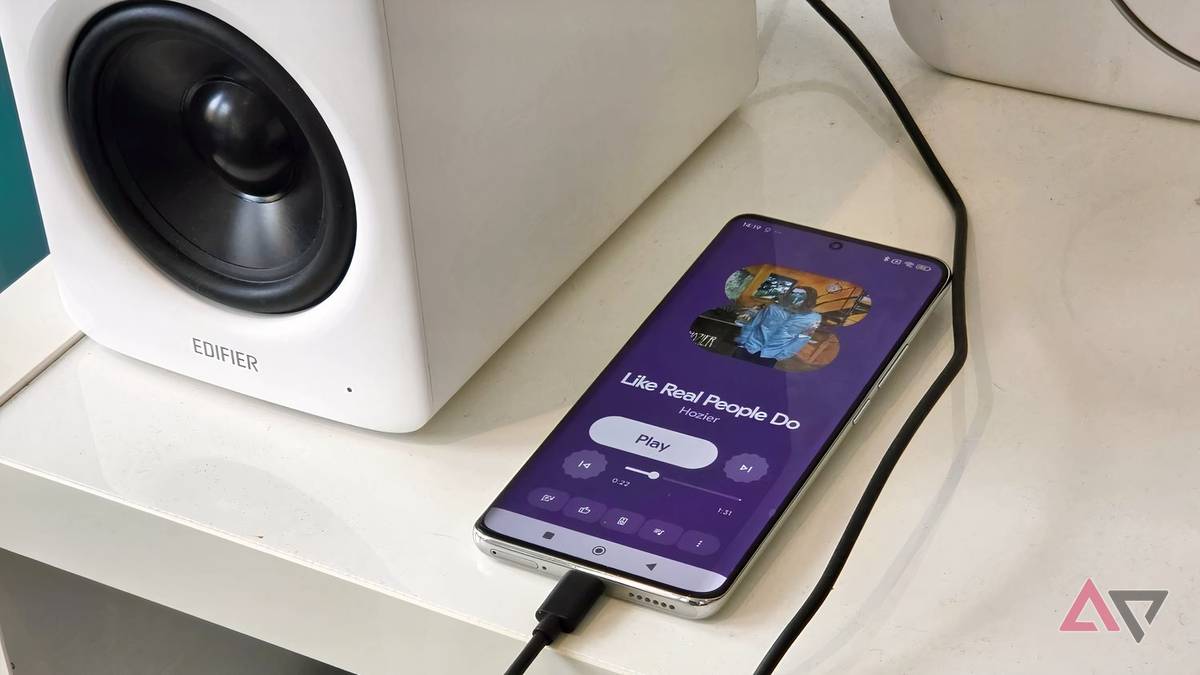
Published Sep 20, 2026, 9:30 AM EDT Tom has been covering technology since 2019, having worked as part of the phones team at TechRadar and then as an editor at What to Watch. Since 2025 he’s been a freelance contributor for many more brands including Digital Trends. BGR, TechRadar Gaming, TechAdvisor and GamesRadar. He's written about myriad topics over his career including phones and tablets, headphones and earbuds, fitness and AV, and enjoys adding more beats to his repertoire. Outside of technology he’s also written reviews and features on games, movies and sports, having worked for many years as an editor at movie & TV website WhattoWatch. He's attended tech launches, product shows, movie premieres and game launches to do so. Tom is based in London, UK, and when not covering technology he does work in the film sector, enjoys to run, cycle, climb and play tennis, and plays several instruments. I receive and test smartphones for a living, and so I always have a few old mobiles hanging around which serve no function but to gather dust. That's doubly true because, for some reason, friends and family always try to palm off old phones on me. Rather than turn my office into a landfill site for old tech, I try to repurpose mobiles. There are plenty of simple ways to give an old Android phone a second life, and I've also written about how I gave my Android tablet a new lease on life. Since I also test audio and AV kits, I wanted a device to control my living room speakers and solve a few annoying issues common to hi-fi systems. When I discovered an old Pocophone device hiding in the wrong box, I knew it was time to begin. Why I needed a phone to control my hi-fi Avoiding Bluetooth and tethering my device My living room speakers are Edifiers M90s. I can connect to them via Bluetooth, USB-C, or 3.5mm, and I don't use them only for music. I have a projector I use for movies and TVs, and pair them wirelessly to the Edifiers (nope, I don't own a TV). I have multiple devices connected to the speakers via Bluetooth, not including the projector, and my flatmate does too. Every time I want to listen to tunes with them, I have to unpick a tangled web of wireless connections. Is my phone connected to the speakers? No, what is it connected to? And what is connected to the speakers that's blocking my connection? It's a nightmare, and it's common in busy households. The potential solution is a wired connection, but if I'm using my smartphone for music this way, I have to keep it near the speakers. That is why I wanted a bespoke device for music listening that I could keep plugged in. Enter the Poco. A blank slate to use how I see fit And time to start making WAVs I wanted my hi-fi control Poco uncluttered, without unnecessary apps or installs that might slow it down, clutter its storage, or drain its battery quickly. So I reset it and kept it in Airplane mode when I didn't need to connect. That storage space is the key factor. I didn't want to rely on streamed songs in this perfect audio set-up. This Poco wasn't using Spotify, Tidal, or Qobuz. Instead, I filled its banks with my music library: several thousand WAV files, ripped from my (sadly departed) physical CD collection. Thankfully, the Poco had 512GB memory, or else I would've needed to make some hard decisions. Lost by the technicals here? WAV files are uncompressed, so they have much more data than MP3s, or the Ogg Vorbis Spotify generally uses. It even has more data than Lossless streaming. Music sounds better this way, in a way that may not be noticeable to many if you're using standard earbuds, but which is more audible when you're using bookshelf speakers like mine. Finding a way to control my tunes It's no DAP, but it'll do When my Poco was full of music, I wanted a way to control it. Like most Androids, it has a built-in media player, but I wanted something a little more bespoke. I wanted something easy to control that displayed songs with some visual flair. Around this time, I discovered an app that did this, called Rhythm. Finding this, when I was searching for something different, saved me from hunting around. I'm sure it's not the only media player app, but it does the job just fine. Rhythm has a look inspired by Material You Expressive, so if you have a stock Android phone, its design will match the rest of your device. Admittedly, my Poco doesn't, so it's a stark change, but I don't mind so much. Rhythm has quite a few cool features, including a useful widget, loads of customization, and a hearing protection mode, but they're for another place and time. What I wanted, and what I got, was an easy-to-use music playback app that offered all the functionality of Spotify with a cleaner look and worked for my music. I'm sure it's not as handy as a Digital Audio Player interface, but it's all I need. Music is no longer a problem (but these issues are) When my Android was full of music and a good way to play it back, I plugged it into my speakers... and kept it there. It was useful to delegate music playback to a separate phone without affecting how I used my cell. As it stands, I have two issues. One is battery, but buying a USB-C splitter will let me charge my phone while playing. The other will be solved by another purchase: a stand will let me hold the handset up, instead of leaving it lying on a surface. But otherwise, it's perfect. I can enjoy high-quality music without fuss, and as an added bonus, I can skip gimmicky music streaming tools like Spotify Wrapped.
I turned an old phone into a hi-fi control system; now it gets more use than my actual cell
Full Article
Original Source
Read the full article at Androidpolice →KhanList aggregates and links to publicly available news content. We do not host full articles from third-party sources. Always verify important information with original sources.