
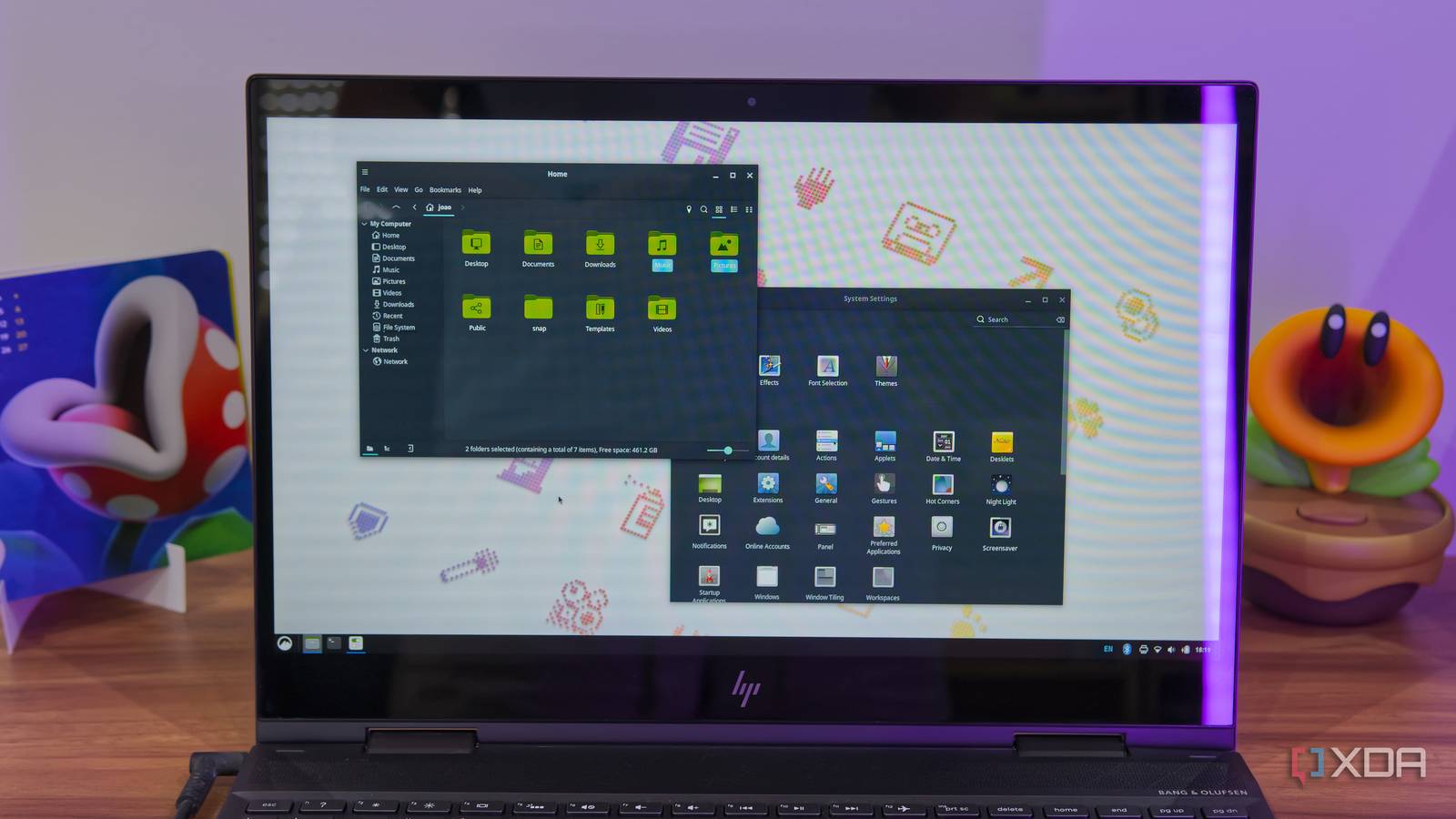
Published Sep 23, 2026, 8:00 PM EDT João has been covering the tech world for over 7 years, with a heavy focus on laptops and the Windows ecosystem. I also love all things tech and videogames, especially Nintendo, which he's always happy to talk about. Prior to joining XDA in 2021, he worked at Neowin: https://www.neowin.net/news/poster/jo%C3%A3o-carrasqueira/ Windows 11 is not the most friendly option for an old PC these days, and many (myself included) will recommend switching to Linux to extend the life of a laptop. But Linux distros aren't all the same, and while Ubuntu is a popular pick, it's not without its downsides. System requirements for Ubuntu have risen a lot over the years, and that's in big part thanks to the GNOME desktop environment it ships with. That, paired with some of the other problems I have with GNOME, pushed me to switch to another desktop to make things feel faster. But it wasn't quite the upgrade I was expecting. Ubuntu has become bloated GNOME is not exactly lightweight Ubuntu's GNOME desktop is known primarily for its ease of use, and the fact that it makes it easier for a newcomer to get used to Linux. It has other benefits, of course, with extensive customization options enabled by GNOME extensions, and a generally robust set of software tools bundled in. However, all of that has come at the cost of performance. Ubuntu now requires at least 6GB of RAM, and on my 8-year-old laptop, things do feel like they could be smoother. This is still a capable laptop with 16GB of RAM, and I'm not saying GNOME is unusable by any means, but it could use a slight performance bump. Plus, there are other aspects I don't love about GNOME that make things feel slower by nature of being more cumbersome. I don't really like the full-screen app launcher and search UI, the unified system menu makes it feel like it takes longer to change certain settings, and so on. Plus, the lack of customization options with GNOME extensions is a problem as those extensions can cause stability issues when GNOME gets updated. Thankfully, unlike Windows, Ubuntu lets me change my desktop entirely, and on this hardware, I had a few options. I'm sure I could still run a more modern desktop like KDE Plasma or COSMIC here, but for the sake of improving performance, a lighter option such as Cinnamon seemed like the best route to take. But speed is only a small part of it Booting into Cinnamon, things felt different, but not quite how I expected. While Cinnamon is still only offering experimental support for the Wayland compositor, things feel just a little bit snappier. Cinnamon's apps may launch and feel a little bit faster, but the biggest difference in perceived speed comes from how much easier to do just about anything (at least on this hardware). The desktop paradigm in Cinnamon just feels more natural, and things feel more accessible overall. The app launcher acts just like the Start menu on Windows (especially before Windows 11), and I can search for apps without having to take over the entire screen. The power options have their own dedicated menu that feels much faster to use than GNOME's UI, and you can say a lot of the same thing about all of the quick settings available in GNOME's unified flyout. Maybe it's the familiarity, as a former Windows user, but things just feel far more natural here, and I can get things done more quickly. It's not necessarily improving my PC's performance, but it does improve mine. I also like how many more customization options Linux Mint offers out of the box. I can download and install themes, add panels to each edge of the screen with their own dedicated widgets, or add "desklets" directly to the desktop. It's a very customizable platform that doesn't require me to jump through as many hoops. There are other options Though they have other downsides If you really want performance gains on Ubuntu because you're hardware-constrained, Cinnamon may not be the best option for you. It is lighter than GNOME, but not as much as you might think. You can try even lighter alternatives like Xfce or LXQT if you really want to see resource usage go down and a smoother experience. However, that comes at the cost of a UI that tends to feel ancient and lacks some of the modern conveniences that, personally, I'm not willing to give up. Xfce just isn't visually appealing, and unlike nearly every other desktop, the Meta key doesn't even open the app launcher or a search bar, so things feel a little more cumbersome. Of course, these are desktops you can learn, and if you're really starved for smoother performance, these are probably the best option that don't require you to reinstall your operating system altogether. You may want an entirely different distro That's where real performance gains lie Ultimately, however, if you really want the best performance possible from your hardware, it may be best to ditch Ubuntu completely and just use a lighter distro from the start. If you want to use Cinnamon with an overall lighter platform, you can install Linux Mint; it's the operating system Cinnamon is designed for in the first place, and while it's still loosely based on Ubuntu, it's just a far lighter platform overall. The thing about installing a different desktop is that you may still have leftover services and apps from the original desktop, but a full distro like Mint can ship Cinnamon with all the appropriate apps and services that match it better and offer better performance in the end. You can try deleting the original desktop on Ubuntu after installing a new one, but that can be a pretty tedious task in itself. It's all about how much time you have. If you can take the time to back up your files and start over with a new distro, or you can split the partition and move your files over, I recommend a whole new distro. But if not, just switching desktops can still make a difference. Replacing GNOME is always a good idea Even if it isn't for the performance gains, replacing Ubuntu's GNOME desktop is always a valid strategy in my book. GNOME is simply too clunky and rigid for my liking, and you can get a better experience with almost any of the alternatives on the market. While an entirely different distro is even better, it just depends on how comfortable you are with that kind of transition.
I switched Ubuntu's desktop to Cinnamon for speed, but the real upgrade was how I work
Full Article
Original Source
Read the full article at Xda-developers →KhanList aggregates and links to publicly available news content. We do not host full articles from third-party sources. Always verify important information with original sources.