
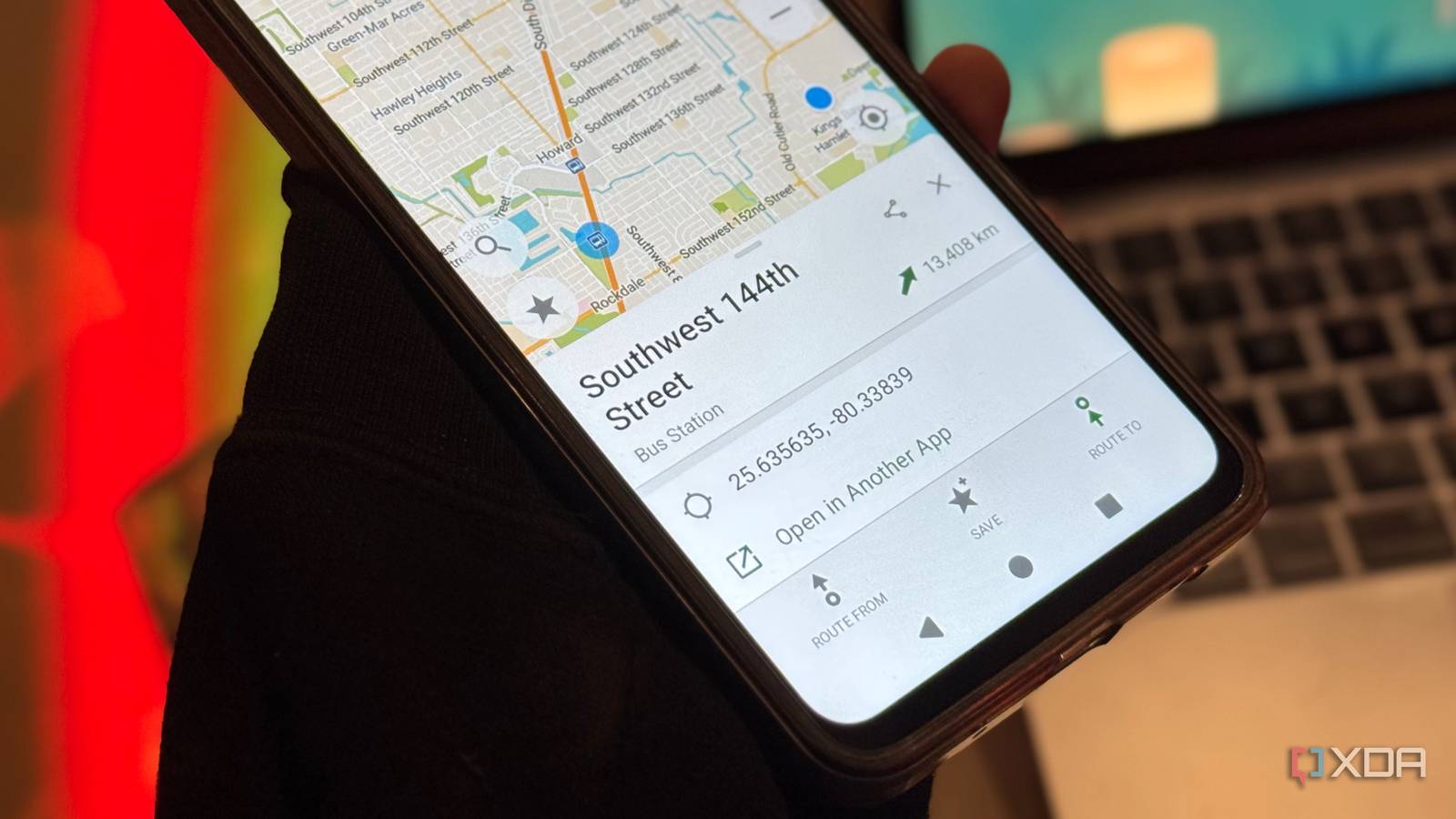
Published Oct 31, 2026, 7:08 AM EDT Mahnoor Faisal is a tech journalist covering AI and productivity tools with bylines at XDA, SlashGear, MakeUseOf, Laptop Mag, and Android Police. She's been writing professionally since she was sixteen, and has since penned hundreds of articles. This includes in-depth coverage of AI tools like NotebookLM to breaking news across the AI space. Her passion for technology started when she received her first iPod Touch (4th generation) on her 8th birthday, and she's been deep in the tech world ever since. Currently pursuing a degree in computer science, Mahnoor brings both a journalist's eye and a technical foundation to her coverage of how AI is reshaping the way we work and learn. You've probably heard people say that even if they've ditched most of Google's apps, there's one they just can't seem to give up: Google Maps. Interestingly, despite relying heavily on Google's ecosystem, from its Workspace apps to some of the experimental tools coming out of Google Labs, Google Maps was one app I barely ever opened. There were two reasons for that. I don't drive, and I don't live in a particularly walkable city. I rarely step out of the house to go somewhere I don't already know the directions to, and when I do, I'm usually with a friend who drives. But I've been traveling quite a bit lately, and Google Maps has gone from an app I'd rarely open to one of the most-used apps on my phone. While I've grown to appreciate just how useful Google Maps is, I've also started wondering whether I really need to rely on Google to get around. So, I decided to put that to the test by replacing it with CoMaps, a completely free and open-source alternative. CoMaps is a completely open-source alternative to Google Maps A familiar app with a different philosophy Now, this isn't my first time trying open-source Google Maps alternatives. I've been experimenting with them for a while now, and I even wrote about three alternatives I tested just a few days ago. One of the tools I covered was Organic Maps, a fairly well-known open-source Google Maps alternative. It's long been known for its privacy-focused approach and is built on OpenStreetMap data. Interestingly, CoMaps is actually a fork of Organic Maps. It emerged in May 2025 following disagreements between Organic Maps' contributors and shareholders over the project's governance, financial transparency, and future direction. Several contributors ultimately decided to branch off and create CoMaps, a community-driven, not-for-profit alternative that prioritizes transparency and open-source development. This means the two apps have a fair bit in common. Like Organic Maps, CoMaps prioritizes user privacy, doesn't require an account, and lets you download maps for offline navigation. It supports walking, cycling, and driving directions. It also doesn't bombard you with ads and is completely free from AI features you never asked for. A little help from the crowd goes a long way CoMaps is built by its community for its community, and it seems to take this philosophy very seriously. Since it relies on OpenStreetMap data, users can contribute to the maps themselves, whether that's adding a missing business, correcting outdated opening hours, or updating information about an existing location. You can even make some of these changes directly through the app, although you'll need an OpenStreetMap account to do so. While you can do all of the above with Organic Maps too, CoMaps takes things a step further with its integration with Mangrove Reviews. One of my biggest frustrations with the open-source alternatives I previously tested was the lack of ratings and reviews. After all, when you're exploring an unfamiliar city, knowing how to get somewhere is only half the battle. You also need to figure out whether that restaurant or café is actually worth visiting. CoMaps attempts to address this with community-powered reviews. Since August 2026, Android users have been able to see star ratings and written reviews for places through Mangrove, an independent, open review platform. While you can technically access Mangrove reviews separately when using Organic Maps, CoMaps integrates them directly into the app, so you don't have to switch between services. Interestingly, these reviews are also downloaded alongside the maps, meaning you can access them even when you're offline. You can also contribute your own reviews through external tools like MapComplete. There's a catch, though. Mangrove's database is still nowhere near as extensive as Google's. As of October 2026, it has just over 10,000 reviews worldwide, compared to the millions available on larger platforms. This means finding reviews for places near you can be a challenge. Still, it's an interesting step toward addressing one of the biggest advantages Google Maps has over its open-source competitors. CoMaps has offline maps that actually work offline Google Maps can't walk the walk One of my biggest frustrations with Google Maps is just how limited its offline maps are. I mean, what good are offline maps if they can't actually give you the directions you need when you're offline? Plus, what's worse than discovering that limitation when you've already lost internet access? I learned this the hard way when I was in Berlin for IFA. I needed to get a local SIM card from a store in the city center, which was closing in about an hour. I was alone in an unfamiliar city, had no mobile data, and needed to figure out how to get there as quickly as possible. Now, you'd think having downloaded Google Maps' offline maps beforehand would've been enough. Unfortunately, that wasn't the case. While I could see the streets around me, Google Maps couldn't give me walking directions. With time running out, I ended up having to ask strangers for directions along the way. The problem is that Google Maps only supports driving directions when you're offline. Walking, cycling, and public transit directions all require an internet connection. Given that I don't drive and spend most of my time walking whenever I'm traveling, this is a pretty major inconvenience. This is where CoMaps makes a massive difference. Like Google Maps, you can download maps of entire regions beforehand. But unlike Google's offering, CoMaps lets you search for places, plan walking routes, and get turn-by-turn directions even when you're completely offline. You also get voice-guided navigation, and since GPS doesn't require an internet connection, you can still track your location without mobile data. Essentially, instead of simply having a downloaded map that shows you where you are, you have an actual navigation app that can help you get to where you need to go. The biggest thing I'm missing out on is live traffic data Luckily, that's not my biggest concern If there's one thing Google Maps is undeniably good at, it's live traffic data. Thanks to its massive user base, Google Maps can provide real-time traffic updates, identify congestion, and suggest alternative routes to help you avoid getting stuck in traffic. It's one of those features that can make a massive difference when you're trying to get somewhere on time. Unfortunately, this is also one of the biggest things CoMaps lacks. It doesn't offer real-time traffic information, meaning you won't know whether a particular road is congested or if there's a faster route available. That said, this isn't much of a dealbreaker for me. I don't drive, and when I'm traveling, I'm almost always exploring on foot. So, while I can certainly see why the lack of live traffic data might be a major drawback for some people, it's not a feature I personally rely on very often. The good news is that CoMaps' developers are actively working on bringing live traffic information to the app. According to its official documentation, the team has already started developing its own traffic data server, with the goal of using open, privacy-preserving data sources. There's no confirmed timeline for when the feature will arrive, but it's reassuring to know that the developers are working on addressing this limitation. Google Maps does more, but CoMaps does enough Ultimately, I don't think CoMaps is going to replace Google Maps for everyone. Google still has the upper hand when it comes to live traffic information, its massive database of reviews, and the sheer number of features it offers. However, I've realized that I don't necessarily need all of those features to get around. For someone who primarily relies on walking directions, CoMaps gets the basics right, and its offline navigation alone makes it worth switching to. Add its privacy-focused approach, community-driven development, and growing support for reviews, and there's plenty to like.
I replaced Google Maps with this open-source alternative and I barely miss it
Full Article
Original Source
Read the full article at Xda-developers →KhanList aggregates and links to publicly available news content. We do not host full articles from third-party sources. Always verify important information with original sources.