
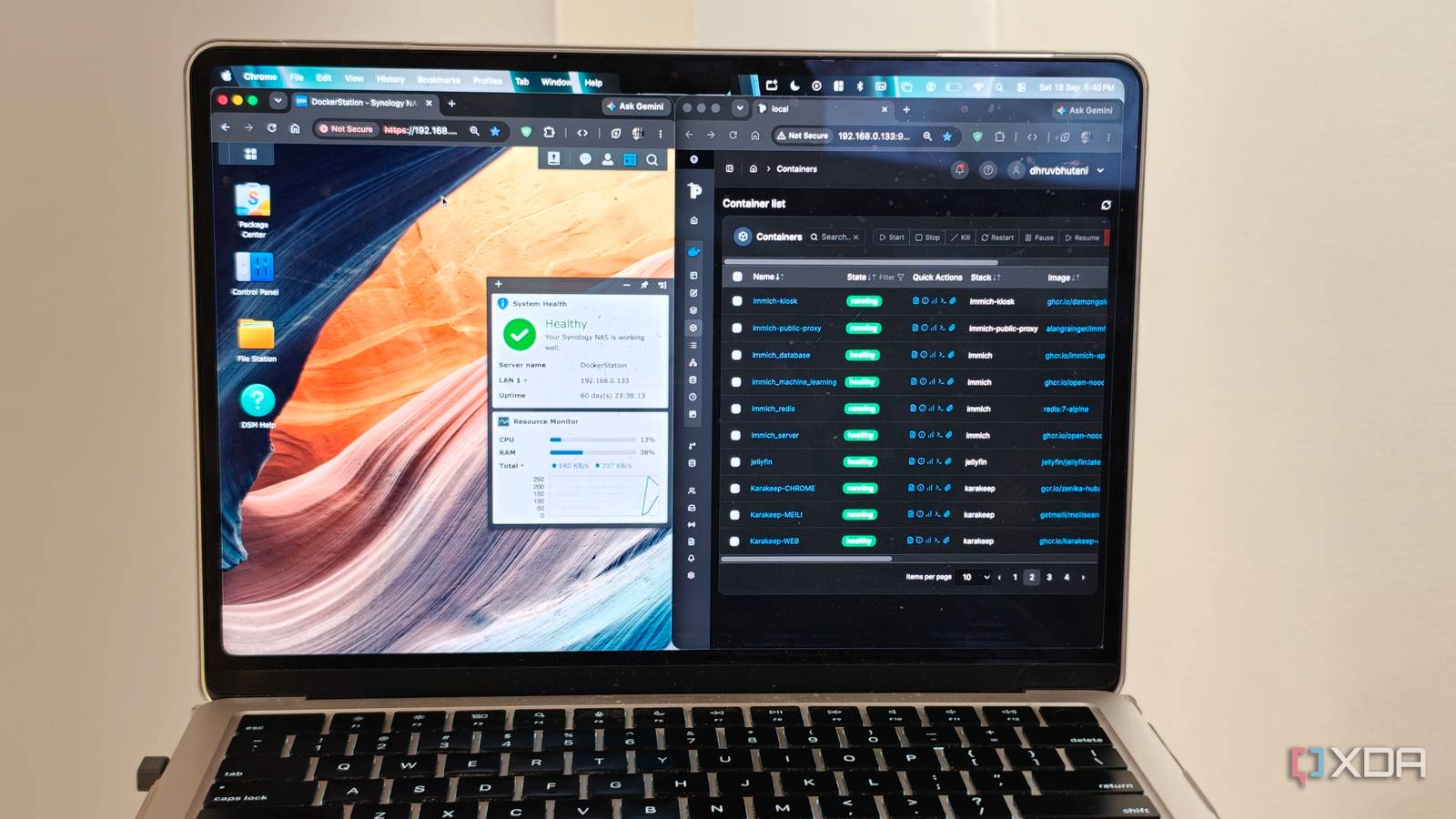
Published Sep 19, 2026, 10:00 AM EDT Dhruv Bhutani has been writing about consumer technology since 2008, offering deep insights into the personal technology landscape through features and opinion pieces. He writes for XDA-Developers, where he focuses on topics like productivity, networking, self-hosting, and more. Over the years, his work has also appeared in leading publications such as Android Police, Android Authority, CNET, PCMag, and more. Outside of his professional work, Dhruv is an avid fan of horror media spanning films and literature, enjoys fitness activities, collects vinyl records, and plays the guitar. When I first picked up my Synology NAS, the built-in software ecosystem was a big upsell for me. While I definitely needed a place to store files, I always wanted to build an ecosystem around it. From photo backups to media playback, you catch my drift. However, over time, I've gradually made the switch over to third-party apps, not because Synology's own apps are not capable, but because the third-party and open-source competition is just so much better and fast-moving. It's why I now run Immich for photos, Navidrome for music, Plex and Jellyfin for movies and many more. All these apps run in Docker on my NAS and solve everyday problems in my setup. But more than that, these apps and many more have become important tools in my self-hosted stack. I don't want my software to be tied to one NAS Open-source apps make switching platforms easy Credit: Since building a self-hosted photo archive was why I got a NAS, let's start there. It's a good example of where the default NAS experience was fairly limiting. Synology Photos is decent with support for albums, folder views and more. It can even identify people and subjects. Plus, there are apps for Android and iOS. So far, so good. But Synology Photos, to put it bluntly, is pretty dated. It hasn't got any major new features in a while, and lacks many of the additions made to Immich like proper GPS tagging, import workflows, and even shared libraries. More than that, though, Immich's mobile photo backup workflow is significantly more reliable than Synology Photos. All of that might sound fairly simple, but there's another aspect to it. I'm not building my workflow around a proprietary photo app. Tomorrow, if I decide to switch platforms and switch from Synology to UGreen or even my own server, I can easily switch Immich over to my new setup and continue using it. Can't say that about a proprietary Synology app. In fact, as good as the feature set of the open-source alternatives is, the flexibility to switch platforms is what truly sells it. I want my apps to be as independent as possible. Navidrome gives my music library the experience it needs Plex and Jellyfin give me more flexibility for video While Immich solves my photo backup and management workflow, that's not the only thing I use my NAS for. With a sizeable music library, a great music server experience can make a big difference. I don't want to be scrolling through folders full of FLAC files. In fact, a music library is only usable when you can search, browse and build playlists. Let me be the first to say, Synology's music server app is not very good at all. In fact, I ditched it very early on in my self-hosting journey. While it does the basics like music organization and streaming, the app is neither very intuitive, nor does it have a deep list of features like proper metadata management, or the ability to pull down information about what I'm listening to. So, I switched to Navidrome. Navidrome indexes all the music on my server at a blistering pace, and exposes it through a web browser. But more importantly, Navidrome works beautifully with a world of streaming apps that let you define your own flavor of music listening. And then there's media streaming. Well, for that one, I'm glad I moved to a combination of Plex and Jellyfin earlier on in my self-hosting journey as Synology itself killed its video streaming application. The only first-party option is a simple DLNA server which is far from convenient in 2026. That, however, brings me to another point. With first-party apps, you never know the cadence of releases, or if the app will even be supported a few years down the line. Using third-party software opens up options. Right now, I dabble between Plex and Jellyfin both. While the former has been exceptionally useful for sharing my media library with friends and family as well as remote streaming, I find the latter better at streaming my remux library at home. I don't have to stick to one and can choose between apps based on my own personal requirements. Ditching first-party options opens up that kind of flexibility. I use Synology for what it does best — storage. I haven't replaced my Synology NAS. It still serves as the backbone of my smart home and self-hosted stack. But what I've done is that I've moved away from my dependence on Synology's applications. Some don't fit my workflow anymore, while others just aren't as feature-packed. The NAS stores the data while third-party apps hosted via Docker handle the application layer. This helps me get the best of both worlds, while also staying on top of the latest improvements. Right now, Plex serves up my movies, Navidrome my music, Immich my photos, and a plethora of apps like Grimmory for books and Paperless for documents fill in the gaps. And for me, that's the real advantage of running open-source or third-party alternatives on a NAS. I get to choose the software that makes most sense for me. Synology DS925+ CPU AMD Ryzen V1500B Memory 4 GB DDR4 ECC SODIMM Drive Bays 4 x HDD, 2 x NVMe Expansion 1 x USB Type C Ports 2 x 2.5GbE RJ-45; 2 x USB-A 3.2 Gen 1 OS DSM 7.2
I ditched Synology's apps for open-source alternatives, and my NAS finally became useful
Full Article
Original Source
Read the full article at Xda-developers →KhanList aggregates and links to publicly available news content. We do not host full articles from third-party sources. Always verify important information with original sources.