
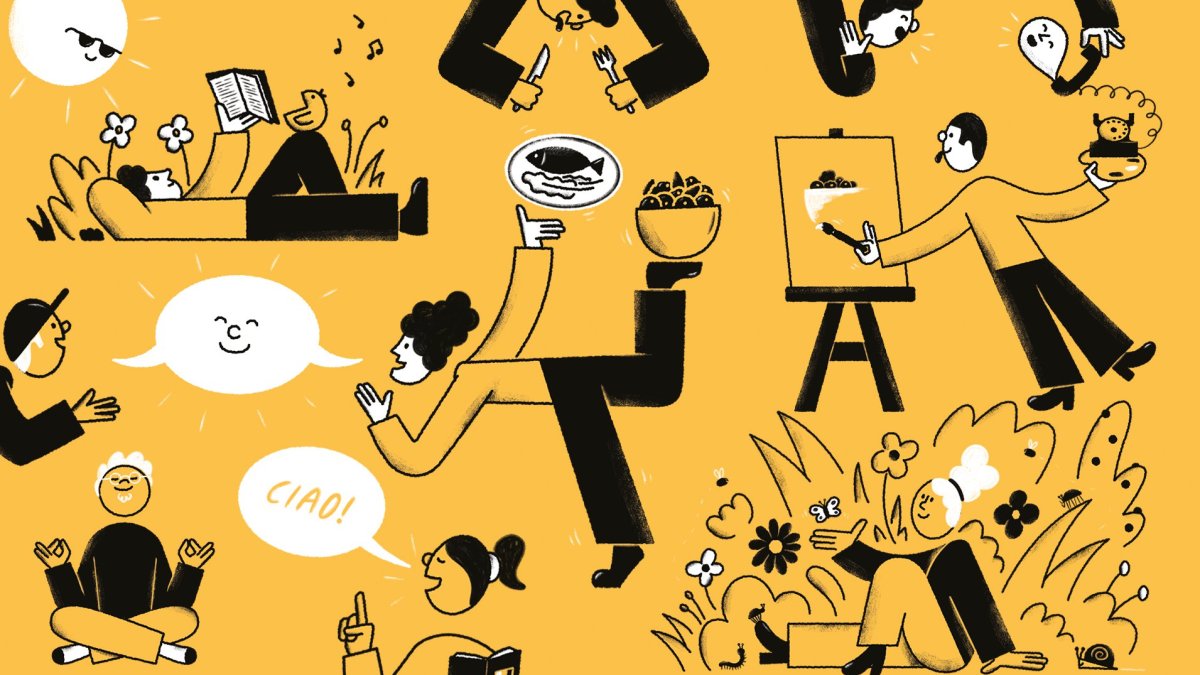
Cognitive decline may feel like an inevitable part of getting older, but there are things we can all do to protect against it. From spending five minutes doing something creative to trying a 60-second maths challenge, experts share their quick and easy tips for a healthy brain as we age… Read every day “Studies show that people who read regularly experience better mental health and have up to 40 per cent lower chance of developing dementia. So, read a few pages of a book every day. Comprehension and recall are enhanced by holding a book and turning its pages, engaging spatial imagery systems that help us understand and, importantly for our future brains, remember.” Dr Mark Weatherall, clinical neurologist at The Medical Chambers Kensington Learn something a little difficult “Don’t just do the same crossword you’ve been doing for 20 years. Spend 10 minutes making your brain do something it isn’t already good at. Learn five words of Italian, practise a few chords on an instrument, try a new dance sequence or learn how to use a new piece of technology. The aim isn’t to become brilliant at it; it is the challenge that matters. Continuing to learn and staying mentally active helps build ‘cognitive reserve’ – essentially the brain’s resilience and ability to cope with age-related changes and disease.” Dr Nikki Ramskill, GP and founder of The Female Health Doctor clinic Do a five-minute creativity sprint “You don’t need to be artistic to benefit from creativity. Set a timer for five or 10 minutes and challenge yourself to write a short story, sketch an object in the room, think of alternative uses for a household item or invent a new recipe. Creative activities can draw on skills including imagination, planning and problem-solving. They are also a useful way to break away from routine thinking patterns. Don’t worry about producing something perfect – the goal is simply to practise generating new ideas, which helps keep your brain active and engaged.” Fran Vandelli, dementia lead at Bupa Care Services Shorts Pause before googling “Memory isn’t just about taking in information. Retrieval – the process of bringing stored information back to mind – is an important part of how memory works. Technology means we can find an answer almost instantly, but occasionally giving your brain the chance to retrieve information itself provides a simple mental challenge. If you forget the name of an actor, what you needed from the supermarket, or something you discussed earlier in the day, spend a minute actively trying to recall it before looking it up. It’s a small way of exercising memory retrieval during everyday life.” Dr Harpreet Sarna, chief medical officer at VitalityHealth Phone somebody “Instead of sending another WhatsApp message, pick up the phone and spend 10 minutes actually talking to someone. Conversation makes the brain work surprisingly hard: you are listening, interpreting meaning and emotion, retrieving memories, finding words and formulating responses, often simultaneously.” Dr Nikki Ramskill Take five to notice nature “Spending time outdoors can be good for both mental wellbeing and brain health, but how you use that time matters. Instead of simply going outside, spend a few minutes actively noticing what’s around you. Count how many different bird sounds you can hear, identify plants or observe changes in the season. This conscious attention encourages mindfulness while exercising memory and observation skills. Time in nature may also help reduce stress, which can support brain health by limiting prolonged exposure to stress hormones such as cortisol.” Fran Vandelli Take a regular ‘hearing detox’ “Hearing loss in midlife is associated with an increased risk of dementia, yet people can live with gradual hearing deterioration for years without recognising it. Give your ears regular breaks from loud noises and don’t keep increasing the volume to compensate for background noise. If you are frequently asking people to repeat themselves, struggling with conversations in restaurants or turning up the television, don’t just put it down to ageing – book a hearing test.” Dr Nikki Ramskill Challenge your point of view “Many of us read the same types of books, articles and social media content every day. To give your brain a gentle challenge, spend just 10 minutes reading something that introduces a new perspective or idea. When we are exposed to unfamiliar concepts, our brains need to process, understand and make connections with new information.” Fran Vandelli Challenge yourself by reading other views (Photo: FG Trade/Getty) Practise your balance “Try standing on one leg for part of your tooth-brushing routine, swapping sides, or, if it is safe for you to do so, a few controlled squats while the kettle boils. Balance and co-ordinated movement require communication between multiple brain systems, while maintaining strength and physical activity becomes increasingly important as we age.” Dr Nikki Ramskill Recall your day in reverse order “At the end of your working day, spend a few minutes mentally retracing the day backwards. Start with the most recent event and work your way back to the morning. Working backwards may feel more demanding than replaying events in their usual order, making it a simple recall challenge. Taking a few screen-free minutes to do this before bed may also help you unwind and manage stress, supporting both sleep and brain health.” Fran Vandelli Use your non-dominant hand for a simple task “Try using your non-dominant hand for a low-risk everyday activity, such as opening a drawer, using your remote control or stirring a drink. As the movement is less familiar, you may need to slow down and concentrate more carefully than usual. Because the task feels unfamiliar, the brain has to pay closer attention and approach it in a different way. These small challenges can support adaptability and co-ordination.” Fran Vandelli Turn your walk into a brain workout “Movement is one of the strongest lifestyle tools we have for protecting long-term brain health. On a 10-minute walk, try naming animals alphabetically or recalling the shopping list without looking at your phone. You’re combining physical activity with memory, attention and problem-solving.” Dr Nikki Ramskill Learn one new word and use it in conversation “Language is one of the most complex functions the brain performs. A simple but effective brain habit is to learn a word, understand its meaning and then use it in the right context. For an extra challenge, try learning it in another language, as exploring new vocabulary and grammar patterns can help to build cognitive reserve.” Fran Vandelli Try learning new vocabulary and using it in your every day life (Photo: andreswd/Getty) Upgrade your eating “A better diet to fuel the brain can be achieved simply by taking a few minutes to upgrade the meals you already eat. Sprinkle pumpkin seeds or walnuts over porridge or yoghurt, or add spinach, broccoli or peas to an omelette or evening meal. Adding beans, chickpeas or lentils into salads or soups also ticks the box, while oily fish such as salmon, sardines or mackerel are useful regular additions to any meal. These foods all include nutrients such as B vitamins, magnesium, iron and zinc which are vital for healthy brain function.” Mike Wakeman, pharmacist and founder of Evera Nutrition Perfect your wind-down routine “While we sleep, the brain is actively processing and consolidating information gathered through the day, helping to strengthen new memories and learning. Sleep also supports cognitive functions such as attention, concentration and our ability to process information the following day. One simple thing you can do in under 10 minutes is to create a wind-down period as part of your sleep routine. Put your phone away, dim the lights and spend time doing something calming rather than scrolling.” Dr Harpreet Sarna Build micro social connections “Social interaction plays an important role in brain health. For people who work from home or spend a lot of time online, creating opportunities for everyday conversation may be a helpful way to stay socially engaged. Aim to have more conversations with people you wouldn’t normally speak to, be that a neighbour, colleague, sales assistant or dog walkers.” Fran Vandelli Build movement breaks into your day “Brain health and cardiovascular health are closely connected, as the brain requires a constant supply of oxygen and nutrients delivered through the blood. Even short periods of movement can be a useful way to build more activity into your day. If you are already heading out for a walk, try increasing your pace for 10 minutes so your heart rate and breathing increase. You could also take a brisk walk at lunchtime or fit in a short period of movement at home.” Dr Harpreet Sarna Take a mental maths challenge “The classic ‘Subtract seven from 100’ exercise from cognitive assessments is used to assess attention, concentration and calculation. You can borrow this principle and turn it into a one-minute daily brain challenge. Start at 100 and subtract seven repeatedly. The next day, start at 200 and subtract nine, or choose a different starting number and interval. Because you have to hold the previous number in your mind while calculating the next one, you engage several cognitive skills simultaneously, including attention, working memory, mental processing and recall.” Dr Emer MacSweeney, CEO and consultant neuroradiologist at Re:Cognition Health Take a moment and breath (Photo: Stefania Pelfini la Waziya/Getty) Give your brain a proper pause “Spend 10 minutes without your phone, television or other stimulation and focus on slow breathing. Managing ongoing stress matters, because poor sleep, low mood and chronic stress can all affect concentration and memory.” Dr Nadia Ahmad, GP Navigate without using a satnav “On a familiar journey, switch off your satnav and try navigating for yourself, or deliberately take a different route. Actively work out where you are going, look for landmarks and think about how different streets connect. Navigation draws on several cognitive processes, including attention, memory and spatial awareness. You don’t need to get deliberately lost, but occasionally making your brain do the navigating requires active problem-solving.” Dr Mohammed Enayat, GP and founder of longevity clinic HUM2N
How to future proof your brain, in 10 minutes a day
Full Article
Original Source
Read the full article at Inews →KhanList aggregates and links to publicly available news content. We do not host full articles from third-party sources. Always verify important information with original sources.