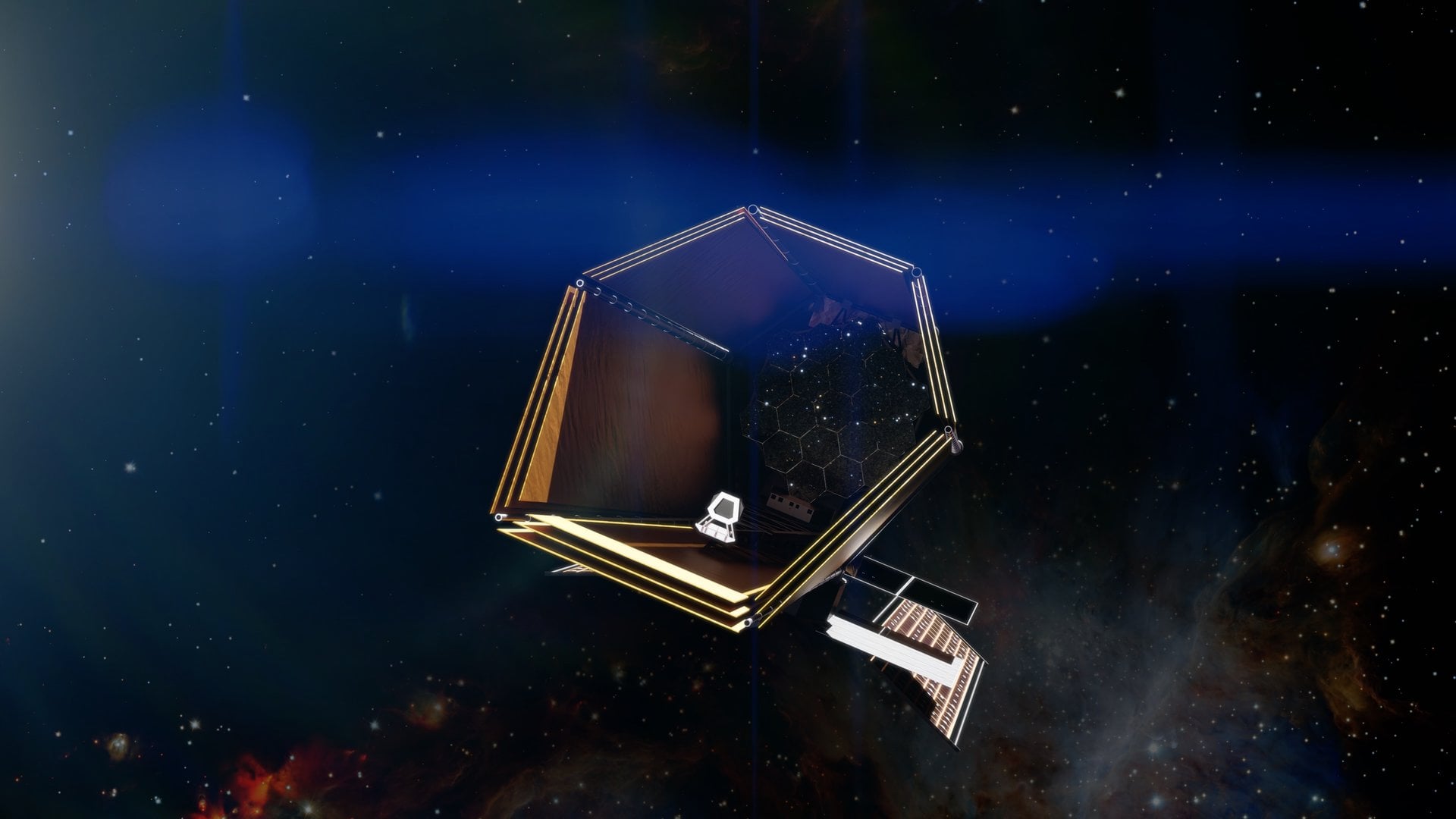
We’ve been covering the journey of the Habitable Worlds Observatory for some time now. Over the past few years, it's gone from a proposal to a relatively fleshed-out plan for how and what the next Great Observatory should do—in this case, look at and characterize potentially habitable exoplanets. Back in August 2024, NASA set up the HWO Technology Maturation Project Office (TMPO) to coordinate the technological and scientific development needed to make the mission a success. They recently released a comprehensive plan for the first steps of that process in pre-print form on arXiv, and it’s very clear on what needs to happen before the Mission Concept Review (MCR) at the end of the decade. NASA is famous for using Technology Readiness Levels (TRLs), and the TMPO structured its report based on bringing three “tracks” up to a TRL 5 by the MCR. This is equivalent to the technology being validated “in a relevant environment,” which will make more sense after explaining what the technologies actually are. First is the telescope's coronagraph. HWO is designed to stare at extremely bright stars for a long time and attempt to resolve any companion planets they might have. To do that, it needs to block out the light from the star itself to focus on the light from the planet. The coronagraph instrument (CI) is the tool for the job, being intended to suppress starlight to a level of 10^-10, even extremely close to the star itself. Fraser talks about the limits of the HWO To pull this off, the system plans to use a “deformable mirror” paired up with an array of 96x96 linear actuators that can control the surface of the mirror down to picometer-level precision. The key is these actuators have to be extremely reliable, have extremely high positional resolution, and not have their driver electronics fry when exposed to the harsh radiation environment of space. The light that makes it past these deformable mirrors will then be captured by ultra-sensitive photon-counting detectors, such as Electron-Multiply Charge Capture Devices (EMCCDs), or potentially superconducting quantum sensors, both of which feature high quantum efficiency and near-zero background noise. But a coronagraph is only as useful as the telescope it is mounted on. If the telescope as a whole can’t hold that same level of positional accuracy, it doesn’t matter how good the coronagraph is. And it has to be able to maintain this positional accuracy for hours or even days, as the observations the HWO is expected to undertake are expected to last that long. One of the hardest features to account for in this second technological category is thermal expansion, where the components of the telescope itself expand or contract in “creeps” or “lurches” as they get either hotter or colder. To combat this, HWO will have a massive, active thermal control system, utilize low coefficient of thermal expansion (CTE) materials like Corning ULE or Schott Zerodur, and have a control system that can utilize micro-thrusters, vibration isolation, and even its own stand-alone mirrors to keep the spacecraft steady and pointed in the right direction. Fraser discusses with HWO with its architect, Lee Feinberg All of that pointing will enable arguably the most important components to do their job—the sensors. HWO isn’t intended as just an exoplanet hunter, but also as a next-generational astrophysics observatory. To meet the requirements laid out in the Astro2020 report that called for the HWO in the first place, the mission will have to have sensitivity in wavelengths ranging from the near-infrared down to the far-ultraviolet. To meet these requirements, new mirror coatings must be developed that can be applied evenly over the entirety of the mission’s mirrors. It will also require improved technologies such as large-format UV detectors, Next Generation Microshutter Arrays (NGMAs), and Digital Micromirror Devices (DMDs), all of which will require significant development before they are ready for prime time on a Great Observatory mission. Getting to prime time will require a “crawl-walk-run” method, according to the paper. Luckily, there’s some “heritage” in this space—especially the experiences gleaned from the development (and delays) of the James Webb Space Telescope and the upcoming Nancy Grace Roman Space Telescope. But perhaps more importantly for this next “TRL” step are the test beds intended for use on the HWO mission. As mentioned, TRL 5 requires proving the system works in a relevant environment. But creating an environment relevant to space on Earth is not particularly easy. HWO engineers plan to use cutting-edge test beds like the Exoplanet Imaging Coronagraph (EPIC-5) and even the custom-designed Habitable Worlds Observatory Systems Testbed (HOST), which is designed to test the interconnected systems needed to make the entire observatory work. The engineering and science teams still have a few years before their critical MCR, at which point NASA and its partners can cancel the entire project if its milestones are not being met. And the project teams are already starting the international collaborative aspect of the mission's design, with a conference planned for later this year focusing on the HWO’s technologies. This TMPO report will likely serve as a guiding document for those discussions and hopefully will serve as a basis for the technical development of our next Great Observatory. Learn More: M. Bolcar et al. - The Habitable Worlds Observatory Technology Development Plan UT - 'High-Res' is the Secret to Finding Alien Life with the Next Great Space Telescope UT - Research Work Begins on the Habitable Worlds Observatory UT - The HWO Must Be Picometer Perfect To Observe Earth 2.0
How NASA Plans to Build the Habitable Worlds Observatory
Full Article
Original Source
Read the full article at Universetoday →KhanList aggregates and links to publicly available news content. We do not host full articles from third-party sources. Always verify important information with original sources.