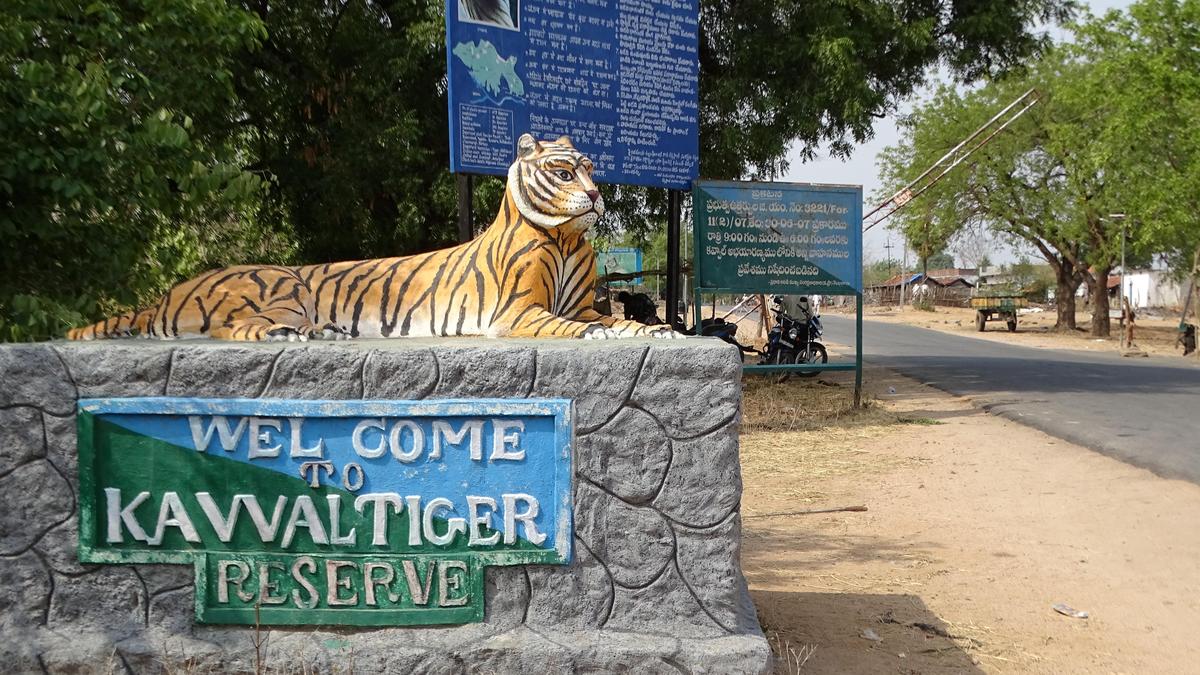
At the Kawal Tiger Reserve, conservation efforts have been overshadowed by a disturbing pattern of tiger disappearances and rampant poaching. | Photo Credit: File Photo Telangana finds itself on a sticky wicket on the 11th International Tiger Day (July 29), with two sharply contrasting tiger conservation stories unfolding in the State. While the southern forests have emerged as a model of successful conservation, the northern landscape continues to grapple with tiger disappearances and poaching.In the south, it is a resounding success, with the tiger population growing phenomenally in less than a decade in the Amrabad Tiger Reserve. According to the All India Tiger Estimate, the number of tigers in the reserve has increased from 14 in 2018 to 42 now, excluding cubs less than a year old.The picture is starkly different in northern Telangana, which includes the Kawal Tiger Reserve. Here, conservation efforts have been overshadowed by a disturbing pattern of tiger disappearances and rampant poaching. Very recently, a tiger that had roamed the non-forest districts of northern Telangana for several months vanished under mysterious circumstances soon after entering the forests of Nizamabad.While the contrast between north and south is routinely attributed to habitat fragmentation and failure in habitat management by Forest department officials, the actual reason lies elsewhere, say experts.Amrabad Tiger Reserve is predominantly inhabited by the Chenchu tribe, who do not view land primarily as a means of economic advancement. Under the Forest Rights Act settlements, most families received less than five acres of land, reflecting their limited dependence on agriculture. As a result, they have relatively little interaction with outsiders or political interests.This changes for northern Telangana where majority of the population depends on agriculture as its main source of income, is politically well connected and hence, has regular interaction with non-forest dwellers. The drive for economic uplift defines their behaviour towards nature, which is marked by frequent forest felling for agricultural expansion, violent confrontations with forest officials, and widespread poaching.“Only by promoting Tiger Economy can we address this issue sufficiently,” says a Forest official under the condition of anonymity. “Tigers could be conserved effectively countrywide only where eco-tourism activities were promoted in tiger reserves.”He terms the oft-stated reasons such as habitat fragmentation as excuses, and shows the example of Tipeshwar which has a sizeable tiger population despite it being a fraction of Kawal in size. Unless poaching is countered with a strategy that includes the inhabitants of the villages as economic beneficiaries, tiger numbers will not go up in north Telangana, he says.Telangana’s Principal Chief Conservator of Forests (Head of Forest Force) cum Chief Wildlife Warden Vinay Kumar is in agreement about the role of Chenchu community in tiger numbers of Amrabad.“The most inspiring aspect of Amrabad’s recovery is the partnership with the indigenous Chenchu community, the members of which serve as wildlife watchers, assist in fire prevention, support habitat protection, participate in monitoring activities and contribute significantly to safeguarding the reserve,” Mr.Vinay Kumar says.When responsibly managed, ecotourism transforms wildlife into a source of local pride and economic opportunity, which creates strong public support for conservation, he says, and adds that the road ahead leads to creating greater livelihood opportunities for local communities through conservation-linked enterprises and responsible ecotourism. Published - July 29, 2026 12:28 am IST
Eco tourism-based livelihood opportunities, the only way forward for tiger conservation in Telangana, say experts
Full Article
Original Source
Read the full article at Thehindu →KhanList aggregates and links to publicly available news content. We do not host full articles from third-party sources. Always verify important information with original sources.