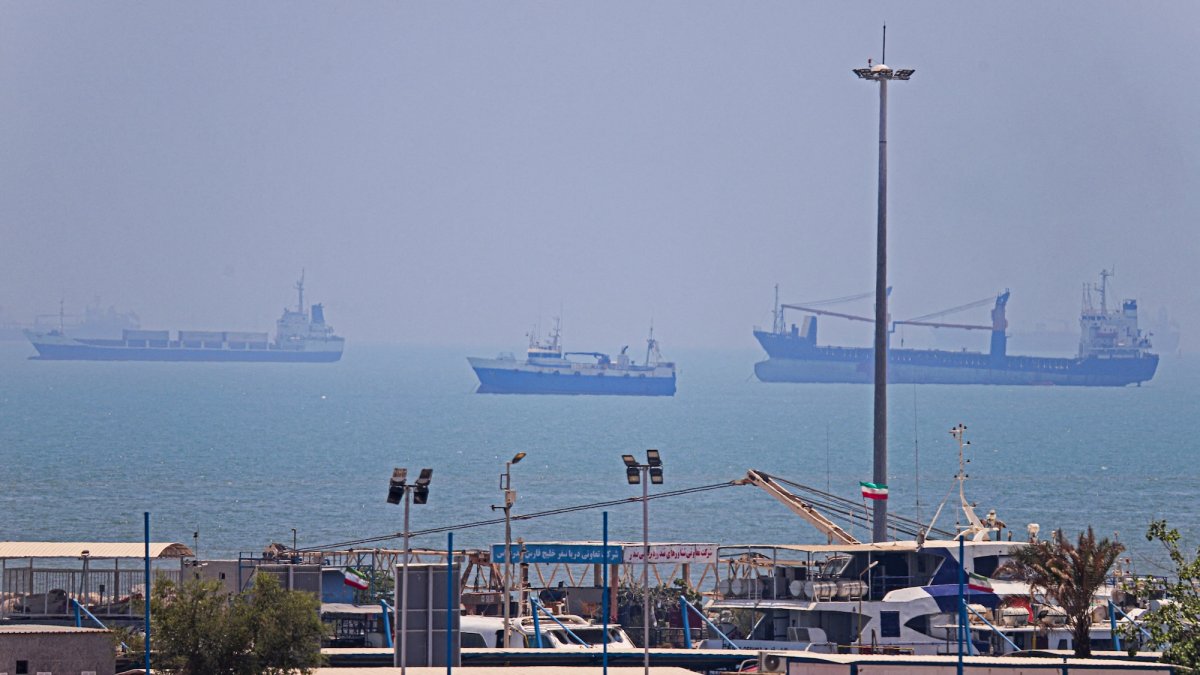
In this picture obtained from Iran's ISNA news agency on June 18, 2026, vessels are seen anchored in Bandar Abbas along the Strait of Hormuz. Credit: Amirhossein Khorgooei / ISNA / AFP via Getty Images Get the Popular Science daily newsletter💡 Breakthroughs, discoveries, and DIY tips sent six days a week. By signing up, you confirm you are 16+, will receive newsletters and promotional content and agree to our Terms of Use and acknowledge the data practices in our Privacy Policy. You may unsubscribe at any time. The ongoing closure of the Strait of Hormuz amid the United States’ war with Iran may not only be causing problems for the global economy. Marine scientists now warn that the thousands of vessels stuck in the Persian Gulf could inadvertently introduce an unprecedented wave of invasive species, parasites, and pathogens into the region. The team’s report is laid out in a study recently published in the journal Biological Invasions. According to the paper’s authors, including Woods Hole Oceanographic Institution (WHOI) marine biologist Carolyn Tepolt, these extremely disruptive newcomers are often “extremely difficult, if not impossible” to remove once they are there. “This disruption to global shipping has many repercussions and has also more quietly created ideal conditions to spread warm-water species to new ports,” Tepolt said in a statement. Vessels remain stranded in the Strait of Hormuz as of July 28, 2026. Credit: Vessel Tracker Invasive organisms have been making their way into unprepared ecosystems around the world for centuries, thanks to maritime trade routes and a process known as ship biofouling. Merchant ships inadvertently began exporting the European green crab (Carcinus maenas) during the 1800s, and the ravenous crustaceans are now found on every continent except for Antarctica. The brown tree snake (Boiga irregularis) likely hitched rides aboard ships bound for Guam during the 1950s, and have since hunted multiple of the island’s native species to extinction in a matter of decades. Some of the most disruptive newcomers never make it onto land. Tepolt and her study co-authors cite recent issues with Margalefidinium polykrikoides, a toxic, fish-killing red algae bloom that often lurks inside a ship’s water ballast before spreading across destination ports. The bay barnacle (Amphibalanus improvisu) can thrive in both high and low salinity waters, where they compete with native organisms for resources and block intake pipes at factories and power stations. What’s more, the Persian Gulf’s climate may further exacerbate the situation. Warmer waters encourage breeding in many invasive oceanic species, while also bolstering heat resistance in future generations, making them even more difficult to manage. To stay atop the compounding concerns, marine scientists are urging international cooperation to better monitor ship biofouling, while also stepping up mitigation and vessel cleaning efforts. If routes reopen, global ports—especially where currently stranded vessels first arrive—need to increase their own invasive species prevention protocols. “While the human and economic consequences of events like the war in the Middle East will always remain the highest priority, ecological impacts cannot be overlooked,” the researchers cautioned. 2026 Popular Science Home of the Future Awards 39 products that will improve your everyday life.
Strait of Hormuz ship bottleneck could fuel invasive species nightmare
Full Article
Original Source
Read the full article at Popsci →KhanList aggregates and links to publicly available news content. We do not host full articles from third-party sources. Always verify important information with original sources.