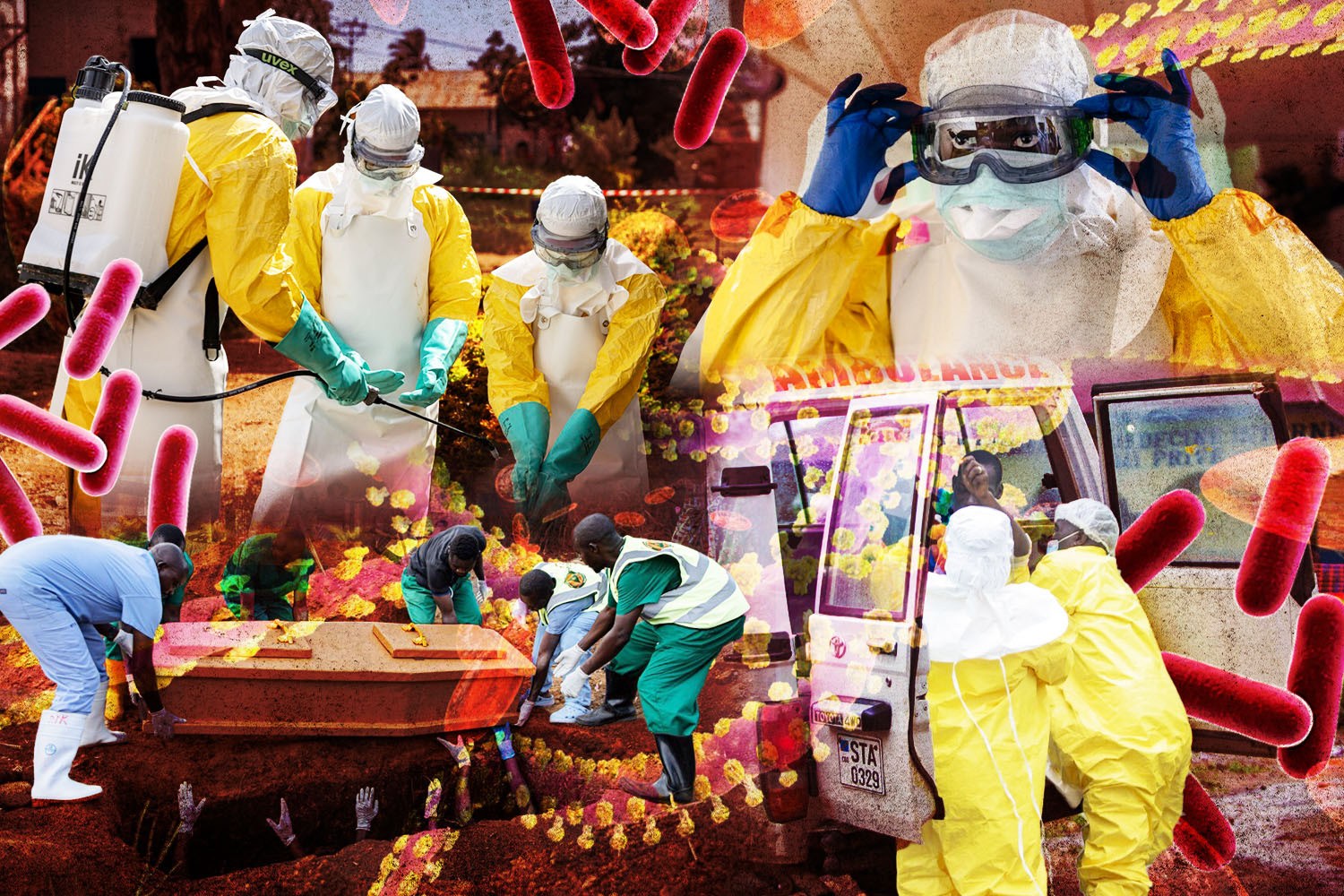
AN OUTBREAK of Ebola in the Democratic Republic of Congo (DRC) could be spreading from dead bodies, health experts have warned. As the death toll has surpassed 800 and more than 2,100 people have been infected with the disease, officials fear cases could be spreading through one particular practice. Health experts have warned that Ebola cases could be spreading from dead bodies Credit: AFP They fear that the transportation of bodies for funerals and burials risks spreading the virus further Credit: Reuters The transport of Ebola victims’ bodies between different areas of the DRC for funerals or burial risks the virus spreading further, the International Organisation for Migration (IOM) said. Bodies are often transported across districts as families want to bury their loved ones in their home communities. Sign up for the Health newsletter Thank you! But with around two-thirds of Ebola deaths in this outbreak occurring outside hospitals or clinics, burials are often harder to control, the IOM explained. Dr Andrew Mbala, from the IOM, said: “If we don’t really manage the dead bodies well, if we don’t engage the community … then it means there will be more spread within the community.” Ebola is passed on through direct contact with bodily fluids from infected people or animals. The virus is very contagious, so patients need to be isolated, and notably, it remains highly infectious after death. This makes funeral practices a critical component of outbreak control. Ebola first appears as a high fever, intense muscle and joint pain, headaches and a sore throat. Most read in Health This is often followed by vomiting and diarrhoea, rashes on the skin, kidney and liver failure and sometimes internal and external bleeding. The current DRC outbreak has been caused by the rare Bundibugyo virus, which has no vaccine or treatment at the moment. Funeral practices must be controlled to minimise the outbreak, experts said Credit: Reuters More than 2,000 cases of Ebola have been confirmed, including 828 deaths Credit: Alamy It has been described as the third-worst outbreak on record by the World Health Organization (WHO). The outbreak has expanded by about 70 per cent over the last two weeks, with an average of more than 40 new cases reported daily. Ebola cases have also spread to the neighbouring Uganda, but according to the WHO, no new cases have been reported there since June 21. Speaking about the possibility of the virus spreading through dead bodies, Reuters reported that Dr Mbala said: “There hasn’t been any crossing of dead bodies to another country, but we have seen a lot of crossings of dead bodies within the country.” The IOM said that 105 bodies were intercepted during Ebola surveillance operations at border crossings and entry points into different health zones. This movement risks bringing the virus into new areas if the bodies are not handled very carefully, the agency warned. But it said that community resistance to health officials’ intervention has hampered efforts to ensure safe burials of bodies. Teams responsible for handling bodies and conducting burials have been faced with opposition and even attacks, the IOM said. The outbreak has expanded by about 70 per cent over the last two weeks Credit: Alamy How does Ebola spread and what are the symptoms? The virus is transmitted through direct contact with blood and body fluids and objects that have been contaminated by someone with Ebola. It also spreads through contact with sick or dead wild animals. It can take symptoms two to 21 days to appear following infection – this is known as an incubation period. Ebola first appears as a high fever, intense muscle and joint pain, headaches and a sore throat. Initial symptoms are often followed by vomiting and diarrhoea, rashes on the skin, kidney and liver failure, and sometimes internal and external bleeding. People who survive the virus can suffer from arthritis as well as vision and hearing problems. Some types of Ebola can be prevented with vaccines and treated with medicines. Source: World Health Organization So, how did this outbreak start? The first known case was a nurse who developed symptoms on April 24, meaning the virus had already been spreading undetected for weeks. After their death, the nurse was transported back to their hometown. Samuel Roger Kamba, the Congolese health minister, said one of the reasons the virus spread so quickly was because of the number of people exposed to the nurse’s body during the funeral ceremony. Similarly, Africa’s public health agency, the Africa Centres for Disease Control and Prevention (Africa CDC), told the BBC that funerals were a particular concern in the spread of the virus. Funerals have contributed to the spread of the disease in previous outbreaks. As of July 15, there have been 2,124 confirmed cases of Ebola, including 828 deaths in the DRC, the WHO says. As the most recent Ebola case in Uganda was discharged from a treatment centre on July 16 after two negative tests, the country has begun a 42-day period of enhanced surveillance. This is required before the end of the outbreak can be declared. National authorities in Uganda and the DRC continue to implement extensive response measures, the WHO added. Comment now
Ebola outbreak spreading from DEAD bodies – as death toll hits grim 800 and cases surge 70% in a fortnight
Full Article
Original Source
Read the full article at Thesun →KhanList aggregates and links to publicly available news content. We do not host full articles from third-party sources. Always verify important information with original sources.