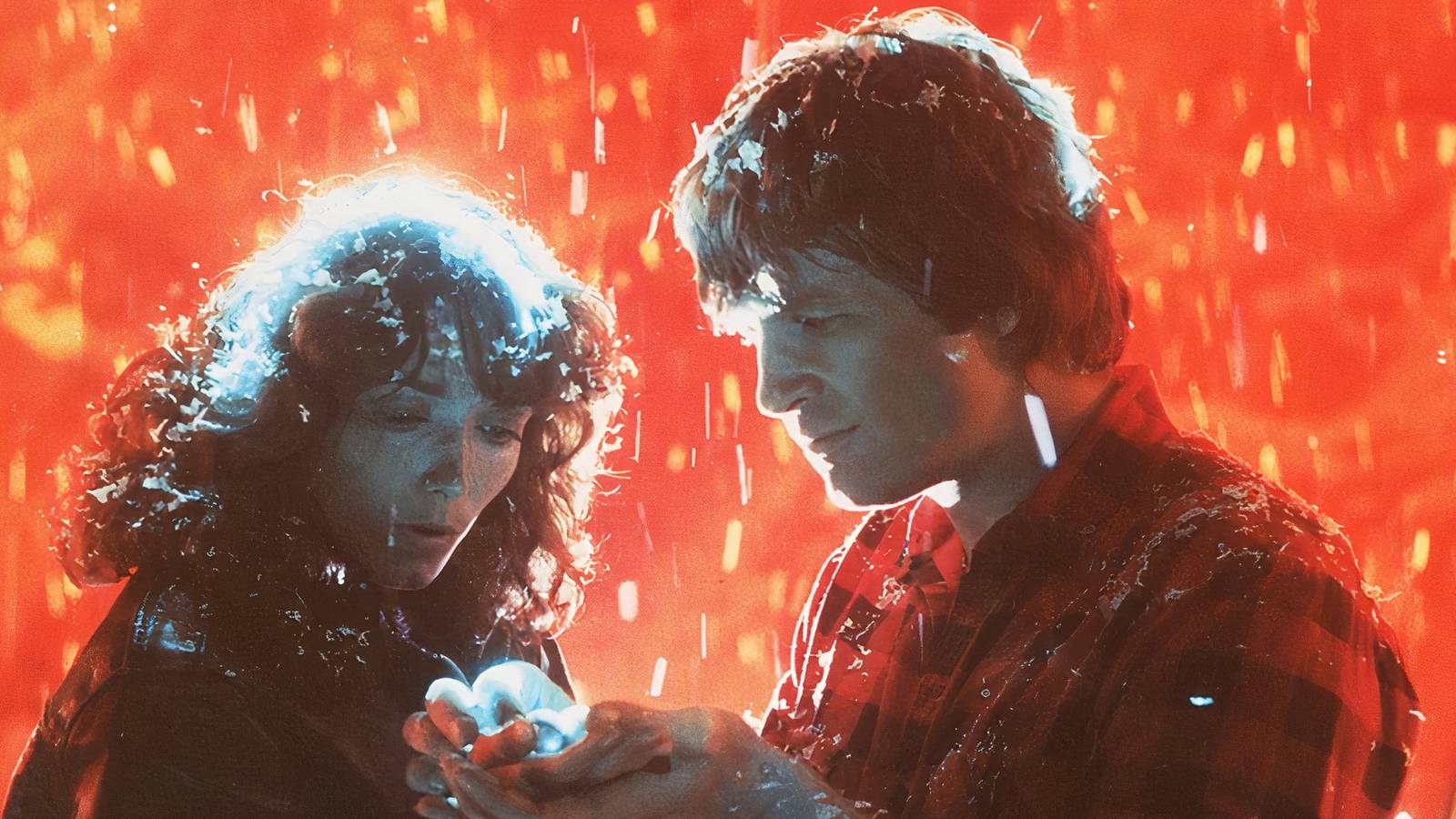
Image via Columbia Pictures Published Jul 25, 2026, 9:33 PM EDT William likes taking edibles, watching movies with his dogs, and then writing about those movies. He doesn't have social media so if you want more of his unhinged opinions or another place to comment hurtful things, you can check out his Letterboxd. Sign in to your Collider account There are lots of beloved sci-fi films — ones that have been praised up and down in print and online for decades with all sorts of hyperbolic statements. The greatest sci-fi movies usually never leave the cultural conversation. Any time a new film in the genre is declared a masterpiece, it's often in relation to those great films that came before. But the medium being around for as long as it has, and sometimes scant availability of some films coupled with streaming saturation, means that there have inevitably been some great sci-fi movies left out of the conversation. These are movies that are just as worthy of praise as any other in the genre, but generally only get mentioned in smaller fan circles. They come from decades past and present, but their future place in pop culture is more uncertain. If anything, these films should be talked about far more and enjoyed by more than just a small group of fans. Keyword should be, but they aren't. These are five of the greatest sci-fi movies that no one talks about anymore. 1 'The Day the Earth Caught Fire' (1961) Image via British Lion Films Disaster movies are nothing new. The subgenre has been around for decades, sowing fear of Mother Nature turning on us and wreaking havoc with earthquakes, volcanoes, and twisters. The sci-fi versions of these films are often more speculative in nature, predicting possible future events, whether they be based on climate change (The Day After Tomorrow) or the Mayan Calendar (2012). Outside of films directed by Roland Emmerich, and predating the disaster movie craze of the '70s, was one of the most grounded and haunting sci-fi disaster films of all time. The Day the Earth Caught Fire comes courtesy of director Val Guest, best known to sci-fi fans for his work with Hammer Films. Set in London and taking place primarily in newsrooms, it's a taut, intelligent thriller where the disaster isn't of Mother Nature, but human nature. Beginning with an apocalyptic, color-tinged opening of a man wandering the empty streets of London, the film then chronicles the destruction of Earth caused by nuclear bomb tests by the United States and the Soviet Union. As told through the eyes of a Daily Express reporter, the film is filled with rapid-fire dialogue and all the chaotic atmosphere of the best newspaper movies. The film doesn't offer any conclusion as to whether humanity manages to avert disaster and extinction or not, as it ends on an ambiguous note that's far more unsettling than even depicting a nuclear holocaust. The Day the Earth Caught Fire is still one of the most unique apocalyptic disaster movies ever made, and its plot still feels chillingly relevant. 2 'Silent Running' (1972) Image via Universal Pictures Sci-fi films in the '70s can be easily classified as those before Star Wars and those after it. George Lucas's monumental blockbuster led to a legion of space opera imitators and studios forking over a lot more cash to beef up special effects budgets. Before Lucas changed film history, the sci-fi movies of the decade were generally of a smaller nature and far more nihilistic. There were post-apocalyptic thrillers like The Omega Man and the darkly comedic A Boy and His Dog. Even those films that did venture into outer space were of a more contemplative sort, such as the universally acclaimed Solaris and the far lesser-known Silent Running. Directed by visual effects legend Douglas Trumbull, it's another apocalyptic film that depicts a future where all remaining plant life exists in ecological preserves on spaceships. It's a film that was unfavorably compared to other classics from the era, but which has developed a cult following that is still far too small. In the future, the forests of Earth have been devastated. Ships orbiting Saturn tow giant domes that hold vegetation and animal life meant to rejuvenate Earth. On board one is ecologist and preservationist Freeman Lowell (Bruce Dern). When orders are given to destroy the domes, Freeman rebels, killing his human crewmates and launching his ship and dome around Saturn. The visual effects are unsurprisingly spectacular for the era, given Trumbull's pedigree, but they don't overshadow the sadness of the film and the tragic performance by Dern at the center. It has the most bittersweet ending to ever involve a droid, and there are some clear influences that trickled down to many future sci-fi films. Collider Exclusive · Sci-Fi Survival Quiz Which Sci-Fi World Would You Survive? The Matrix · Mad Max · Blade Runner · Dune · Star Wars Five universes. Five completely different ways the future went wrong — or sideways, or up in flames. Only one of them is the world your instincts were built for. Eight questions will figure out which dystopia, galaxy, or desert wasteland you'd actually make it out of alive. 💊The Matrix 🔥Mad Max 🌧️Blade Runner 🏜️Dune 🚀Star Wars TEST YOUR SURVIVAL → 01 You sense something is deeply wrong with the world around you. What do you do? The first instinct is often the truest one. APull on every thread until I understand the system — then figure out how to break it. BStop asking questions and start stockpiling — food, fuel, weapons. Questions don't keep you alive. CKeep my head down, observe carefully, and trust no one until I know who's pulling the strings. DStudy the patterns. Every system has a rhythm — learn it, and you learn how to survive it. EFind the people fighting back and join them. You can't fix a broken galaxy alone. NEXT QUESTION → 02 In a world of scarcity, what resource do you guard most fiercely? What we protect reveals what we believe survival actually requires. AKnowledge. If you understand the system, you don't need resources — you can generate them. BFuel. Everything else — movement, power, escape — runs on it. CTrust. In a world of fakes and informants, a truly reliable ally is rarer than any commodity. DWater. And after water, information — the two things empires are truly built on. EShips and credits. The galaxy is big — you survive it by being able to move through it freely. NEXT QUESTION → 03 What kind of threat keeps you up at night? Fear is useful data — if you're honest about what you're actually afraid of. AThat reality itself is a lie — that everything I experience has been constructed to keep me compliant. BA raid. No warning, no mercy — just the roar of engines and then nothing left. CBeing identified. Once someone with power decides you're a problem, you're already out of time. DBeing outmanoeuvred — losing a political game I didn't even know I was playing. EThe Empire tightening its grip until there's nowhere left to run. NEXT QUESTION → 04 How do you deal with authority you don't trust? Every dystopia has a power structure. Your approach to it determines everything. ASubvert it from the inside — learn its rules well enough to weaponise them against it. BIgnore it and stay out of its reach. The further from any power structure, the better. CAppear to comply while doing exactly what I need to do. Visibility is the enemy. DManoeuvre within it carefully. You can't beat a system you refuse to understand. EResist openly when I have to. Some things are worth the risk of being seen. NEXT QUESTION → 05 Which environment could you actually endure long-term? Survival isn't just tactical — it's physical, psychological, and very much about where you are. AUnderground bunkers and server rooms — cramped, artificial, but with access to everything that matters. BOpen wasteland — brutal sun, no shelter, constant movement. At least the threat is honest. CA dense, rain-soaked city where you can disappear into the crowd and nobody asks questions. DMerciless desert — extreme heat, no water, and something enormous living beneath the sand. EThe fringe — backwater planets and busy spaceports where the Empire's attention rarely reaches. NEXT QUESTION → 06 Who do you want in your corner when things fall apart? The company you keep is the clearest signal of who you actually are. AA tight crew of believers who've seen behind the curtain and have nothing left to lose. BOne or two people I'd trust with my life. Any more than that and someone talks. CNobody, ideally. Alliances are liabilities. I work alone unless I have no choice. DA community bound by shared hardship and mutual survival — people who need each other to last. EA ragtag team with wildly different skills and total commitment when it counts. NEXT QUESTION → 07 Where do you draw the line — if you draw one at all? Every survivor eventually faces a moment that tests what they're actually made of. AI won't harm the innocent — even the ones who'd report me without hesitation. BI do what I have to to protect the people I've chosen. Everything else is negotiable. CThe line shifts depending on who's asking and what's at stake. DI draw a long-term line — nothing that compromises my people's future, even if it'd help now. ESome lines, once crossed, can't be uncrossed. I know which ones they are. NEXT QUESTION → 08 What would actually make survival worth it? Staying alive is one thing. Having a reason to is another. AWaking others up — dismantling the illusion so no one else has to live inside it. BFinding somewhere — or someone — worth protecting. A reason to keep moving. CAnswers. Understanding what I am, what any of this means, before time runs out. DLegacy — shaping the future in a way that outlasts me by generations. EFreedom — for myself, for others, for every world still living under someone else's boot. REVEAL MY WORLD → Your Fate Has Been Calculated You'd Survive In…Your answers point to the world your instincts were built for. This is the universe your temperament, your survival instincts, and your particular brand of stubbornness were made for. The MatrixYou took the red pill a long time ago — probably before anyone offered it to you. You're a systems thinker who can't help but notice the seams in things. You're drawn to understanding how the system works before figuring out how to break it. You'd find the Resistance, or it would find you — your instinct for spotting constructed realities is the machines' worst nightmare. You function best when you have access to information and the freedom to act on it. The Matrix built an airtight prison. You'd be the one probing the walls for the door. Mad MaxThe wasteland doesn't reward the clever or the well-connected — it rewards those who are hard to kill and harder to break. That's you. You don't need comfort, community, or a cause larger than the next horizon. You need a vehicle, a clear threat, and enough fuel to outrun it — and you're good at all three. You are unsentimental enough to survive that world, and decent enough — just barely — to be something more than another raider. In the wasteland, that distinction is everything. Blade RunnerYou'd survive here because you know how to exist in moral grey areas without losing yourself completely. You read people accurately, keep your circle small, and ask the questions others prefer not to answer. In a city where humanity is a legal designation rather than a feeling, you hold onto something that keeps you functional. You're not a hero. But you're not lost, either. In Blade Runner's world, that distinction is everything. DuneArrakis is the most hostile environment in the known universe — and you are precisely the kind of person it rewards. Patience, discipline, and political awareness are your core strengths — and on Arrakis, they're survival tools. You understand that the long game matters more than any single victory. Others come to Dune and are consumed by it. You'd learn its logic and earn its respect. In time, you wouldn't just survive Arrakis — you'd begin to reshape it. Star WarsThe galaxy far, far away is vast, loud, and in a constant state of violent political upheaval — and you wouldn't have it any other way. You find meaning in being part of something larger than yourself — a cause, a crew, a rebellion. You'd gravitate toward the Rebellion, or the fringes, or whatever pocket of the galaxy still believes the Empire's grip can be broken. You fight — not because you have to, but because standing aside isn't something you're capable of. In Star Wars, that willingness is what makes all the difference. ↻ RETAKE THE QUIZ 3 'Starman' (1984) Image via Columbia Pictures/Courtesy: Everett Collection John Carpenter may be a bona fide Master of Horror, but he made almost as many contributions to science fiction, with a few films that straddle both genres equally. When it comes to his sci-fi output, most of the praise goes to his masterpiece The Thing, with the rest split between They Live and Escape From New York. While those films are absolutely worth that praise, they unfortunately overshadowed what is one of Carpenter's most underrated and most heartfelt films. Despite the fact that it earned Jeff Bridges an Oscar nomination and helped rehabilitate Carpenter after the critical hatred of The Thing, Starman is probably best known now as the film that Columbia Pictures chose to develop over the similarly sentimental E.T. the Extra-Terrestrial. While the film may not be equal to that Steven Spielberg masterpiece, it's still an incredibly affecting and sharply directed sci-fi film by one of the greatest genre directors of all time. When the titular Starman (Bridges) crashlands on Earth, he takes the form of the recently deceased husband of grieving widow Jenny (Karen Allen). He coerces her to take him across the United States to rendezvous with his species. The road trip not only forms a strangely emotional bond between the two of them, but also forces the Starman to contemplate the nature of humanity and mortality. The U.S. government is also in pursuit, so there's some room for Carpenter to flex some minor action muscles as well. Starman is not only a perfect acting showcase for both Bridges and Allen, who are terrific together, but also for the versatility of Carpenter as a director. He may be most beloved for his most violent films, but he's an old-fashioned craftsman first and foremost, who was raised on the cinema of Howard Hawks, and has just as deft a hand at handling romance. 4 'Strange Days' (1995) Image via 20th Century Studios Kathryn Bigelow has long since become known for her hardcore thrillers grounded in current or historical events, such as The Hurt Locker and Zero Dark Thirty, but she cut her cinematic teeth on genre movies. She began her film career co-directing the biker movie The Loveless, before moving on to films like the vampire neo-Western Near Dark and surfer heist cop drama Point Break. Those films all still have elements of the social issues that would dominate the latter half of her career, but it's the sci-fi noir thriller Strange Days that really encapsulates her entire career. The film's themes of voyeurism, addiction to technology, police militarization, and racial and sexual violence may all make it seem incredibly prescient, but the reality is that Bigelow was only reflecting the current climate of America, and our own sad cyclical nature has kept it relevant. The film was originally developed by James Cameron and then elaborated on with Bigelow, who injected it with social commentary based on the recent Rodney King trial and subsequent L.A. riots. Lenny Nero (Ralph Fiennes) is a black market dealer who specializes in SQUID discs, a special technology that records both the point-of-view and sensations of the subject. When he comes into possession of a disc that depicts a savage sexual assault, it leads him into a dark web of secrets involving dangerous underground figures and corrupt police. Set in 1999, the film is predicting a future that was only a few years away during its production, making its extreme '90s aesthetic both appropriate and nostalgically obsolete. Despite the pulp trappings, Bigelow is never callous or careless in the way she depicts the film's graphic sexual violence or racially motivated killings. She's keenly aware of the social unrest that surrounded race relations in the early '90s and the role that new technology played in it. While the ending of the film is a mild cop out, there's no diminishing the raw power of its most startling images, which likely made it too caustic for audiences who wanted something more escapist. Strange Days bombed, and Bigelow's career took a long time to recover, but it's a killer time capsule that unfortunately still reflects the current status quo. 5 'Timecrimes' (2007) Time loop movies have become their own special subgenre of science fiction thanks to clever comedies like Groundhog Day and Palm Springs and actioners like Edge of Tomorrow. Add to those the low-budget Spanish thriller Timecrimes, which traps its protagonist in a temporal nightmare. Directed by Nacho Vigalondo, who would go on to helm the equally unique kaiju movie Colossal, the film was inspired by several stories published in 2000 AD comic books. It was also successful enough to get Hollywood interested in a remake, which has yet to come to fruition, and the excitement surrounding the original film has since subsided. Vigalondo hasn't had a major career breakthrough or directed a film since that matches the promise of Timecrimes, but it's still a taut, small-scale thriller that uses sci-fi concepts to make it effectively intriguing and bleakly comedic. The film follows Héctor (Karra Elejalde), whose initial prurient act of searching for a young woman he watched undress leads him on a delirious race against time and his own nature as he repeatedly travels back through time to try and correct his mistakes but only violently compounds them. There's a morbid absurdity to the film that keeps it entertaining past its initial disorientation and into some dark twists. It doesn't rely on any elaborate visual effects or production design, but its small sci-fi trappings provide for a perfect set-up. It may occupy space on several lists like this one that extol its virtues as an underseen sci-fi film, but if those are the only places it's being talked about, then it's certainly not near enough for one of the best sci-fi thrillers of its era. Timecrimes Release Date December 12, 2008 Runtime 92 minutes
5 Greatest Sci-Fi Movies No One Talks About Anymore
Full Article
Original Source
Read the full article at Collider →KhanList aggregates and links to publicly available news content. We do not host full articles from third-party sources. Always verify important information with original sources.