
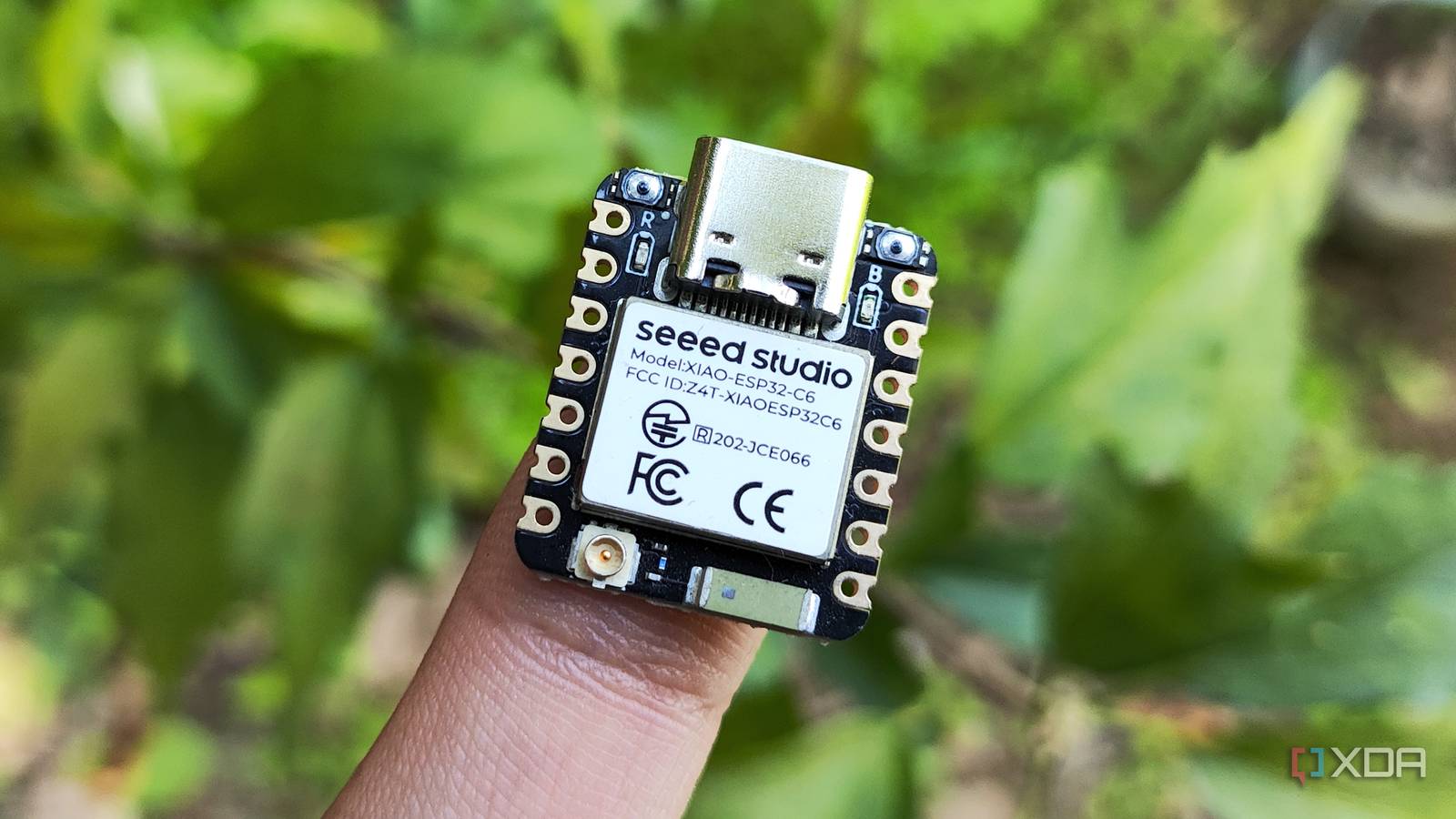
Published Nov 5, 2026, 3:30 PM EST After a 7-year corporate stint, Tanveer found his love for writing and tech too much to resist. An MBA in Marketing and the owner of a PC building business, he writes on PC hardware, technology, and Windows. When not scouring the web for ideas, he can be found building PCs, watching anime, or playing Smash Karts on his RTX 3080 (sigh). You might be used to powering your ESP32 boards directly from a wall socket. A standard 5V USB phone charger provides your project with constant power, but also blocks an outlet (and the charger) as long as you need the project live. You may have made alternate arrangements for your other devices and appliances, but having free wall sockets is always a bonus. Fortunately, not all ESP32 projects need to be chained to a wall outlet. Choosing the right board, configuration, and battery enables you to power your project without occupying a phone charger. These projects aren't obscure either; they can meet real needs inside your home. Whether it's an e-paper dashboard for your desk or a sensor that spends most of its life in deep sleep, a battery-powered ESP32 board is more feasible than you may think. Door or mailbox sensor Using a low-power ESP32 and a magnetic switch One of the simplest sensors you can build with an ESP32 board and a battery is a door/window sensor. It informs you whether a door or window (or a mailbox) is open or closed. Unlike a sensor that is nicely tucked in a corner, a door sensor is prominently visible, making power cables a bit tricky if you want to preserve aesthetics. A battery avoids this problem as long as you put the entire assembly in a nice-looking case. To ensure your door sensor lasts for a year on a single 18650 battery, you'll need to use a board that isn't power-hungry to begin with. Many ESP32 boards consume too much power on the LED and USB chip, but you can use an ESP32-C3 to take care of that. It draws only a couple of dozen μA while in deep sleep and, combined with a magnetic reed switch, can last for months on a single battery. It only needs to wake up when the door opens or closes, report the state to Home Assistant, and go back to sleep. You can use an RTC GPIO wake-up interrupt and an MQTT notification to make it happen. Wi-Fi temperature sensor using an ESP32-C3 Wi-Fi doesn't have to mean power wastage If you want to monitor the temperature to automatically turn appliances on or off, an ESP32-C3 with a simple battery can carry your project even for a year. The key is to allow the board to wake up only when needed. A sensor that samples only a few times a minute, batches its readings, and transmits them over UDP, say, every five minutes will spend most of its time in deep sleep. It will store its readings in memory, which will retain them through deep sleep. Hence, it doesn't need to renegotiate a connection every time it wakes up. With an efficient board like the ESP32-C3, an 18650 battery can easily last for a year. Minimalist e-paper weather station A match made in heaven Powering a personal weather station for a whole year on a single 18650 battery requires some configuration. You can only pick the readings that don't have to be refreshed more than a few times a day. For instance, knowing the day's weather forecast, air quality, and humidity doesn't need a dynamic display. With an e-paper display that consumes power only when it refreshes, 2–3 updates a day can make it last for a year. It's a nifty use of an e-paper display and an efficient ESP32 board, as long as you don't need up-to-date temperature readings every hour. Using a color display will obviously drain the battery faster, so make your choice wisely. Soil moisture sensor using LoRa Keep the power budget minimal Keeping your garden watered requires regular soil moisture monitoring. When running a live cable to a patio or flower bed isn't a good idea, you can use a low-power ESP32 board and a small battery to great effect. You can program the capacitive sensor to measure soil moisture twice a day, signaling your water dispenser accordingly. And when you want the sensor completely offline, such as during the night, you can use a MOSFET to cut power. Paired with a low-power protocol like LoRa to report to Home Assistant, your soil moisture sensor can keep going for almost a year on a single 18650 Li-ion battery (2,500–3,000 mAh). Smart doorbell with ESP-NOW It's NOW or nothing To keep a smart doorbell powered for a year, you'll not only need an ESP32-C3 or ESP32-S3 mini and a battery with low self-discharge, but also a protocol like ESP-NOW. Since regular Wi-Fi handshakes would kill the battery in weeks, ESP-NOW allows the board to wake up, send the packet, and go to sleep in under 100 milliseconds. You'll need to wire the RTC GPIO pin to the physical doorbell button. When it's pressed to bridge the circuit, the board will wake up from deep sleep to send the ESP-NOW packet and go back to sleep. At 0.1 second per ring, it will spend 99.9% of the day in deep sleep if the doorbell is rung, say, 10 times a day. Your ESP32 can last for months without a wall outlet Making your ESP32 project last for months or even a whole year on a single battery is more than possible. You'll have to modify your high-power ESP32 board or buy one that sips power in deep sleep. With the right board, battery, and communication protocol, it's fairly simple to create useful and long-lasting projects without plugging them into an outlet. ESP32-S3 ESP32-S3 comes with a dual-core Xtensa LX7 microcontroller. It has 16MB of flash memory and 8MB of PSRAM with years of maturity to be ready for a variety of projects.
5 ESP32 projects that can run on batteries for a whole year
Full Article
Original Source
Read the full article at Xda-developers →KhanList aggregates and links to publicly available news content. We do not host full articles from third-party sources. Always verify important information with original sources.