
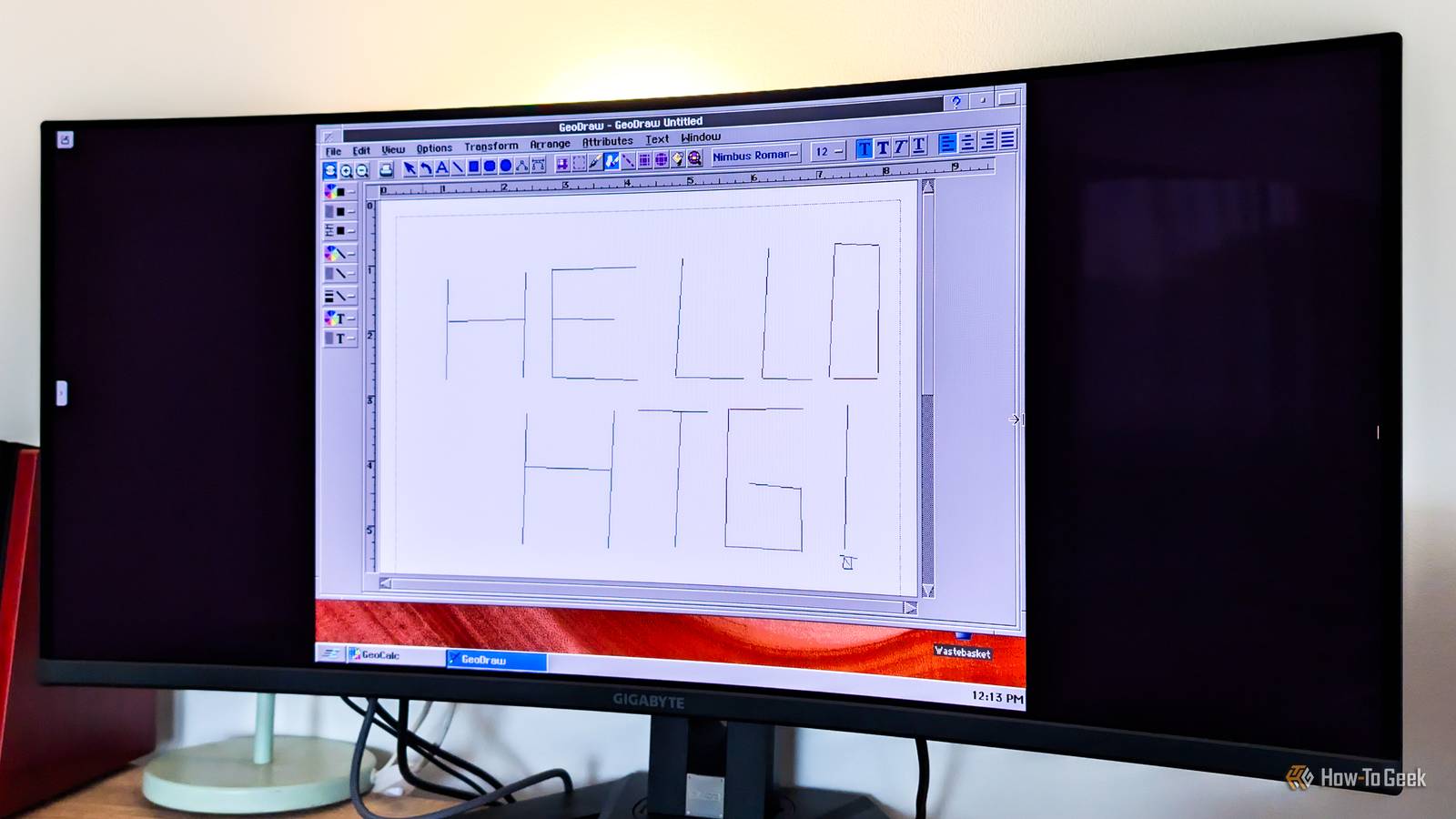
Published Nov 5, 2026, 4:00 PM EST Ever since he got his first smartphone, the legendary Nokia 6600, back in 2005, Goran became obsessed with technology. This obsession had only gotten worse after he received his first gaming PC a couple of months later. He fell in love with video games in the early '90s, shortly after embarking on his gaming journey with the Sega Master System II and SNES. Since then, he has built dozens of PCs, played thousands of games, and authored hundreds of articles about PC hardware, gaming hardware, and video games. He knows everything there is to know about the PC gaming and PC hardware space, and while his console gaming knowledge isn't as comprehensive, he considers himself a console veteran. Goran has almost a decade of experience writing about tech and video games for numerous web publications including TechSpot, TechPowerUp, and EsportsHeadlines. He has been writing for How-To Geek since December 2022. When he isn't gaming or deciding which component of his PC to upgrade next, you can find him strolling around Novi Sad while listening to music and contemplating what to play next. The 1990s was the decade when Windows conquered the world. By the end of it, Windows was the most popular desktop operating system, far ahead of every one of its competitors. But one rival could've taken its spoils at the very beginning of the decade, and the reason why it didn't wasn't because it was an inferior product. In 1990, Microsoft released Windows 3.0 But Windows 3.0 got a worthy competitor the same year In late May of 1990, Microsoft released Windows 3.0, a dramatic improvement over Windows 2.0. Microsoft's new "OS" offered a brand-new 3D graphical user interface that introduced app icons (in glorious 16 colors, no less!) on Windows for the first time. The icons were clickable, and being able to open an app simply by clicking on its icon was a small but significant improvement for Windows. Windows 3.0 also came with improved multitasking and much better customizability than its predecessors. Some other improvements included much better memory management that broke through DOS's 640K memory limit, letting Windows 3.0 run more apps at once, the new Program Manager that was actually easy to use, as well as a new app called File Manager that would become one of the most important Windows apps ever. Despite still running on top of DOS, Windows 3.0 was the first version of Windows that was both a critical and commercial success. It paved the way for future versions of Windows that would make Microsoft the biggest player in the world of desktop operating systems. But that same year, another operating system debuted. Dubbed GeoWorks Ensemble (originally named PC/GEOS), the system was developed by Berkeley Softworks, which renamed itself GeoWorks Corporation in 1990. While Berkeley Softworks had previously developed an 8-bit version of GEOS for the Commodore 64 and Apple II, the new OS was a major step forward. Like Windows 3.0, Ensemble ran on top of DOS, so technically, it wasn't a full-fledged OS. But that didn't matter much since it took over the PC once it loaded, ran its own kernel, and even handled multitasking on its own. For all intents and purposes, it was a proper OS. GeoWorks Ensemble offered everything Windows 3.0 did, and then some Lower hardware requirements, better multitasking and preinstalled app offering, cleaner UI, and more At the time of release, GeoWorks Ensemble was both less demanding and more capable than Windows 3.0. It could run on IBM XT and AT-class PCs, which were powered by the Intel 8088 and 286 CPUs, respectively, with as little as 512KB of RAM. Windows 3.0 could technically run on those PCs too, but to unlock all of its features, it demanded a beefy Intel 386 PC with at least 1MB of extra memory. Despite running well on older PCs that struggled with Windows 3.0, Ensemble offered a number of advantages over its rival. For example, while Windows 3.0 only supported cooperative multitasking for Windows apps, GeoWorks supported preemptive multitasking. This was important because the OS was responsible for multitasking on GeoWorks Ensemble, so you could do multiple things at the same time in multiple apps. On Windows 3.0, a single busy app could lock up the rest of the system until it was done. For instance, if an app was printing a document, you often couldn't use any other apps until it finished, while you could juggle multiple apps on GeoWorks Ensemble even if one or more were busy. But GeoWorks didn't stop there. It also supported scalable fonts, so text looked crisp at any size, and what you saw on the screen matched what came out of your printer. On the flip side, Windows 3.0 mostly relied on bitmap fonts, which looked jagged when scaled. GeoWorks' UI also looked crisper and was generally cleaner than that of Windows 3.0. One of the biggest boons GeoWorks Ensemble offered was its suite of bundled productivity apps that included nearly everything a regular PC user might need at the time: GeoWrite, GeoDraw, GeoManager, GeoPlanner, GeoDex, and GeoComm, along with other apps such as a calculator and a notepad. GeoWorks Ensemble had the upper hand over Windows 3.0 in more than a few ways. Despite its advantages, GeoWorks couldn't fight Microsoft in a few key areas Credit: LGR/YouTube While it offered a better overall package than Microsoft's premier offering, GeoWorks Ensemble lost the battle with Windows due to lagging behind in a few key areas. For starters, developing apps for the OS was much more complex and expensive than for Windows. Early on, you needed a pricey Sun workstation and SDK manuals to create apps, which were written in an object-oriented version of 8086 assembly and, later, a C dialect with object-oriented extensions. If you wanted to debug apps, you had to use a second PC connected via a serial cable, which further added to the cost and complexity. On the other hand, developing apps for Windows was much simpler. For one, you could use a regular PC, write apps in C instead of the custom version of assembly GeoWorks used, and debug them on the same machine with just a second monitor. Windows also had an established app ecosystem before Windows 3.0 arrived, and plenty of developers already knew their way around the tools used to create apps. On top of that, Microsoft released the first version of Visual Basic in 1991, which made development even easier since you could build apps without writing them in C. Plus, Windows came bundled on a bunch of OEM PCs, allowing it to quickly increase its market share. GeoWorks Ensemble also came bundled on some PCs, but according to former GeoWorks CEO Brian Dougherty, Microsoft put pressure on PC vendors, signing them to exclusive Windows deals that prevented them from bundling GeoWorks because "Microsoft realized what we had before the rest of the industry." In the end, the combination of the lack of third-party app support, complex app development, and Windows coming preinstalled on many prebuilt PCs of the time led to GeoWorks Ensemble's disappearance from the desktop OS market. GeoWorks tried to pivot to PDAs, but it lost there too PEN/GEOS had a promising start, but its ties to x86 and DOS were its Achilles' heel Credit: textlad/Wikimedia Commons GeoWorks Corporation tried to pivot to the then-nascent market for handheld PCs and PDAs, and it saw some success there. Some notable devices of the era featured PEN/GEOS, the portable version of the system, including the HP OmniGo, Tandy Zoomer, and the Nokia 9000 and 9110 Communicators, the last three being important for the rise of PDAs and smartphones. But after a promising start, PEN/GEOS didn't find its way to newer devices that really opened the market to a mainstream audience. One of the reasons was that the system was stuck on DOS and x86 architecture, while PDAs and smartphones started moving to other chips, such as ARM, and to systems that didn't have DOS at their heart. Another major reason was that its partners moved on to their own platforms. Palm did it with the famous PalmPilot that ran Palm OS and featured the Graffiti handwriting recognition system. Nokia shifted its smartphones to Symbian, while Microsoft's portable versions of Windows grabbed much of the rest of the market, with PEN/GEOS being mostly forgotten by the early 2000s. GeoWorks Ensemble is yet another example of how a better product doesn't always win In the early 2000s, GeoWorks tried to pivot to the wireless infrastructure market, but that proved anything but successful. In 2003, the company handed exclusive rights to GEOS to Breadbox Computer Company, which had already been selling the OS as Breadbox Ensemble. After Breadbox's owner died, blueway.Softworks bought the PC/GEOS rights and open-sourced it in 2018. You can check out the project's GitHub page, and even play around with the PC/GEOS GUI by visiting its online demo. While GeoWorks Ensemble beat Windows 3.0 in most areas, it failed to take a big bite out of the PC market due to the lack of third-party apps and what GeoWorks saw as Microsoft's refusal to allow its rival a fair market battle. Ironically, the lack of apps was also what killed Windows Phone, Microsoft's mobile OS, which was in some ways ahead of its time. GeoWorks Ensemble and Windows Phone are prime examples of how a better product doesn't always have the last laugh.
The operating system that almost beat Windows (and why you've probably never heard of it)
Full Article
Original Source
Read the full article at Howtogeek →KhanList aggregates and links to publicly available news content. We do not host full articles from third-party sources. Always verify important information with original sources.