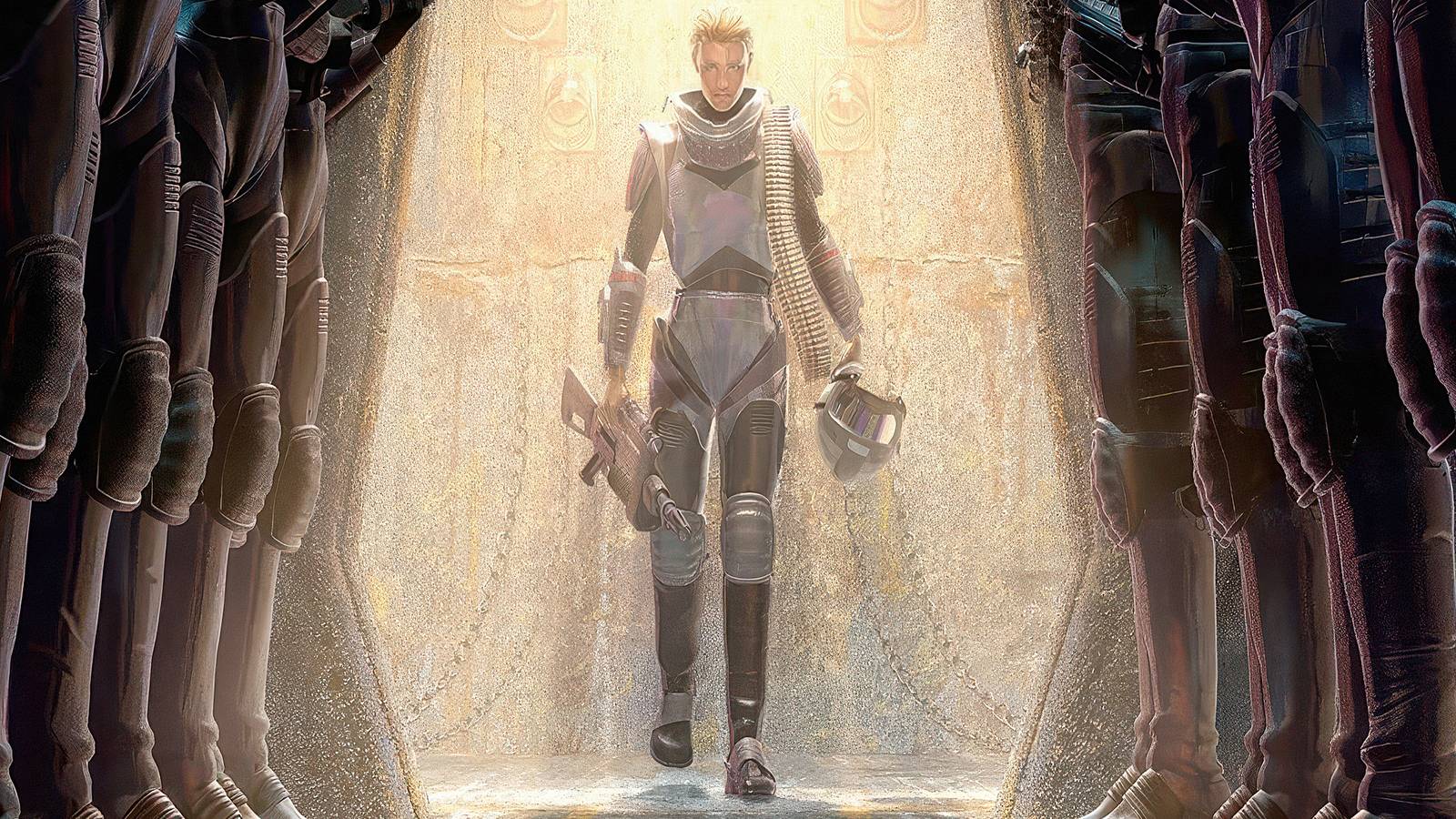
Published Jul 24, 2026, 6:38 AM EDT Diego Pineda has been a devout storyteller his whole life. He has self-published a fantasy novel and a book of short stories, and is actively working on publishing his second novel. A lifelong fan of watching movies and talking about them endlessly, he writes reviews and analyses on his Instagram page dedicated to cinema, and occasionally on his blog. His favorite filmmakers are Andrei Tarkovsky and Charlie Chaplin. He loves modern Mexican cinema and thinks it's tragically underappreciated. Other interests of Diego's include reading, gaming, roller coasters, writing reviews on his Letterboxd account (username: DPP_reviews), and going down rabbit holes of whatever topic he's interested in at any given point. The wonderful thing about science fiction as a literary genre is that there's something out there for virtually anyone and everyone. Those who prefer fantasy may take a liking to science fantasy, while those who love adventure stories are likely to enjoy space operas as well. Of course, those who like stories about high-stakes action, tactical decisions, and expansive wars should become huge fans of the military sci-fi genre. This subsection of the realm of science fiction has evolved greatly since its early days in the pulp magazine tales of future wars that became popular after World War II. From then until the present, sci-fi bookworms have been treated to several military sci-fi novels that have been nothing short of masterpieces. Whether they're pulpy or entirely serious, these books are essential reading for anyone interested in getting into military science fiction. 10 'The Light Brigade' (2019) Image via S&S/Saga Press Many of the greatest masterpieces of the military sci-fi genre lie in the past as essential classics, but modern times have also seen the publication of several great gems from this subgenre. Case in point: Kameron Hurley's The Light Brigade, a Hugo and Locus Awards nominee so brilliantly mind-bending that it pretty much begs for several re-reads. All in all, it's one of the best sci-fi books of the last 10 years, a must-read for anyone who prefers books that aren't so overtly pro-militarism. Indeed, The Light Brigade offers a nuanced critique of warfare and unchecked capitalism that's deeply thought-provoking. It's a gritty, action-packed war story whose razor-sharp social commentary is wonderfully elevated by its delightful puzzle of a time travel narrative. 9 'Halo: The Fall of Reach' (2001) Image via Simon & Schuster There are several book series that have been foundational to the military sci-fi genre over the years, and interestingly enough, one of those is Halo. Proof that tie-in novels can be absolutely exceptional, the Halo series has offered some genuinely amazing military sci-fi books at several points, the best of which fans tend to agree is The Fall of Reach. Penned by Eric Nylund, widely praised as the best Halo book author out there, The Fall of Reach was the very first Halo book ever published, making it a great entry point into the series today—even for those who have never played the games. It's a gripping, fast-paced adventure with some incredible worldbuilding and an engrossing tragic story, the sort of novel that Halo fans and non-fans alike should be able to admire. 8 'Xenos' (2001) Image via Simon & Schuster Another multimedia franchise that has provided the basis for several exceptional military sci-fi books is Warhammer 40,000, a franchise born as a miniature wargame produced by Games Workshop. Fans' opinions on what the best Warhammer book is differ, but there's one in particular that many would confidently call the best gateway for any military sci-fi fan unfamiliar with the series: Dan Abnett's Xenos. It's genuinely one of the best sci-fi books of the last 25 years, even for those who aren't fans of any particular Warhammer property. It's an engrossing detective thriller, an epic space opera, and an action-packed military sci-fi gem that introduces the highly acclaimed Eisenhorn trilogy. Even without any prior Warhammer knowledge, Abnett's fast-paced prose and detailed world-building make this an irresistibly entertaining novel. Image via Del Rey Star Wars is one of the multimedia properties with the most tie-in books, several of which, particularly those set during the fan-favorite Clone Wars era, serve as absolutely fantastic military sci-fi stories. And as far as masterful military sci-fi novels set in the galaxy far, far away go, it doesn't get much better than Karen Traviss' Republic Commando series. And from that saga, the best of the bunch is almost undoubtedly Star Wars: Hard Contact. It is yet another instance of a tie-in where you don't need to be a fan of the franchise in question, nor even particularly knowledgeable about it, to enjoy the book. Gritty and wonderfully character-driven, Star Wars: Hard Contact is perfect for military sci-fi fans who enjoy stories that dive deep into the psychology and personality of soldiers, even if those soldiers in this instance are clones. Collider Exclusive · Star Wars Quiz Which Force UserAre You? Light Side · Dark Side · Or Somewhere Between The Force is not a binary. It is a spectrum — from the serene halls of the Jedi Temple to the shadowed corridors of Sith space. Ten questions will reveal where you truly fall. The Force has always known. Now you will too. 🔵Jedi Master 🟡Padawan 🔴Sith Lord ⚫Inquisitor ⚪Grey Jedi IGNITE YOUR SABER → 01 What is the Force to you? Your relationship with the Force defines everything else. AA living energy I must be worthy of — it is not mine to control. BSomething vast and mysterious I'm only beginning to understand. CNeither light nor dark — just a current I choose to ride. DPower. Pure and simple. The strong take it; the weak don't. NEXT QUESTION → 02 When you feel strong emotions — anger, grief, love — what do you do? The Jedi suppress. The Sith feed. Others choose differently. AAcknowledge them, then release them. Attachment leads to suffering. BFeel them fully, then decide what to do — they're not the enemy. CBury them. Emotion is a liability I can't afford to indulge. DUse them. Passion is the engine of the dark side for good reason. NEXT QUESTION → 03 The Jedi Council gives you an order you disagree with. You: How you handle authority reveals your alignment. AFollow it. The Council's wisdom surpasses my own perspective. BVoice my objection clearly, then defer to the decision. CComply outwardly while doing what I think is right. DIgnore it. The strong don't answer to committees. NEXT QUESTION → 04 You are offered forbidden knowledge that could give you enormous power. The cost is crossing a moral line. You: The dark side's pull is never more than a choice away. ARefuse without hesitation. There is no cost worth that price. BWeigh it carefully — sometimes darkness holds real answers. CFeel the pull but walk away — for now. DAccept it. Power justifies the method used to obtain it. NEXT QUESTION → 05 Your approach to training and learning is: A student's habits become a master's character. ADedicated but humble. There is always more to learn from my masters. BRigorous and patient. Mastery is earned through years of discipline. CEclectic — I draw from every tradition, not just one. DRelentless and brutal. Pain accelerates growth. Rest is weakness. NEXT QUESTION → 06 In a duel, your lightsaber fighting style reflects: Combat is the purest expression of a Force user's philosophy. ADefense and composure — I wait for my opponent to overcommit. BFast and instinctive — I trust the Force to guide my movements. CUnpredictable — I blend styles to keep enemies off-balance. DOverwhelming aggression — I end fights before they begin. NEXT QUESTION → 07 A defeated enemy lies at your feet, powerless. You: Mercy — or its absence — is the truest test of alignment. AStrike them down — compassion toward enemies is naïve and costly. BNeutralize them permanently. I can't afford loose ends. CSpare them if I can — but stay clear-eyed about the risks. DOffer them a chance to surrender. Every being deserves that. NEXT QUESTION → 08 The Jedi Code forbids attachment. Your honest view on love and bonds: The source of the greatest falls in the galaxy. AThe Code is right. Attachment clouds judgment and invites suffering. BLove is not a weakness — the Jedi Code got this one wrong. CI have no attachment — only loyalty to my master's mission. DI feel it deeply but struggle to reconcile it with my training. NEXT QUESTION → 09 Why do you use the Force at all? What's the point? Purpose is the difference between a knight and a weapon. ATo learn. I'm still figuring out what I'm capable of. BTo protect and serve. The Force is a responsibility, not a gift. CTo survive — and maybe carve out something worth having. DTo dominate. Strength demands to be expressed, not contained. NEXT QUESTION → 10 At the final moment — light side or dark side pulling at you — what wins? In the end, every Force user faces this moment. What does yours look like? AThe light. I choose peace, even when darkness would be easier. BNeither fully — I carve my own path through the middle. CWhoever I serve — my loyalty defines me more than my morality. DThe dark. Power is the only thing that's ever actually been real. REVEAL MY ALIGNMENT → Your Alignment Has Been Determined Your Place in the ForceThe scores below reveal how the Force sees you. Your highest number is your true alignment. Read on to understand what that means — and what it will cost you. 🔵 Jedi Master 🟡 Padawan 🔴 Sith Lord ⚫ Inquisitor ⚪ Grey Jedi Disciplined, compassionate, and deeply attuned to the living Force, you have walked the path long enough to understand its demands — and accept them. You lead not through authority alone, but through example. You have felt the pull of the dark side and chosen otherwise, every time. That is not certainty. That is courage. You are earnest, powerful, and brimming with potential — and you know it, which is both your greatest asset and your most dangerous flaw. You act before you think, trust your gut over your training, and sometimes confuse impatience for bravery. The Masters see something in you, though. The question isn't whether you have what it takes — it's whether you'll be patient enough to find out. You are not simply dangerous — you are certain, and that is worse. You have decided what the galaxy needs, and you have decided you are the one to deliver it. Your power is genuine and formidable, earned through sacrifice that would have broken lesser beings. But examine your victories carefully. Every Sith believed their cause was righteous. The dark side's cruelest trick is that it agrees with you. You were forged in fire and reshaped by those who found you at your lowest. You serve, because service gave you structure when you had none. Your allegiance is not to an ideology — it is to survival and to the master who gave you purpose. But there is something buried beneath the conditioning. The Jedi you hunt? You recognize them. Because you remember what it felt like before the choice was taken from you. You have looked at the Jedi Code and the Sith Code and found both of them incomplete. You walk the line not out of indecision but out of conviction — you genuinely believe both extremes miss something essential. The Jedi don't fully trust you. The Sith think you're wasting your potential. They're both partially right. But so are you. ↻ RETAKE THE QUIZ 6 'Starship Troopers' (1959) Image via Ace Books Before it served as the basis for one of the best satire movies of the last 75 years, Starship Troopers revolutionized military science fiction and quickly established itself as one of the genre's cornerstones, which it still is today. It's a must-read for anyone interested in the genre's history, winner of the Hugo Award for Best Novel and one of the most acclaimed sci-fi books of its time. As it has aged, the book has proven somewhat controversial due to its views on things like authoritarianism and militarism, but even the way it lends itself to those sorts of nuanced conversations adds to its value as an essential classic. Blending intense mechanized combat with profound philosophical debates about civic duty, Starship Troopers is a riveting coming-of-age story whose influence on the genre cannot be overstated. 5 'The Lost Fleet: Dauntless' (2006) Image via Ace Books John G. Hemry's The Lost Fleet series (written under the pen name of Jack Campbell) is a massive landmark in the modern history of military science fiction, composed of several sub-series and over a dozen books in total. But as expansive as the series may be, it's admirable that its best installment is still the very first of the bunch, Dauntless, which sets the stage for the saga perfectly while also being tremendously enjoyable on its own. The realistic space combat is riveting, and the worldbuilding is fantastic. As a retired US Navy officer, Hemry's tactically detailed writing and nuanced depiction of emotional reactions to combat make Dauntless an absolutely fascinating piece of military sci-fi. The realistic space combat is riveting, the character drama adds a deeply compelling emotional dimension to the book, and the worldbuilding is fantastic. There's not much political or thematic depth here, but as pure breezy entertainment, it doesn't get much more effective than Dauntless. 4 'Armor' (1984) Image via DAW Books Rather than a mainstream icon of sci-fi literature, John Steakley is more of a cult figure who only penned two books in his lifetime. The first (and best) was Armor, a foundational classic of the military sci-fi genre that's among the best sci-fi books of the last 50 years. It follows humanity's war against an alien race using combat exoskeletons, but what sets it apart is that Steakley's focus is on the psychological toll of war. Armor proved substantially influential for military sci-fi, and its mark is still visible in many works of the genre that take a more introspective, psychologically nuanced approach to these action-packed narratives. This underappreciated '80s gem is a hugely entertaining novel, but what's most surprising and powerful about it is just how emotionally stirring it is from start to finish. 3 'Old Man's War' (2005) Image via Tor Books Another one of the most foundational military sci-fi novels of the 21st century that revitalized the subgenre and pushed its limits to distances rarely seen before, John Scalzi's Old Man's War is the groundbreaking start of the series of the same name. It's the sort of sci-fi book that keeps you hooked throughout, a masterful space opera that launched Scalzi into mainstream prominence. At first glance, the fast pace and action-packed narrative of Old Man's War, which make it irresistibly entertaining from the first page to the last, may make it seem pro-war, but it's actually a novel that rewards revisits. Upon closer inspection, aside from being incredibly fun, Old Man's War is also a deeply nuanced critique of colonial expansion and the dehumanization of soldiers, subtly exploring these themes while still entertaining even the most demanding military sci-fi bookworm. 2 'Ender's Game' (1985) Image via Tor Books The realm of military science fiction is one so vast and so diverse that it's impossible to ever read every single masterpiece the genre has ever produced. But there are definitely a handful of military sci-fi cornerstones so groundbreaking, so important, and so influential that virtually all fans of the genre should read them at least once. Despite how controversial and utterly reprehensible a figure Orson Scott Card may be, there's no denying that Ender's Game is one such book. It's one of those classic sci-fi books still worth reading in 2026, a gripping blend of creatively written zero-gravity action and a thematically profound exploration of many a moral quandary. Ender's Game is a thrilling action story, a psychologically layered coming-of-age, and a cautionary tale against apathy all in equal measure. In short, it's a military sci-fi classic that's nearly unparalleled. 1 'The Forever War' (1974) Image via St. Martin's Press If there's any one book that can be considered the greatest, most essential, and most impactful military sci-fi novel ever written, it's Joe Haldeman's The Forever War, the origin of the series of the same name. Winner of the Nebula, Hugo, and Locus Awards, it truly is one of the greatest science fiction stories ever written, as emotionally raw as it is profoundly humanistic. Deeply inspired by Haldeman's traumatic experiences fighting in the Vietnam War, The Forever War is deeply critical of war and the senselessness of military combat. While it's generally scientifically accurate, so hard sci-fi fans should be pleased, it's also thematically and tonally complex, so those looking for more than just simple entertainment should have a blast. The book is also fast-paced and wonderfully written, making it thoroughly entertaining. In other words, it's the closest military sci-fi literature has ever come to perfection.
10 Greatest Military Sci-Fi Books of All Time
Full Article
Original Source
Read the full article at Collider →KhanList aggregates and links to publicly available news content. We do not host full articles from third-party sources. Always verify important information with original sources.