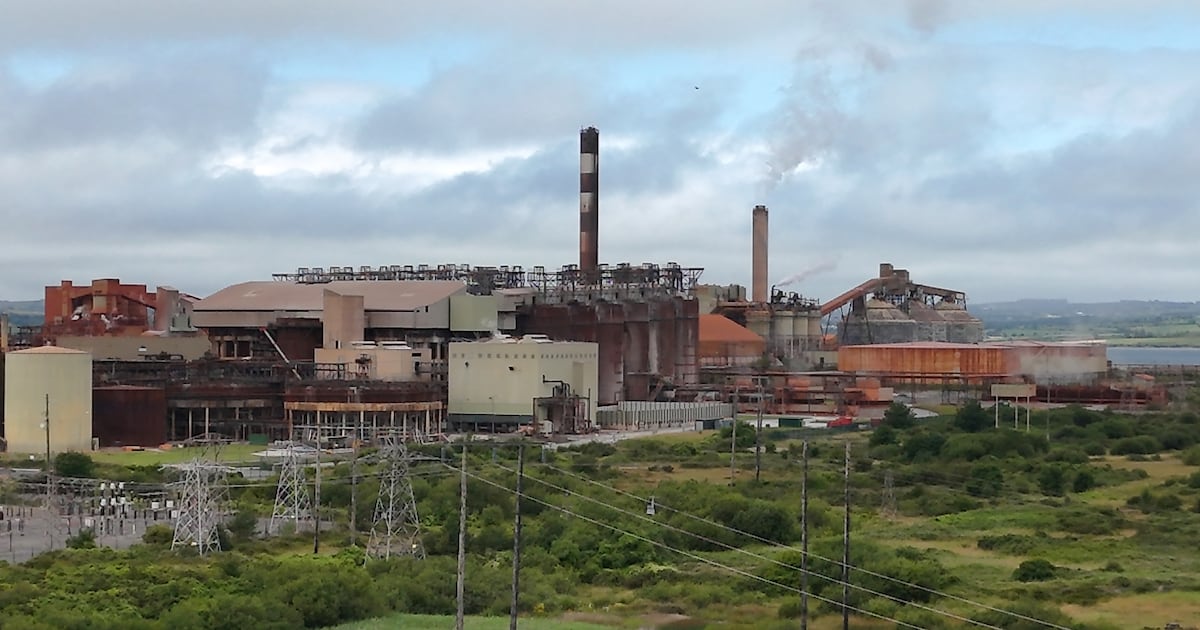
Ukrainian president Volodymyr Zelenskiy appealed for economic sanctions to bar Aughinish Alumina from exporting raw material to Russia during private talks with European Commission president Ursula von der Leyen last week.The Ukrainian wartime leader said it was his belief that alumina produced in the Co Limerick plant was helping to fuel the Russian war effort, according to one senior official briefed on the discussion afterwards.It is understood Zelenskiy asked the EU to introduce an export ban cutting off the sale of alumina – the raw material used to make aluminium, to Russia – during a closed-door discussion with von der Leyen when the commission president visited Kyiv last week.The request for EU-level sanctions to choke off the supply of alumina to Russia was one of a number of points raised by Zelenskiy in his talks with the top EU politician.READ MOREAn investigation by the Department of Enterprise examining Aughinish Alumina’s exports to Russia is being finalised. The Government has committed to share the findings with the commission, which is the EU’s executive arm that proposes and oversees economic sanctions targeting Moscow. The investigation was launched following reporting by The Irish Times, in co-operation with the Organised Crime and Corruption Reporting Project, that drew on leaked documents to detail how Aughinish Alumina is shipping vast amounts of alumina to smelters in Russia, where it is then sold to a company supplying aluminium to Russian arms and missile manufacturers.The review is expected to find there is insufficient evidence to conclude Aughinish is supplying the Russian arms industry, but that it is not possible to say alumina from the plant wasn’t ending up making Russian weapons.The Shannon refinery is expected to feature in discussions between Zelenskiy and Taoiseach Micheál Martin in an upcoming visit he is scheduled to make to Kyiv.Zelenskiy expressed concern exports from the Irish plant were aiding the Russian military machine when he met the Taoiseach in Dublin, on the margins of a ceremony marking the start of Ireland’s Council of the EU presidency earlier this month.[ Aughinish Alumina report not expected to be published before being sent to EU commissionOpens in new window ][ Aughinish Alumina report will not rule out that material is used in Russian weaponsOpens in new window ]The European Commission has not proposed including alumina products, or an export ban, in any of the rounds of economic sanctions levelled against Moscow so far.Sanctions are intended to make it harder for Russia to keep fighting in Ukraine, by cutting off its supply of key materials and the revenue Moscow receives from the sale of oil, gas and other products.The economic restrictions are proposed by the commission and must be unanimously approved by all 27 EU states.Negotiations to agree on the union’s 21st round of sanctions are continuing after weeks of talks that have become difficult and increasingly divisive at times. Greece, Germany, Portugal and Austria have all sought concessions to protect certain domestic businesses and industries from the knock-on effects of blacklisting additional sections of Russia’s economy.There is a diplomatic push in Brussels to clinch a deal on a watered-down package of sanctions this week.Multiple sources in the commission said it was highly likely sanctioning alumina, thus making it illegal to supply the product to Russia, would feature as an option in the next batch of draft sanctions proposed in the autumn. The Government has repeatedly said it will not stand for a scenario where Ireland is found to be in any way supplying material producing Russian missiles launched at Ukraine.Aughinish Alumina has warned that sanctioning its Russian-bound shipments could force the industrial plant to shut, threatening hundreds of jobs in the Foynes area and its flow of material provided to European heavy industry.
Zelenskiy asked Ursula von der Leyen for EU sanctions on Aughinish exports
Full Article
Original Source
Read the full article at Irishtimes →KhanList aggregates and links to publicly available news content. We do not host full articles from third-party sources. Always verify important information with original sources.