
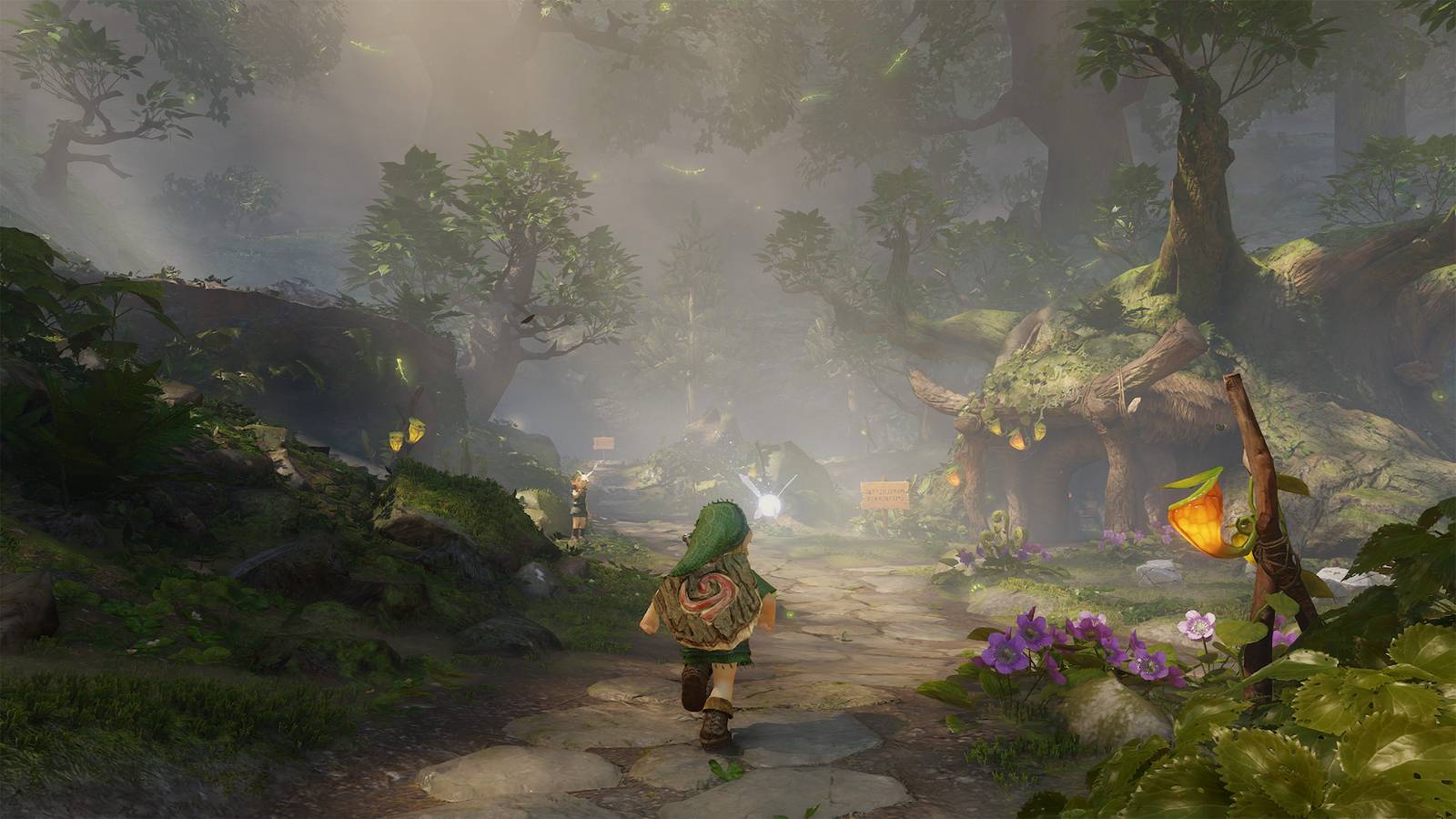
Published Nov 7, 2026, 8:31 PM EST Patrick O'Rourke is XDA's News Editor and Entertainment Segment Lead. Previously, he was Pocket-lint's Editor-in-Chief, the Editor-in-Chief of Canadian tech publication MobileSyrup, and earlier in his career, he worked as the technology editor at the Financial Post and Postmedia. He's based in Toronto. Over the past 15 years, he's written thousands of articles. Patrick has also interviewed dozens of tech industry executives and covered GDC, E3, Gamescom, WWDC, Apple keynotes, Samsung Unpacked events and more. Patrick has a BA in journalism from Toronto Metropolitan University. Summary Zelda: Ocarina of Time is already running on Switch 2 emulators on PC. The game seems playable on high-end rigs, but performance is still somewhat glitchy. The Hookshot static recompiler runs Ocarina of Time natively on Windows with frame-gen, upscaling, and ultrawide support. Nxnative allows Switch 2 games to run well on Mac (ARM64+Metal), including Ocarina of Time. The Legend of Zelda: Ocarina of Time released just a couple of days ago on November 5th for the Switch 2, but we’ve already seen the game running on Windows 11 PCs through Switch 2 emulators like Lichii (a fork of Eglantine), with performance improving rapidly thanks to several recent updates and the help of AI tools. Right now, the game seems somewhat playable on high-end PCs, though graphical glitches and other problems remain. Several Lichii forks have emerged with varied claims about performance, as countless vibe-coded projects all compete for the glory of being the first to run the remake of the N64 classic smoothly on PC. Amid the wave of emulators, a new tool called Hookshot has emerged (via Videocardz). Unlike traditional emulation, Hookshot is a static recompilation that translates Ocarina of Time’s ARM64 code into a native Windows game. Like similar Mac projects, you need to build the game from your own files with Hookshot. Hookshot adds several extra features, including 2x, 3x, and 4x frame generation, upscaling, and ultrawide support. More importantly, reports indicate Hookshot runs Zelda: Ocarina of Time (or rather, the "green hat adventure game") more smoothly than any current emulation effort. Performance reportedly falls in the 50fps range without frame generation with a Ryzen 7600X and a GeForce RTX 4060 Ti 16GB, according to Hookshot’s developer NotRexed. In addition to Hookshot, ItsOOGWAY posted a video of DLSS 5 running directly on a PC emulating Zelda: Ocarina of Time to YouTube. This clip uses a new fork of Lichii called Fritzi, along with a community-developed DLSS 5 manager and Live Flow Multi Frame Generation. The results are pretty subtle, but you can still see the over-the-top extra detail DLSS 5 adds to the game (it surprisingly doesn't look awful, though). Zelda: Ocarina of Time already runs pretty well on Mac Nxnative has been updated with Switch 2 support There are also several examples of Ocarina of Time playing smoothly with Nxnative on Mac, including this clip of the game running at a ridiculously smooth 60fps in the Great Deku Tree. I tried Nxnative myself with a few different graphical interface tools and was impressed with the overall performance of Switch titles. Since then, the tool has added support for several Switch 2 games, resulting in this solid-looking iPhone port of Ocarina of Time from @happyjoejiang (Joe Jiang) on Twitter. At a basic level, similar to Wine (Wine Is Not an Emulator), an open-source compatibility layer that allows Windows apps and games to run on Linux, Nxnative lets software written for another platform (Nintendo's Switch) execute on a host operating system with high-level emulation (HLE) components, in this case, macOS. Because the Switch and Apple devices use Arm-based processors, Nxnative can run a lot of the game's original ARM64 code directly on Apple's chips, while recreating the Switch's system services and translating its graphics API to Metal. This is part of why we're generally seeing Switch 2 titles like The Legend of Zelda: Ocarina of Time run more smoothly on Mac compared to PC. I haven't tried any of these emulators or tools with Ocarina of Time, so I can't verify these projects or videos. That said, they all seem very legitimate, and multiple users back up the performance claims. It's important to note that in order to play Zelda: Ocarina of Time on PC with an emulator, you need to legally own a copy of the title and dump it into a compatible file format from your jailbroken Switch 2.
Zelda: Ocarina of Time is already running on PC with DLSS 5 and frame generation
Full Article
Original Source
Read the full article at Xda-developers →KhanList aggregates and links to publicly available news content. We do not host full articles from third-party sources. Always verify important information with original sources.