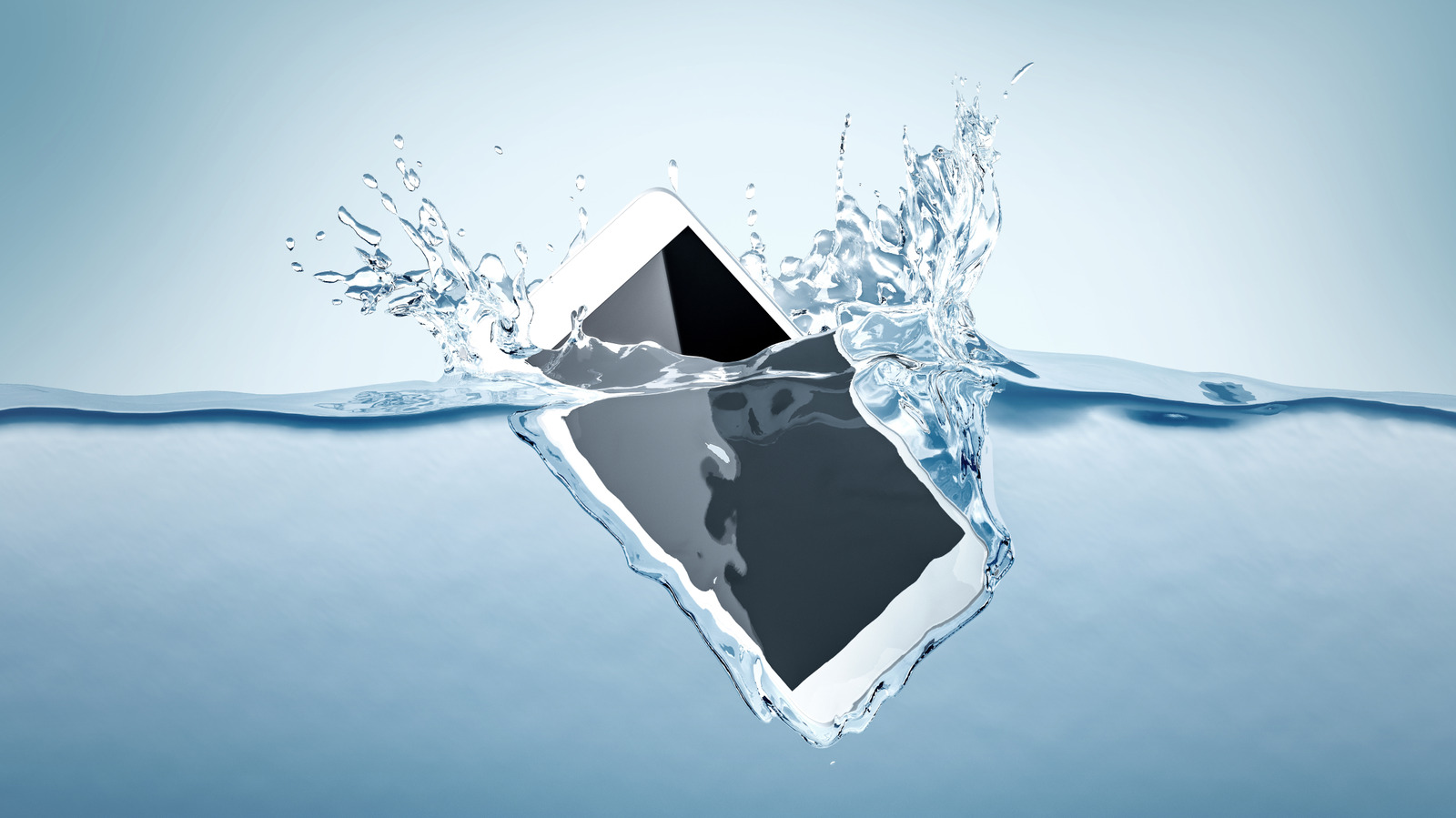
Don't just jump straight into a pool with it, you savage. Alexandrbognat/Getty Images If you were hoping to take your seemingly water-resistant phone swimming this summer, you're sadly out of luck. Though many phones now boast a high Ingress Protection rating — IP for short — that make them seem waterproof, that's not exactly the case. In theory, an IP68-rated phone should be able to handle being fully submerged in water, but the IP rating system has many technicalities to consider when determining your phone's true durability. To make matters worse, most phone warranties don't cover water damage. Even devices like the OnePlus line that explicitly advertise their ruggedness have their warranty voided by liquid damage. How do you know if your phone is truly protected? How Ingress Protection ratings work To understand the shortcomings of waterproof phone claims, it's important to understand how Ingress Protection ratings work. Created by the International Electrotechnical Commission, the first number in a rating like IP68 represents a product's resistance to solid matter like dust, with six being the maximum value; the second number is for its water resistance, with nine being the highest possible. If a rating features an X in the first spot, it means dust protection hasn't been tested for. How much water each number can withstand is very specific, ranging from water droplets to full submersion — that is, until you get to IPX8. While a value of IPX7 is defined as withstanding up to 1 meter of water for up to 30 minutes, the specifications of IPX8 are largely determined by individual manufacturers. The only clear distinction is that it can survive more than a meter of water, but just how much depth it can handle and for how long is a case-by-case basis. Newer iPhones, for example, can handle up to six meters for up to 30 minutes, while older phones can handle between two and four meters depending on the model, but they're all rated IP68. Is IP68 fully waterproof? Evgen_prozhyrko/Getty Images Unfortunately for water lovers and the perpetually clumsy, these water resistance claims aren't really designed for real life. When the IP value is tested for, the water isn't hot, salty, muddy, chlorine-laden, or otherwise impure, it's not moving, and the phone is submerged gently. Unless users are actively recreating all of these conditions, there's a myriad of other factors at play determining whether your phone survives. The phone being tested is also brand new — even with a high-quality phone case, every impact your phone takes can cause small, otherwise imperceptible damage that can change how it's affected by water. Combine all of this with the fact the specifics of an IP68 are highly dependent on the manufacturer, perhaps only meeting the bare minimum technical qualifications for the rating, and you've got a recipe for a waterlogged phone. If you were hoping to circumvent this issue by upgrading to an IP69 device instead, you're out of luck. Though they're uncommon, IP69-rated phones do exist, but even those devices shouldn't come along in your pocket to the pool. The nine indicates the phone can withstand high-pressure, high-temperature water jets, but there's no additional submersion protection. To truly keep your smartphone safe, water should be avoided at all costs, regardless of IP rating.
Your phone may not be as waterproof as you think — here's why IP68 can be misleading
Full Article
Original Source
Read the full article at Engadget →KhanList aggregates and links to publicly available news content. We do not host full articles from third-party sources. Always verify important information with original sources.