
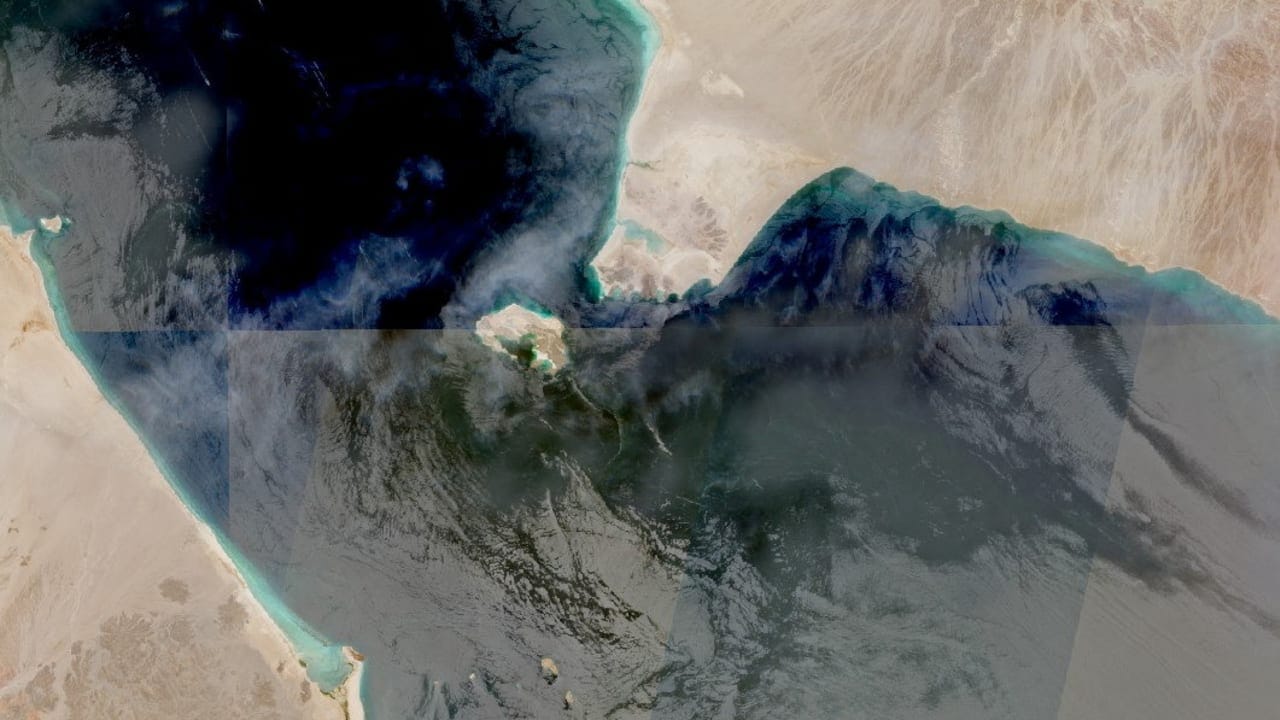
Jerusalem Post/Middle EastNew measures require proof of full payment of customs duties and taxes before international transfers can proceed, raising concerns over added costs for importers in impoverished Yemen.Follow us on GoogleA satellite imagery shows Bab el Mandeb Strait, as Iran threatens using Yemen's Houthi allies to shut the Bab el-Mandeb gateway to the Red Sea Wednesday, 15th July 2026(photo credit: NASA Worldview/Handout via REUTERS)NOVEMBER 5, 2026 16:25Yemen's internationally recognized authorities are moving to tighten financial controls over goods entering Houthi-controlled ports, according to a decision by the National Committee for Regulating and Financing Imports (NCRFI), circulated by the Aden Chamber of Commerce and Industry. The decision requires customs duties, taxes and other legally prescribed government revenues to be paid in advance on imports destined for Houthi-controlled ports.The new measures, circulated earlier this week, make the processing of foreign-exchange transactions and related international transfers conditional on proof that the applicable charges have been paid in full. Critics warn the requirements could create an additional financial burden for businesses importing supplies into the poverty-stricken country.Wafiq Saleh, an economic journalist in Yemen, told the Yemen Youth TV Channel last week that the small quantity of imports allowed to enter the besieged city of Taiz was not meeting residents' basic needs, and that the country was falling into a war-driven economy, with inflated black-market prices for basic goods.On social media, Saleh described the Yemeni government's new measures as “an important economic tool in the hands of the Central Bank and the National Committee for Import Financing, in the face of traders and importers.”“Traders and importers who attempt to circumvent this mechanism will find it difficult to cover letters of credit for goods imported from abroad. The Central Bank of Yemen in Aden is the authorized entity for covering letters of credit and communicating with regional correspondent banks and intermediary banks,” he said. “No commercial or banking entity will be able to access the international financial system outside of the official monetary authorities.”Saudi-backed Yemeni government fighters fire a truck-mounted recoilless rifle during battles against Yemen's Iran-backed Houthis at the Jabal Han front west of the city of Taiz on October 21, 2026. (credit: Ahmad AL-BASHA / AFP via Getty Images)Houthis collect millions through taxes, customs duties and other leviesSince the Houthis captured Sanaa in 2014, the group has collected revenues through taxes, customs duties, zakat (religious alms) and other levies, according to the independent Yemeni research and policy institution Mokha Center for Strategic Studies.In July, the institution published a report estimating that the Houthis' “parallel economy” accounted for around $2.5 billion annually in direct and indirect financial resources and costs. The report estimated that around $800 million came from taxes and customs, $600 million from additional fees and levies, $300 million from cash and in-kind contributions to the war effort, and $100 million from mobilization events. Businesses also bore an additional $700 million in indirect costs.Houthis demand $51 billion from Saudi Arabia to end hostilitiesOn Thursday, the Wall Street Journal reported that the Houthis had demanded $51 billion from Saudi Arabia as compensation for years of Saudi airstrikes and a prolonged blockade, alongside formal recognition of the group as Yemen's rulers, in exchange for ending hostilities.Saudi Arabia has faced repeated attacks by Iran and the Iran-backed Houthis since the US and Israel launched strikes against Iran on February 28. In response, Riyadh has sought to strengthen its regional defense partnerships. It signed the Mecca Joint Defense Agreement with Turkey and Pakistan in August, and on Wednesday signed a separate defense cooperation agreement with Syria.Follow us on Google
Yemen gov’t tightens import controls as Houthis reportedly demand $51 billion from Saudi Arabia
Full Article
Original Source
Read the full article at Jpost →KhanList aggregates and links to publicly available news content. We do not host full articles from third-party sources. Always verify important information with original sources.