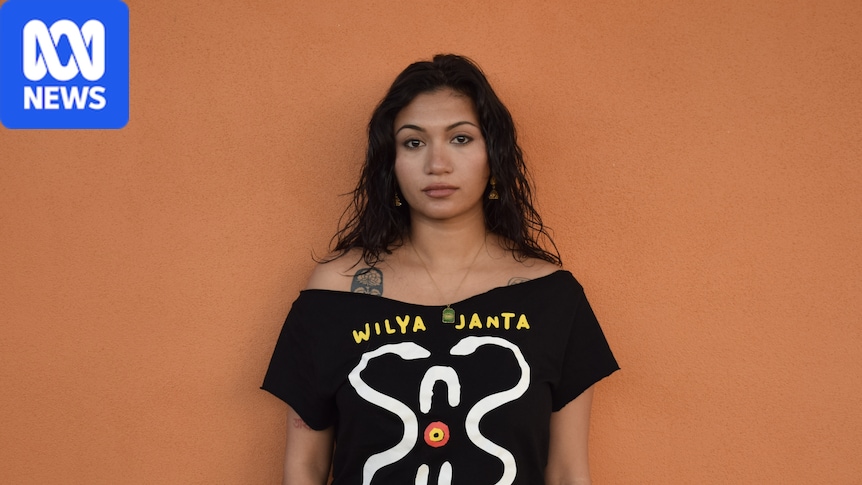
Here are the ways Violet once believed the world worked.Aged 19, she believed the renowned street artist Anthony Lister would take her on as an apprentice.Aged 23, she believed him when he allegedly agreed to seek help for his drug use in return for her silence — justice enough, she thought, for an encounter she described as rape.Later, Violet, whose last name has been withheld for her family's privacy, believed making an informal report about that night in December, 2016, might help her access mental health support.And when police encouraged her to join other women and formalise a statement against the man sometimes described as Australia's Banksy, she believed the process would be fast, straightforward and fair.Mr Lister has always strenuously denied any wrongdoing and was acquitted of all charges against him in 2025.Violet, now 30, has accepted the findings of the court. But her participation in the case against Mr Lister has drastically changed her understanding of how police and court systems work, leading her to take the extraordinary step of revealing herself as one of the artist's five accusers in the hope that sharing her experience can help others on the same path."There are so many things that I could have done differently had I been offered more knowledge and more information about what I was agreeing to do," Violet said.'Felt like a bit of a chess piece'Violet contacted the Sexual Assault Reporting Option (SARO) in 2019 to disclose the 2016 encounter in the hope the NSW Police-linked service could connect her with mental health support. At the time, she said she was struggling to understand what had happened, had intense feelings of shame, and was engaging in "silly behaviours" to cope.Police encouraged Violet to make a formal statement about the street artist. (ABC News)Violet said she had no intention of formalising a statement but was twice contacted by police and felt it was the right thing to do.After making her first statement, a deeply uncomfortable process she said took many hours, she said she was given a card with the contact details of support services and "sent on my way"."I came out with a splitting headache. I felt like I was almost floating," Violet said."There was no way that I was going to look down to that card or look up where to go next in order to have that aftercare."Mr Lister was charged in March 2020.It took more than four years for the trial to begin in the NSW District Court. Violet said it was difficult to get in touch with the Office of the Director of Public Prosecutions (ODPP) for clarity on what was happening with the case unless they needed something from her, when "suddenly, they were incredibly available".When a prosecution lawyer emailed to ask whether she had undergone EMDR therapy or hypnosis, she misunderstood the correspondence to mean she could not access professional support. Her mental health badly deteriorated."I often felt like a bit of a chess piece to them, and I don't think that that was their intention, but I think that the way that they're structured makes it so that it's very easy for a victim-survivor to feel a little bit chucked around," Violet said.By the time Violet gave evidence in court in September 2024, when she told the jury of the encounter in which she alleged she had audibly said "no" and cried, she had developed vertigo and a speech impediment that she blamed on severe stress."There should've been buy-in from [the ODPP] to make sure I wasn't crazy by the end of the period, which, you know, I kind of was," Violet said."By the end of it I didn't recognise myself. I was not a good witness, and that has also impacted me after the fact."The NSW ODPP did not respond to questions.Jury shown sex tape Violet didn't know was recordedViolet is haunted by the knowledge a jury was shown a recording of her and Mr Lister having sex, filmed more than one year before the incident she described as rape.She told the jury she did not remember aspects of the filmed encounter and did not know she was being recorded.The video was found by detectives and was a focus of her cross-examination."The defence lawyer had asked questions about [the video recording] ... my answer to all of his questions was 'I don't know, I don't know, because I don't remember'," she said.Mr Lister denies any wrongdoing and was cleared of all charges last year. (ABC News: Keana Naughton)"It was almost like he was describing somebody else, but I knew that what he was saying wasn't made up because the jury had just seen the video."And he was asking about things that had happened in the video ... so then of course I came across as a liar and a witness that wasn't credible at all."The jury spent more than two weeks in deliberations. Mr Lister was acquitted of the two charges relating to Violet in December 2024 — assault occasioning actual bodily harm, which related to him tattooing her in 2015, and sexual intercourse without consent — as well as charges relating to two other women.In 2025, after a second trial, Mr Lister was acquitted of all charges."What it did do for me was send me back to that place of, 'Oh, am I crazy? Did I make all of this up?' and any shred of self confidence or trust was just gone," Violet said."Since then I have not been able to make a single decision without that festering doubt."'As a community we should be horrified'Mr Lister was contacted for comment.Earlier this year, freelance videographer Doug Gillen uploaded an interview with Mr Lister in which the artist suggested collusion against him both by the women who accused him of sexual assault, who he described as "mostly scorned lovers", and expressed disappointment mainstream media had not widely covered his second series of acquittals.He has described being deeply affected by his treatment from NSW Police, his time in prison, and the court process, and has alluded to a conspiracy to bring him down because he was a "threat to society in my ability to communicate to society"."I can assure anyone that it was not my life goal to bring this this man down," Violet said.Ms Bevan says witnesses need more support to navigate the legal system. (ABC News: Abby Haberecht)Speaking generally, Full Stop Australia chief executive Karen Bevan said it was clear through her organisation's work and the research of the Australian Law Reform Commission that witnesses in sexual assault proceedings needed greater support.She called for an expansion of a previously-announced trial of Sexual Violence Community Justice System Navigators, people who will help witnesses through the legal system."So much of the court setting, from what we're told by victim-survivors, feels like it's there to wrong-foot them and make them feel ashamed or somehow like they're the person on trial," Ms Bevan said."It's not surprising to me that this kind of thing happens in courtrooms, but as a community we should be horrified, we should be shocked."Using her experience to inform othersViolet's perception of the world has changed. She said when she looked back at herself at 23, the age she was when she made her first report to police, one part of her wished she could stop her younger self from forging ahead.The other part of her, she said, now believed that her experience could at least help inform others of the reality of appearing as a witness in court and contribute to conversations about justice system reform."I genuinely think that if [Mr Lister and I] were offered an opportunity to engage in a process that is similar to a restorative justice model, that both he and I would be so much better off right now," she said.Violet said she wanted other witnesses to know they were allowed to advocate for themselves."You are allowed to ask as many questions as you need to," she said."Get as much support as you can, because you will need it."I know that if I was told that, maybe I would've been a little bit louder about my needs, but I didn't have anyone telling me that."
Woman who accused 'Australia's Banksy' of rape wants the courts to hear this
Full Article
Original Source
Read the full article at Abc →KhanList aggregates and links to publicly available news content. We do not host full articles from third-party sources. Always verify important information with original sources.