
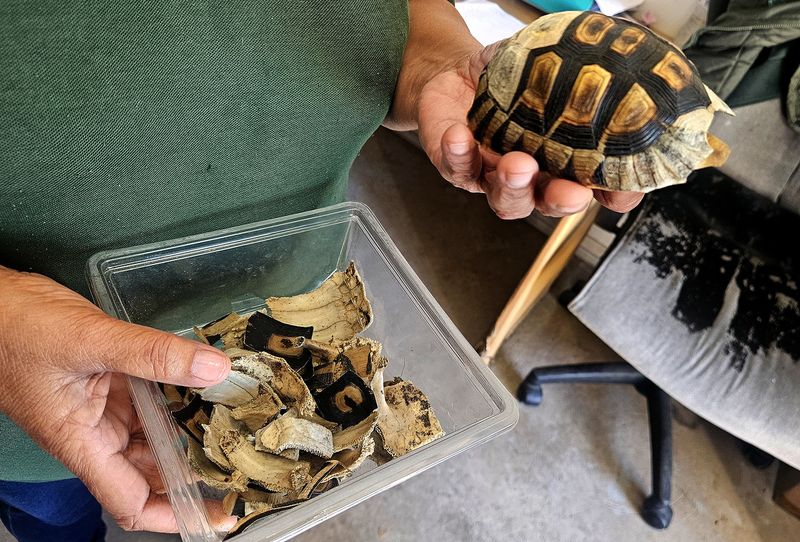
Police in Chatty, Gqeberha, rescued 15 wild tortoises and recovered four dead ones from a makeshift enclosure. The owner, who did not have a permit to keep the animals, voluntarily surrendered them.The incident highlights the threats facing wild tortoises, which are collected and kept in captivity despite legal protections.Members of Mount Road Police Station’s Family Violence, Child Protection and Sexual Offences Unit discovered the tortoises while conducting an investigation in Chatty on 23 October into an unrelated matter. Some of the 15 tortoises that were removed from a property in Gqeberha on Friday. (Photo: Animal Anti-Cruelty League / Facebook) “While at the premises, a [police] member noticed tortoises in a makeshift enclosure and four dead tortoises on the opposite side of the yard. The member approached the owner, who was unable to produce a permit. She voluntarily surrendered 15 live tortoises and four dead tortoises. Police contacted the Animal Anti-Cruelty League, which took the tortoises into their care. No criminal case was opened,” said Gqeberha police spokesperson Captain Sandra Janse van Rensburg.Capturing, collecting or keeping wild tortoises is illegal in South Africa under provincial nature conservation ordinances such as the Nature Conservation Ordinance and national legislation like the National Environmental Management: Biodiversity Act.Removing a wild tortoise from its natural habitat, keeping it as a pet, or transporting it without a formal permit from provincial nature conservation authorities is a criminal offence.The rescued animals – which included leopard, mountain and angulate tortoises – were taken to a wildlife expert for rehabilitation, where one was treated for an injured shell. Animal Anti-Cruelty League inspector Beverley Rademeyer said the surviving tortoises were released into the Grootkloof Nature Conservation Reserve.“I was contacted by one of the officers who were conducting an investigation after they noticed tortoises in the yard [where] they were working,” said Rademeyer. “The first thing is always to remove the tortoises because people are not allowed to keep wildlife species in residential areas. I referred the owners ... to the Animal Protection Act and the Nature Conservation Ordinance, which explain which animals are allowed to be kept with a permit.” Animal Anti-Cruelty League inspector Beverley Rademeyer. (Photo: Andisa Bonani) She emphasised that the Animal Protection Act prohibits keeping wild animals in confinement, as they need their natural environment to thrive, reach their full lifespan of more than 100 years, and reproduce.“We have released over 1,000 tortoises over the period I’ve been working here. In some cases we have found them chained and deprived of food and water.”Rademeyer, who has served with the Animal Anti-Cruelty League for more than 20 years, said people often collect tortoises without considering the consequences.“People keep them when they randomly come across them; others find them when they hunt, truck drivers pick them up on the roads,” she said. “However, in this particular case, we don’t think they were bred for a particular purpose; they were just easily accessible from the nearby swamps and rivers.”The Endangered Wildlife Trust (EWT) says South Africa is home to 13 tortoise species, most of which are endemic to the country. In December 2024, the organisation highlighted declining populations among three endangered species, attributing the declines to factors including habitat loss, poaching and crow predation. DM
WILDLIFE CONSERVATION: Police rescue 15 wild tortoises from Gqeberha property, four others found dead
Full Article
Original Source
Read the full article at Dailymaverick →KhanList aggregates and links to publicly available news content. We do not host full articles from third-party sources. Always verify important information with original sources.