
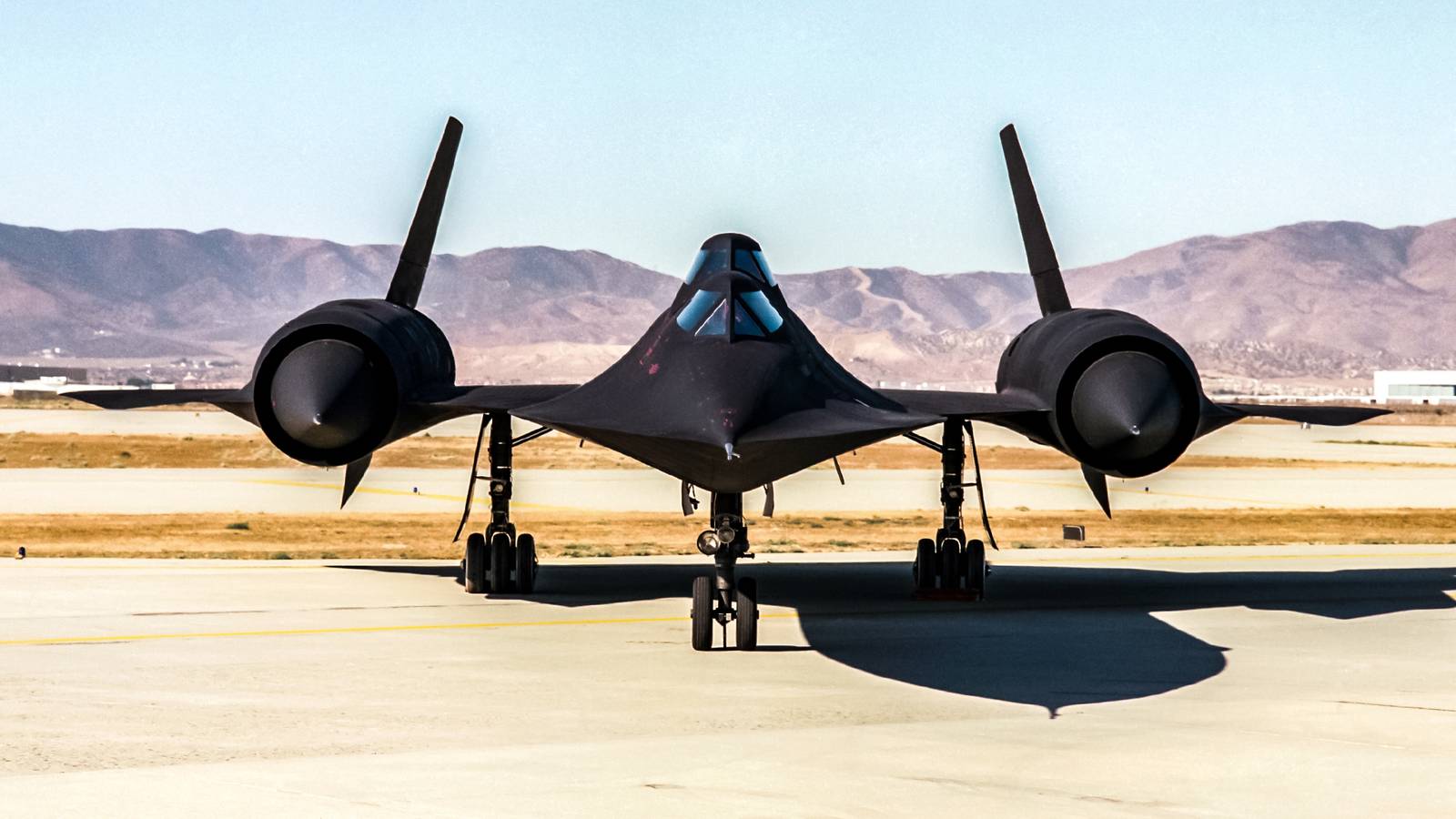
Cruising at over Mach 3 heated the titanium skin of the Lockheed SR-71 Blackbird to temperatures past 600°F (316 °C). The spyplane's leading edges routinely exceeded 1,050°F (566 °C). At those temperatures, standard jet fuel would boil away instantly, overpressurize uninsulated fuselage cavities, or detonate spontaneously inside blistering titanium tanks. So engineers created JP-7. However, it was so difficult to ignite that it required a special chemical igniter, meaning even trace amounts mixed into standard jet fuel could prevent normal fighter jets from lighting their engines at high altitudes. The US Air Force Strategic Air Command solved this operational dilemma by taking 56 frontline Boeing KC-135A transports and rebuilding them into dedicated KC-135Q platforms. Technicians installed fully isolated plumbing networks, dedicated electric boost pumps, and independent stainless-steel fuel trunks to separate the liquids. The tanker kept standard JP-4 inside its upper wing cavities to run its own J57 engines, while sealing heavy JP-7 strictly inside lower fuselage body tanks designated for boom offload. The KC-135Q carried JP-7 in its main fuselage body tanks specifically to offload to the SR-71, while burning standard jet fuel from its wing tanks to power its own engines. Beyond the plumbing, these specialized tankers were upgraded with high-speed flight instrumentation to fly near their upper speed limits, so the Blackbird could stay safely airborne during hookups. They even received advanced astro-inertial navigation systems and specialized rendezvous equipment, allowing the tanker and the spy plane to find each other over open oceans under strict radio silence. Two Fuels, One Airframe: Inside The KC-135Q Redesign Credit: US Air Force This dedicated tanker fleet was essential because the SR-71 could not take off with a full fuel load. Engineers built the Blackbird's titanium body with deliberate gaps between the panels, so the metal could expand when superheated at Mach 3. While the aircraft sat cold on the ground, those gaps stayed open and allowed fuel to constantly drip onto the runway. As a result, the Blackbird took off with a light fuel load, climbed immediately to fill its tanks from a waiting KC-135Q. Keeping the two fuels isolated was critical, as any cross-contamination would either ruin the JP-7's heat resistance inside the Blackbird or choke the tanker's engines during landing approach. The tanker had two single-point refueling receptacles inside its main landing gear wheel wells. Ground crews pumped standard jet fuel into the left wheel well to power the tanker's own engines, while pumping specialized JP-7 into the right wheel well to fill the forward, center, and rear belly tanks destined for the SR-71. Offloading up to 74,490 lb (33,788 kg) of heavy JP-7 from the tanker also caused balance shifts during high-speed refueling. As the rear tanks emptied, the tanker's center of gravity shifted backward, threatening to force the nose into an uncontrollable pitch-up. Boeing mechanics bolted an 850-lb (386 kg) lead ballast block directly into the tanker's lower nose compartment. The counterweight offset the shifting fuel mass, keeping the tanker level and stable. Flying On The Razor's Edge: The Danger Of Mid-Air Hookups Credit: US Air Force Mid-air refueling between a heavy transport and a supersonic spy plane pushed both aircraft to their absolute flying limits. A fully loaded KC-135Q weighed roughly 297,000 lb (134,717 kg) and had to fly right near its structural speed limit of 355 knots (657 km/h) at full power. Tanker pilots kept their throttles pushed straight to the stops, squeezing every bit of thrust out of their roaring engines just to stay fast enough for the hookup. The SR-71 had the exact opposite problem, flying near the bottom of its speed range while fighting heavy drag at a steep angle of attack. As thousands of pounds of cold JP-7 poured through the boom, the extra weight dragged the Blackbird dangerously close to a stall. To keep the jet from dropping out of formation, both crews flew a connected dive, trading thousands of feet of altitude to maintain speed. Crews dubbed the formation descent 'tobogganing.' The maneuver meant plummeting at 500 to 1,500 feet (152 to 457 meters) per minute. By pointing their noses slightly downward the refueling track, the tanker used gravity to maintain airspeed while the increasingly heavy Blackbird took on fuel without stalling. Locked together, the two planes traveled long distances while sinking gracefully into their designated airspace. The danger of the practice yielded tragic results on May 17, 1974, when a KC-135Q and an SR-71 collided during night training over California. Shifting air currents induced sudden pitch movement that snapped the refueling boom clean off, slamming it into the tanker's tail and tearing through the airframe before both crews managed to recover their planes. The Real Reason The Blackbird Took Off Light Credit: US Air Force According to aviation myths, the SR-71's titanium body leaked uncontrollably on the ground, forcing the plane to launch with minimal fuel. It is true that fuel did leak from the cold airframe, but mission planning was never dictated by the seepage. Severe landing gear tire limits, structural load envelopes, and single-engine ascent profiles were the true reasons for an immediate aerial rendezvous after every lift-off. The SR-71 had a maximum gross takeoff weight of 140,000 lb (63,503 kg), but tire loading and brake heat limits would be pushed well beyond acceptable tolerance if its tanks were filled for takeoff. Departing with roughly 40,000 lb (18,144 kg) of JP-7 left enough safety margin to ensure the aircraft could maintain climb control if an engine failed during rotation. Once airborne, the Blackbird climbed to 25,000 feet (7,620 meters) to meet a waiting KC-135Q tanker within 20 minutes and take on over 11,000 gallons (41,640 liters) of chilled JP-7. With its tanks fully loaded in flight, the aircraft could engage its afterburners, accelerate past transonic drag, and climb into the stratosphere. Tanker crews had to maintain exact rendezvous timing. Missing the hookup would force the SR-71 to divert immediately to a recovery base, as it would already be on backup reserve. Credit: US Air Force At Mach 3, air friction turned the Blackbird’s wings into an oven, heating the fuel tanks to 550°F. Regular jet fuel would have boiled away or exploded in that heat, so chemists made a custom synthetic fuel called JP-7 that wouldn't catch fire on its own or evaporate in the thin air at 80,000 feet (24,384 meters). Yet, as the Smithsonian explains, making the fuel that tough caused two big problems. It lost its natural slickness, so chemists had to mix in a special lubricant to keep engine valves from grinding down, and it became too stubborn for normal spark plugs to light. To start the engines and afterburners, engineers installed a system that sprayed a chemical called triethylborane into the burners, creating a bright green flash of fire on contact with air, with just enough onboard for 16 lights per engine. As the plane burned through its fuel, the space left inside the superheated tanks became a massive explosion hazard. To prevent lingering fuel fumes from igniting against the hot metal walls, an onboard system pumped nitrogen gas into the emptying tanks. This pushed the oxygen out and replaced it with a harmless, non-flammable gas, keeping the aircraft safe during long, high-speed spy missions. The High Cost Of Support: KC-135T Credit: US Air Force Throughout the Cold War, Strategic Air Command was under pressure to dedicate 56 modified KC-135A tankers to strategic reconnaissance. These aircraft had to undergo days-long tank cleanings in order to refuel conventional bombers like the B-52 due to strict JP-7 purity regulations. Meanwhile, lifetime SR-71 running expenses reached $200,000 per flight hour due to specialized Shell Oil refineries, rail wagons, and five to six tankers per sortie. Long missions put the crew's endurance to the test because of conditions within the 144-inch-wide tanker cabin. Interior noise levels ranged from 88 to 92 dB due to supplementary high-flow gasoline pumps operating beneath the deck. At the same time, heavy kerosene vapors constantly seeped through floor seals during extended pumping cycles, forcing crews to endure loud, fume-filled flights while across remote air tracks. Major modernization arrived in the 1980s with updates to 54 surviving KC-135Q airframes, including high-bypass turbofans. Crews replaced the thirsty J57 turbojets with modern CFM International F108 engines producing 21,600 pounds of thrust each. Redesignated as the KC-135T, these upgraded tankers climbed faster, burned far less fuel, and provided wider safety margins during high-altitude refueling. A Cold War Workhorse That Refused To Retire Credit: US Air Force When the Air Force retired the SR-71 in the late 1990s, the remaining KC-135T tankers did not go to the boneyard. The 'heavies' stayed in front-line service to continue supporting the USAF's fleet. Offering solid airframe life and low operating costs, they joined standard refueling wings across active-duty units, the Air National Guard, and the Air Force Reserve Command, remaining vital long after the supersonic spy planes they once supported were grounded. The unique plumbing built for JP-7 gave the KC-135T a lasting operational edge. The Pentagon repurposed its segregated tanks to haul JP-8 in its body tanks for Air Force fighters while keeping JP-5 in its wing tanks to refuel nearby aircraft carrier wings during joint operations. Further upgrades kept it flying alongside modern tankers like the Boeing KC-46A Pegasus. Later airframe overhauls and digital avionics upgrades pushed the KC-135T's maximum takeoff weight to 322,500 lb (145,000 kg). Today, these Stratotankers still fly global sorties, easily recognized by dual wheel-well fueling ports and fuselage floodlights originally built for the Blackbird, proving how Cold War engineering created lasting aerospace utility.
Why The SR-71 Blackbird Needed Special KC-135 Tankers Just To Refuel
Full Article
Original Source
Read the full article at Simpleflying →KhanList aggregates and links to publicly available news content. We do not host full articles from third-party sources. Always verify important information with original sources.