
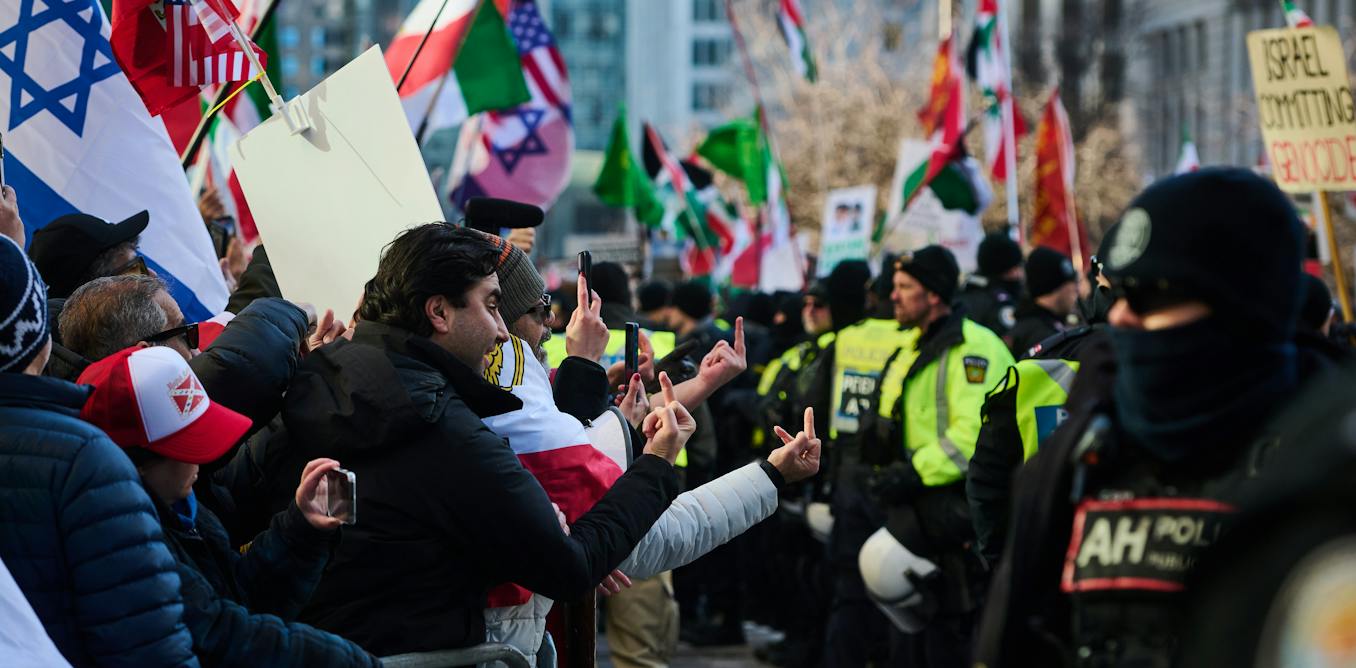
Western democracies are currently witnessing a troubling rise in political violence and intimidation within segments of the Iranian diaspora, driven by deepening polarization among opponents of the Islamic Republic. These acts of violence are compounded by systemic patterns of targeted corporate harassment, doxxing and public intimidation by the Iranian regime across the United States, Europe and the United Kingdom. Hostility and hate incidents are escalating, but particular concern has focused on a fringe segment of monarchist supporters aligned with Reza Pahlavi, the exiled son of the former shah who has said he condemns the violence. These supporters have increasingly embraced ultra-nationalist and Islamophobic rhetoric, while seeking common cause with far-right movements in western countries. In light of Canadian Conservative Leader Pierre Poilievre’s invitation to Pahlavi to visit Canada, addressing tensions and political violence within the Iranian diaspora has become a critical priority. Reza Pahlavi speaks during a news conference on Jan. 16, 2026, in Washington, D.C. (AP Photo/Mark Schiefelbein) Deep polarization The Iranian diaspora has mobilized heavily in response to domestic protests in Iran and the February 2026 Israeli-American military campaign. But rather than forming a united front for regime change in Tehran, the diaspora has grown deeply polarized, triggering multiple violent clashes across North America. Because the nationalist faction of the Pahlavi movement lacks formal political parties, independent media and self-sustaining funds, it relies heavily on populist appeal to build its movement. Far-right influence inside the pro-Pahlavi movement, alongside rising tensions due to the U.S.–Israeli war with Tehran, has created a volatile climate for attacks on Muslim institutions and for violence within the Iranian diaspora. Some Pahlavi supporters have adopted a nationalist and polarizing stance within the Iranian diaspora in the West. The movement has progressively distanced itself from pro-democracy groups and the broader “Woman, Life, Freedom” coalition that previously unified the opposition following the 2022 protests. Nationalist pro-Pahlavi supporters routinely portray all competing political factions, regardless of their actual position, as supporters of the existing government in Tehran. Read more: A year after Mahsa Amini’s death, Iran’s women continue their long fight for ‘women, life, freedom’ ‘We are Aryans’ Spanning pro-Israel and anti-Palestinian foreign policy stances alongside broader anti-immigration and Islamophobic trends, the nationalist fringe of the pro-Pahlavi movement has found common ground with the European far right and, increasingly, its North American counterpart. What’s common among these movements is hostility toward Islam rather than the Islamic Republic itself. Mona Jafarian, who leads the pro-Pahlavi group Femme Azadi, has defended the slogan “We are Aryans” on French television by explaining that it means Islam is not the Iranians’ religion. At a march in the U.K. in May 2026, dozens waved Iran’s lion-and-sun flag — the Iranian national flag used under the Pahlavi dynasty before the 1979 Islamic Revolution — in support of Pahlavi. Media reports from inside the crowd showed those flags flew alongside Israeli and MAGA flags and leaflets calling for “a future for white people.” Pro-Pahlavi marchers told the media they’d come at Tommy Robinson’s invitation and carried banners depicting Robinson and Donald Trump as saviours of the Iranian nation. Robinson is a prominent British far-right political activist known for regularly expressing Islamophobic and anti-immigration views. In France, several pro-Pahlavi groups and supporters have increasingly adopted far-right rhetoric and aligned themselves with local ultra-nationalist organizations. In Sweden, a parliamentary initiative endorsing Pahlavi as the legitimate alternative to the Islamic Republic drew 12 signatures, 11 from the Sweden Democrats, a party with roots in the neo-Nazi political movement. Violent incidents erupted during World Cup matches involving Iran, underscoring widening divisions not only between pro- and anti-regime groups, but also among the various political factions opposing the Islamic Republic. Demonstrators against the Iranian regime protest near the Seattle stadium before a World Cup soccer match between Egypt and Iran in June 2026. AP Photo//Lindsey Wasson) Canadian incidents A series of incidents and crimes involving alleged monarchist supporters has played out across Canada, which has one of the fastest-growing Iranian diasporas in the world. In Calgary in March, thousands filled City Hall plaza waving the Iranian flag alongside Canadian, American and Israeli ones. Also in March, Toronto police arrested two people in suspected hate-motivated offences following confrontations between pro- and anti-regime protesters. In British Columbia, two people described by the media as monarchist supporters have been charged with first-degree murder in the death of an Iranian-Canadian academic who was critical of both the clerical government and the exiled Pahlavi family. A report on arrests made in the death of Masood Masjoody, a critic of the Iranian regime. (Global News) Prior to the Iran war, the Imam Mahdi Islamic Centre in Thornhill was spray-painted with Persian graffiti in 2022 that York Regional Police investigated as hate-motivated. Criminal charges were filed that same year in B.C. against two people protesting the Islamic Republic who targeted an Islamic centre, interrupting active worship services and a children’s educational program. Other instances of violence and criminal activity have occurred across Canada, including graffiti, physical violence, uttering threats and public incitement of hatred. The Iranian Canadian Congress reports that an Islamic centre in Alberta was attacked in February 2026 and two worshippers were hospitalized, a senior Muslim woman volunteering at a centre in B.C. was assaulted in January and Iranian-Canadian businesses in four provinces have been pressured to display the monarchist flag. Wake-up call Pahlavi has condemned such conduct, saying anyone engaging in violence is not his supporter and should face prosecution. He also suggested the Iranian regime plants agitators among his followers. His advisers and supporters have been less measured, essentially telling Iranians to choose between Pahlavi or the Islamic Republic. Although the connection between the Canadian far right and the pro-Pahlavi movement is weaker than in Europe, the growing violence within the Iranian diaspora shows it’s now taking root in Canada. Read more: How the far right is evolving and growing in Canada This trend of violence is deeply transnational and tied to global geopolitics, yet law enforcement still treats it locally — handling attacks as isolated hate crimes rather than national security threats. By focusing on individual incidents instead of broader patterns, Canada is failing to combat the problem. An emergent far-right fringe demands serious national security scrutiny. Far-right extremism takes many forms, and these developments within the Iranian diaspora must serve as a critical wake-up call.
Why the Iranian diaspora is so bitterly divided — in Canada and abroad
Full Article
Original Source
Read the full article at Theconversation →KhanList aggregates and links to publicly available news content. We do not host full articles from third-party sources. Always verify important information with original sources.