
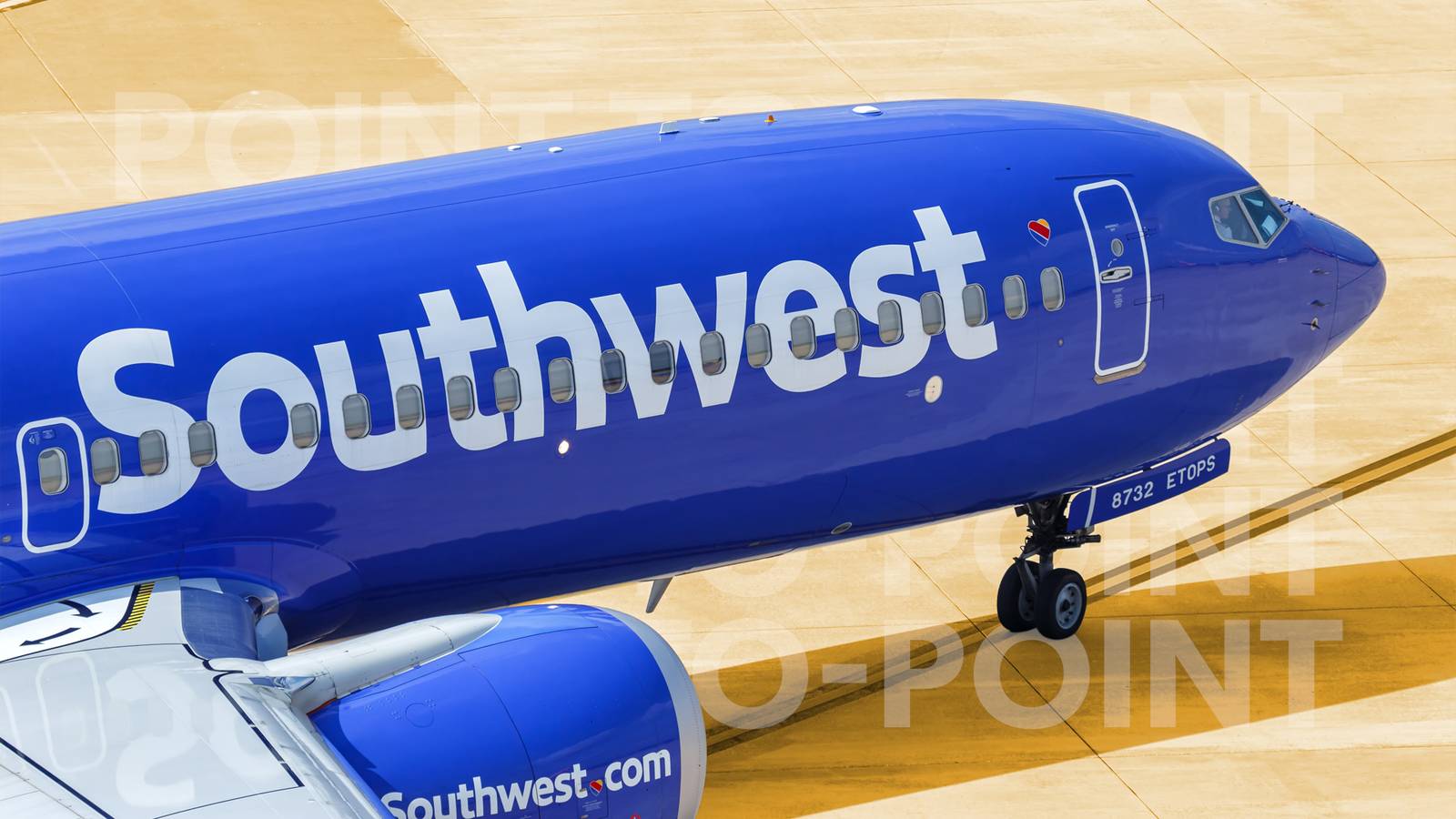
Published Sep 27, 2026, 5:15 AM EDT Journalist – Aaron is an aviation and travel journalist with 14 years of experience in the travel and tourism industry. His background spans airport operations, aviation infrastructure, and travel consulting, having worked with global organizations across New Zealand, Europe, and North America. Combining industry expertise with firsthand travel experience across more than 52 countries and five continents, Aaron covers airlines, airports, aviation policy, and the wider travel sector. He is based in Canterbury, New Zealand. His work has been published in Simple Flying and featured by MSN, SAM CHUI Aviation & Travel, EIN News, Pakistan Defence, and Climate Depot. Southwest Airlines, the world's largest low-cost carrier and one of the largest airlines in the United States, has made headlines in recent times with several amendments to its current offerings. Most notably, the Dallas-based carrier announced that it would be removing its free checked baggage service. It is also now looking to move away from its current point-to-point network, and focus on convenient connections through its many US hub cities. Southwest has a reputation for providing convenient, low-cost air travel to cities across the United States, the Caribbean, and Latin America. The carrier has done so by building a point-to-point network that can transport passengers from A to B without the need for long layovers. This model has been mirrored by many low-cost carriers around the globe, such as Ryanair (the biggest example of how point-to-point travel can be successful), and other carriers like easyJet, Air Arabia, Jetstar, and Frontier Airlines. The Benefits Of Point-To-Point Travel Credit: Ceri Breeze | Shutterstock Point-to-point travel is modeled by many low-cost carriers to avoid the traditional hub-and-spoke itinerary. Legacy carriers, like American Airlines or Delta Air Lines, use the hub and spoke system, where they can offer more flights to their hub cities, potentially with larger aircraft, to then provide a high frequency of services between their major airports served. However, low-cost carriers have traditionally pioneered the point-to-point itinerary, as this allows passengers to not only avoid layovers and wasting time on connections, but also, for the carrier, it can sometimes result in fewer delays. This means no domino effects throughout the airline's network that can be encountered by cancellations or missed flights. For nervous flyers, the thought of point-to-point travel can ensure less stress and less rushing between flights or missed baggage transfers. Point to point is not only quicker for passengers, but also can see a higher aircraft utilization, with quick turnaround, ensuring the airline can arrive, disembark, board, and depart within short time frames (sometimes as short as 30 minutes). The choice of point-to-point travel can also avoid costly hub infrastructure for airlines at their respective hubs. Fewer transfers can also result in fewer lost bags and reduced labor costs for the carrier. A Move To Hub & Spoke Credit: ArtByArthur | Shutterstock The basic idea of hub and spoke travel is that an airline has a major connecting center, with spoke routes feeding flights from smaller regional airports to its larger cities. Examples of this include Atlanta for Delta Air Lines, which services several high-frequency routes to major international and domestic destinations, while also providing several frequent regional services to smaller centers Emirates, one of the world's most iconic international carriers, also operates a highly successful hub-and-spoke model from Dubai. Larger legacy carriers prefer the hub-and-spoke model, as this can result in fewer aircraft required to serve large cities, and can ensure the airline can fill the planes more easily by combining passengers from connecting services onto its long-haul services. This allows airlines, like Emirates, to provide unmatched global coverage, allowing the carrier to serve smaller markets more profitably. US legacy carriers, like American, Delta and United Airlines, all operate an extensive hub-and-spoke model, where they can aim to fill the majority of their flights on hub-and-spoke itineraries. Meanwhile, point-to-point carriers can see themselves limiting their market share by only offering services to one destination within that itinerary. The advantage of hub-and-spoke allows premium traffic for businesses looking for convenient connections and a larger international reach. It also unlocks more destinations and a higher frequency of flights for passengers. Southwest's Move Away From Point-to-Point Flying Credit: Markus Mainka | Shutterstock Southwest has seen rising operational costs, fueled by higher labor costs and the rising price of jet fuel. The aviation market in the United States is also becoming saturated with competition, with many of the most desirable point-to-point itineraries already served. Frontier, which positions itself as one of the cheapest airlines in the United States, is also competing against legacy carriers, like Delta or United. International expansion is also on the cards for Southwest Airlines, with the airline considering expanding into new international markets, which will require more connections from paying passengers to ensure that the airline can fill as many seats onboard as possible. For the airline to also appeal to the business passenger, it needs to be able to offer convenient one-stop options that are beyond the airline's more traditional markets. City Key Destinations Departures (Daily) Dallas (DAL) Austin, Chicago, or Houston More than 200 daily departures Denver (DEN) Chicago, Phoenix, or Las Vegas More than 180 daily departures Baltimore (BWI) Atlanta, Chicago, or Orlando More than 150 daily departures 'High-density stations' for Southwest could include those detailed above. Southwest will look to operate 'high density stations', which sees the airline avoid the term ' hub', in a bid to see a high number of daily departures from its busiest airports. The likes of Dallas Love Field, Denver International Airport, and Baltimore/Washington International Thurgood Marshall Airportwill all operating more than 150 daily departures. Key connecting routes will serve destinations like Chicago, Phoenix, and Austin. For new, longer destinations within the airline's network, it needs to focus on hub-like connection flows to ensure that the airline can operate with a sufficient number of passengers. What's In It For Southwest? Credit: Southwest Airlines At the outset, passengers could question why one of the world's most successful low-cost carriers would want to make major changes to what has appealed to the masses since its inception. However, the simple answer is that the airline will now be able to position itself to serve new and exciting domestic and international markets, and provide a higher number of services between its busiest and most in-demand cities. The airline will look to avoid the term 'hub and spoke', while still serving its most popular flights directly, but other markets may see the move towards connecting itineraries. This balance of ensuring low cost for the consumer, paired with expanded connectivity, will see the airline attempt to reaffirm its dominance in the US skies. However, it needs to find the best way for it to adapt after 50 years as the ever-changing aviation landscape evolves. After the COVID-19 pandemic, premium passenger demand has skyrocketed, with travelers looking at new and exciting ways to travel in style, while still considering the best way to get the ultimate bang for their buck. For Southwest's future, this may see the carrier losing a cost advantage against traditional low-cost carriers like Frontier, as point-to-point, direct airlines. Additionally, there are likely to be financial implications with higher operational complexities at its busiest ports. For more connecting passengers, this will lead to higher baggage handling costs and more staff with boots on the ground. However, it will also allow the carrier to leverage more medium-haul destinations. A Look At Southwest's 'High Density' Hubs Currently, Southwest has extensive services from 13 hub airports in the United States, as detailed in the table below. While it remains unclear as to where exactly the airline will operate its high-density models to and from, it would be expected that these hubs will be the frontrunners. Leveraging the airline's current point-to-point system, Southwest will strategically select key markets to provide a high number of direct services between busy cities. Currently, Southwest Airlines can operate up to 4,000 daily flights across its top 18 busiest airports. These include Baltimore, Denver, Las Vegas, and Chicago Midway. At the recent Annual Future of the Consumer Conference, the airline made it clear that it will shake the way it has traditionally offered point-to-point travel, to move towards a hybrid approach that incorporates greater connectivity. City Airport IATA Code Atlanta Hartsfield–Jackson Atlanta International Airport ATL Baltimore Baltimore/Washington International Thurgood Marshall Airport BWI Chicago Chicago Midway International Airport MDW Dallas Dallas Love Field DAL Denver Denver International Airport DEN Houston William P. Hobby Airport HOU Las Vegas Harry Reid International Airport LAS Los Angeles Los Angeles International Airport LAX Nashville Nashville International Airport BNA Oakland Oakland International Airport OAK Orlando Orlando International Airport MCO Phoenix Phoenix Sky Harbor Airport PHX Tampa Tampa International Airport TPA While it will see some routes shelved to operate to their key markets, the airline has made it clear it will remain the most dominant key point-to-point carrier as well. In essence, Southwest is looking to achieve the best of both worlds. Southwest executives have made it clear that the current makeup of the airline's network can no longer be sustained to ensure positive growth. This will see the airline move towards offering a higher number of connecting itineraries to provide an operational picture that will make the most sense. These changes will likely see better passenger flow and increased aircraft utilization. For those living in larger cities, it's a win-win, as the airline will likely provide more flights across its network. What's Next For Southwest? Credit: Flickr Southwest's news that it will look to enhance the current business model to introduce more connecting flights is part of a strategic shift for the airline to appeal to more passengers and serve more markets. The practical approach is at the center of new network development and management. For the last 50 years, Southwest has continued to build a reputation for cheap, convenient flights across the United States and has been able to undercut legacy carriers by offering affordable airfares. However, the airline will not be receiving as many passengers as possible with the current model. Still, eventually, these changes should ensure that the coffers remain strong, so the airline can continue to dominate the skies above the US, with more flights, to more destinations, on more aircraft.
Why Southwest Airlines Is Moving Away From Point-To-Point Flying
Full Article
Original Source
Read the full article at Simpleflying →KhanList aggregates and links to publicly available news content. We do not host full articles from third-party sources. Always verify important information with original sources.