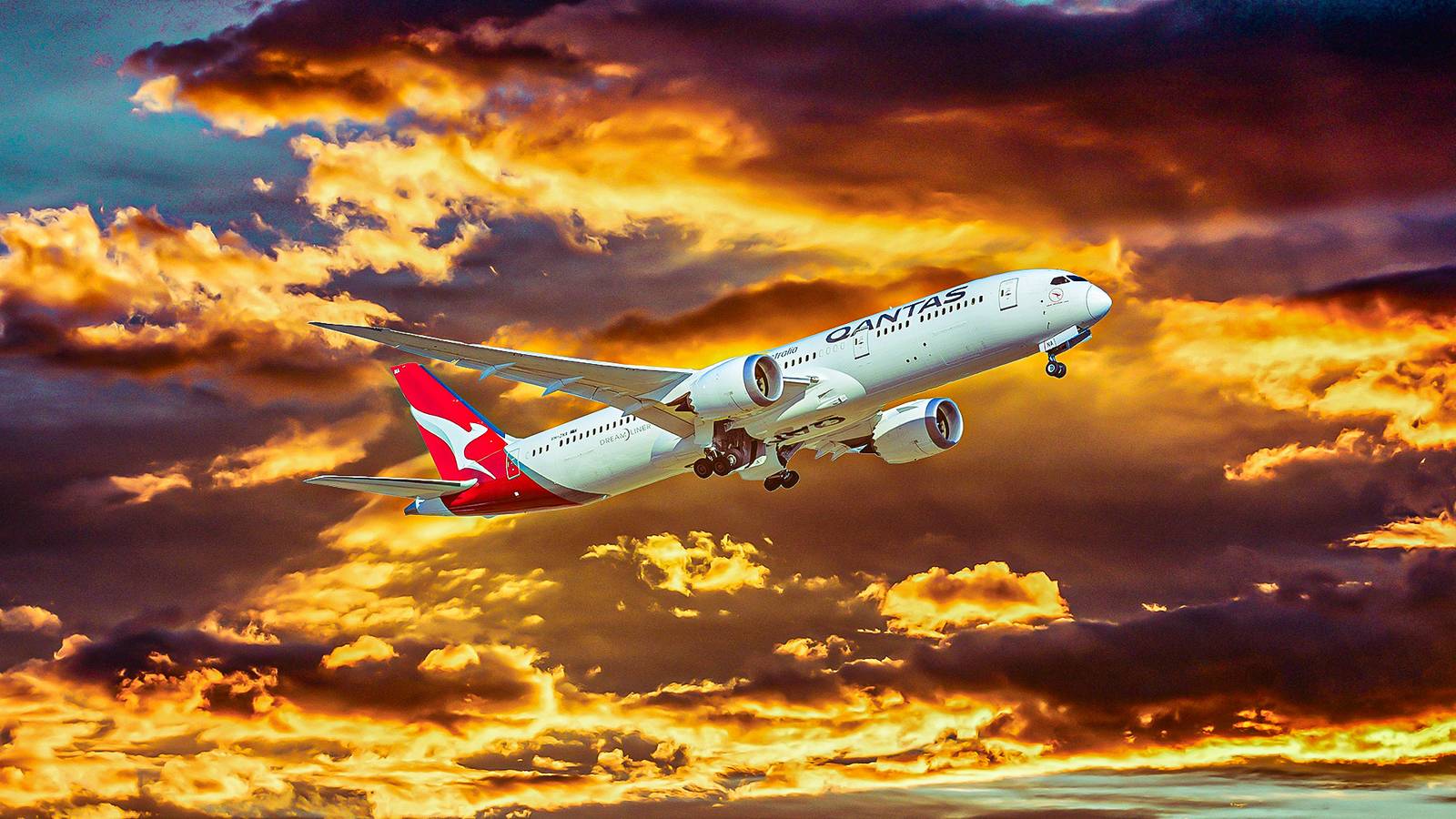
Published Jul 29, 2026, 9:00 PM EDT Jack comes to Simple Flying with a lifelong interest in all things aviation. He holds a degree in Aerospace Engineering from Georgia Tech, and is a certified private and remote pilot. Beyond these experiences, Jack previously worked for a corporate flight department where he gained first-hand experience in the world of business aviation. Currently, Jack works in the professional services industry and continues to build his flight hours outside of work. Sign in to your Simple Flying account For decades, nonstop passenger flights between Australia and Europe represented one of commercial aviation's greatest technical challenges. The enormous distance between the continents traditionally forced airlines to rely on intermediate stops in Asia or the Middle East, creating a network built around hub cities such as Singapore, Dubai, Doha, Hong Kong, and Bangkok. While aircraft technology steadily improved over the years, operating a commercially viable nonstop route remained beyond the practical limits of most fleets. Today, one airline stands alone. Qantas is the only carrier operating a nonstop passenger service between Australia and continental Europe via its seasonal Perth to Rome route. Other airlines operate service from Australia to the United Kingdom, but Qantas is the only airline providing direct service from Australia to continental Europe. That distinction is not only the result of possessing a long-range aircraft; it also reflects a carefully aligned combination of geography, fleet capabilities, market demand, and network strategy. The service demonstrates what is currently possible in ultra-long haul aviation while also highlighting why competitors have chosen different approaches and why true nonstop connections from Australia's east coast to Europe remain several years away. Perth's Geography Makes The Difference The single biggest reason Qantas can operate nonstop flights to continental Europe is the location of Perth. Unlike Sydney, Melbourne, or Brisbane, Perth sits on Australia's western edge, placing it significantly closer to Europe. That geographic advantage removes hundreds of miles from potential flight paths compared with departures from Australia's eastern population centers. Those savings are enough to transform what would otherwise be an impossible route into one that fits within the operational capabilities of modern long-range aircraft. Distance Between Major Australian Cities and Rome, Italy City Pair Distance Sydney to Rome 10,155 miles (16,342 km) Brisbane to Rome 10,025 miles (16,134 km) Melbourne to Rome 9,932 miles (15,984 km) Perth to Rome 8,300 miles (13,350 km) 787-9 range: 9,550 miles (15,370 km) The Perth to Rome sector measures approximately 8,300 miles (13,350 km), making it one of the world's longest scheduled flights. Although still exceptionally demanding, it falls within the performance envelope of the Boeing 787-9 Dreamliner when configured for Qantas' network. Had the flight originated in Sydney instead, the additional distance would push the route well beyond the practical range of the aircraft while leaving insufficient margins for payload, adverse weather, fuel reserves, and operational flexibility. This same geographic advantage enabled Qantas to launch the landmark Perth to London service in 2018, becoming the first airline to connect Australia directly with Europe using scheduled passenger flights. Even today, Perth remains the only Australian gateway capable of supporting such operations without requiring entirely new aircraft. Geography alone, however, is not enough. Numerous international airlines already fly into Perth, yet none continue nonstop to continental Europe because the city serves a different purpose within their broader networks. The Boeing 787-9 Makes The Route Possible Credit: Shutterstock Aircraft capability is the second critical ingredient. Qantas operates the Perth to Rome service using the 787-9, an aircraft specifically designed for long-range efficiency rather than maximum passenger capacity. Compared with larger widebody aircraft such as the Airbus A380 or Boeing 777-300ER, the 787-9 burns considerably less fuel while carrying fewer passengers, making ultra-long haul routes economically feasible where larger aircraft would struggle. Qantas configures its Dreamliners with just 236 seats across business, premium economy, and economy cabins. That relatively low density helps keep aircraft weight within limits while also improving passenger comfort during flights approaching 16 hours. The Dreamliner's extensive use of lightweight composite materials, advanced aerodynamics, and efficient GEnx engines allows it to cover distances that previously required larger aircraft operating with significant payload restrictions. Qantas 787-9 Cabin Configuration Cabin Total Seats Business 42 Premium economy 28 Economy 166 Even with these capabilities, operating near the limits of an aircraft's range remains a careful balancing act. Wind conditions, seasonal weather patterns, air traffic restrictions, and required fuel reserves all influence whether nonstop operations remain practical. That reality explains why Qantas has adjusted several European services over time. While Perth to Rome continues, the airline suspended its nonstop Perth to Paris route and instead now operates the service via Singapore. According to Qantas, routing through Singapore provides greater operational flexibility while maintaining overall European capacity. Aerospace Global News reported that the airline simultaneously increased services to Rome rather than abandoning nonstop Europe flying altogether. The contrast illustrates an important point: even for Qantas, nonstop European flying remains highly selective rather than universally applicable. Why Other Airlines Continue To Favor One Stop Connections Credit: Perth Airport The absence of competing nonstop services is not due to a lack of demand for travel between Australia and Europe. Instead, rival airlines have concluded that connecting passengers through existing hubs delivers stronger economics than operating aircraft at the extreme edge of their performance envelopes. Carriers such as Emirates, Qatar Airways, Singapore Airlines, Cathay Pacific, Turkish Airlines, and numerous European airlines already possess highly successful hub-and-spoke networks linking Australia with Europe. Rather than serving passengers through a single ultra-long haul flight, these airlines divide the journey into two more manageable sectors. This strategy offers several operational advantages. For one, aircraft spend less time on individual sectors, improving utilization across the fleet. Airlines gain greater scheduling flexibility, passengers have access to numerous destination combinations beyond a single European city, and crews operate within more conventional duty periods. Hub operations also consolidate demand from multiple Australian cities. Instead of relying solely on passengers originating in Perth, airlines can combine travelers from Sydney, Melbourne, Brisbane, Adelaide, Auckland, and other markets before distributing them onward throughout Europe. However, European airlines face an additional disadvantage: none possess a Western Australian hub equivalent to Perth. Launching nonstop flights from Rome, Paris, Frankfurt, or Amsterdam to Perth would require committing aircraft to exceptionally long sectors serving a comparatively smaller local market than Australia's eastern capitals. Without an established domestic Australian network feeding those flights, filling enough seats year-round becomes substantially more difficult. As a result, airlines continue to rely on established transfer points that already support extensive passenger flows and connecting opportunities. Although nonstop services reduce travel time, the savings often do not outweigh the commercial benefits of operating through large international hubs. Rome Is A Carefully Targeted Seasonal Opportunity Credit: Aeroporti di Roma Qantas' Rome service should not be viewed as evidence that nonstop Australia to continental Europe flying has become routine. Instead, it reflects a highly targeted seasonal strategy. The airline first launched Perth to Rome in 2022, becoming the first carrier to operate nonstop passenger flights between Australia and continental Europe. The service was designed around periods of particularly strong leisure demand, especially during the European summer when Australians travel extensively to Italy and surrounding destinations. Rather than operating year-round, Qantas adjusts the schedule according to seasonal demand. For 2026, the airline significantly expanded the service, increasing operations from three to four weekly flights while adding approximately 10,000 additional seats across the season. According to the Qantas Newsroom, the expanded schedule reflects sustained passenger demand while remaining limited to periods where the economics are strongest. Business Travel News Europe likewise reported that the longer operating season allows Qantas to capitalize on continued leisure demand without committing aircraft during weaker months. The airline's broader European network demonstrates similar flexibility. While Perth to Rome continues nonstop, outbound services to London operate via Singapore before returning nonstop from London to Perth. Qantas continuously evaluates whether nonstop operations produce sufficient commercial returns compared with alternative routings. Rome currently satisfies that equation better than other continental European destinations, as Italy attracts strong Australian tourism. Rome also serves as a major international gateway, and seasonal demand aligns well with aircraft availability within the Dreamliner fleet. Even so, the route remains an exception rather than the foundation of Qantas' European strategy. Project Sunrise Could Change Everything Credit: Airbus Although Perth currently enables Australia's only nonstop service to continental Europe, the industry's long-term ambitions extend much further east. Qantas' Project Sunrise aims to introduce nonstop flights from Sydney and Melbourne directly to major European destinations using specially configured Airbus A350-1000 aircraft. These aircraft are being built specifically for ultra-long haul operations exceeding 20 hours, making them substantially more capable than the 787-9 on routes departing Australia's eastern cities. The A350-1000 selected for Project Sunrise incorporates additional fuel capacity, advanced Rolls-Royce Trent XWB engines, aerodynamic refinements, and an interior designed to improve passenger wellbeing during exceptionally long flights. Qantas has also worked with researchers and medical experts to develop cabin lighting, meal timing, and onboard wellness measures intended to reduce the effects of ultra-long-haul travel. If introduced as planned, Project Sunrise would eliminate the geographic limitation that currently makes Perth uniquely valuable. Passengers departing Sydney or Melbourne would no longer need to connect through Perth, Singapore, Dubai, or Doha before reaching Europe. Such flights would represent an entirely different category of nonstop service compared with Perth to Rome because they would overcome the much greater distances separating Australia's eastern population centers from Europe. Until those aircraft enter commercial service, however, Perth remains Australia's only realistic launching point for nonstop flights to continental Europe. The Dreamliner can reach Rome from Western Australia, but it cannot realistically perform the same mission from Sydney or Melbourne under normal commercial operating conditions. That distinction explains why Project Sunrise remains one of the aviation industry's most closely watched developments. Will Other Airlines Challenge Qantas? Credit: Shutterstock For now, Qantas is likely to retain its unique position as the only airline operating nonstop passenger flights between Australia and continental Europe. The combination of Perth's geographic advantage, the 787-9's range, and carefully managed seasonal demand creates a business case that few competitors can realistically replicate. Most international airlines remain committed to one-stop networks through established hubs, where greater flexibility, broader connectivity, and stronger economics continue to outweigh the benefits of nonstop service. That landscape could change over the next decade as a new generation of ultra-long-range aircraft enters service. Qantas' forthcoming A350-1000 fleet under Project Sunrise is expected to make nonstop flights from Sydney and Melbourne to Europe possible for the first time, potentially reshaping how Australians travel to the continent. If those services prove commercially successful, they may encourage other airlines to reevaluate their own long-haul strategies. Until then, however, Perth to Rome remains a rare example of how geography, technology, and network planning have combined to achieve a route that no other airline has yet been able, or willing, to match.
Why Is Qantas The Only Airline Flying Nonstop From Australia To Continental Europe?
Full Article
Original Source
Read the full article at Simpleflying →KhanList aggregates and links to publicly available news content. We do not host full articles from third-party sources. Always verify important information with original sources.