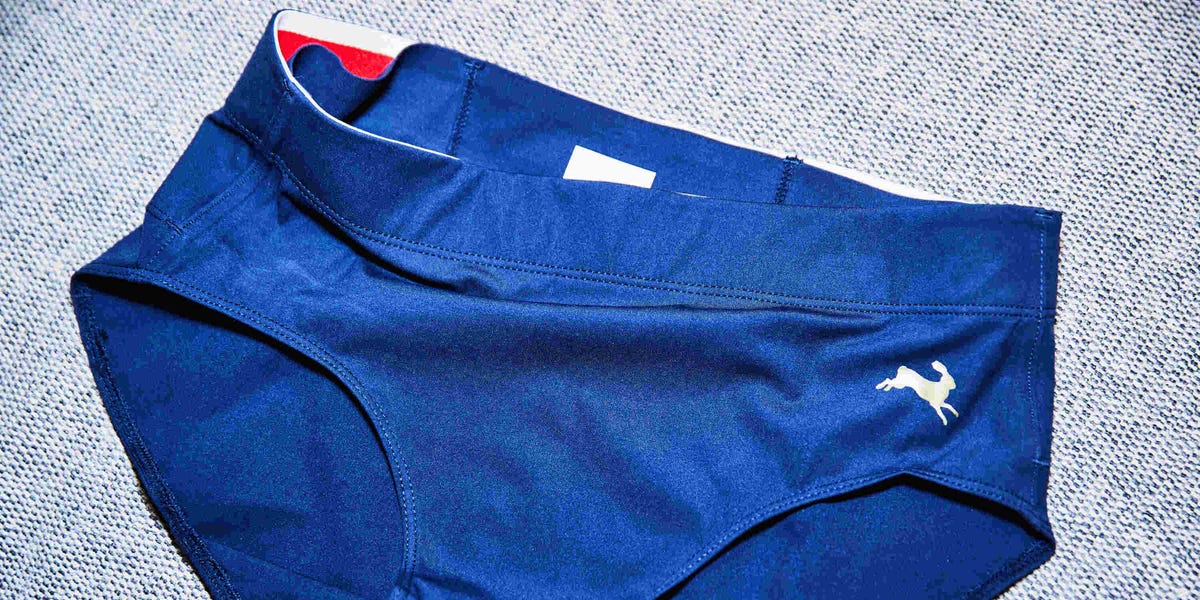
When Emily Richards raced in high school, she wore baggy shorts over running tights because she was self-conscious about form-fitting bottoms. By college, though, she began wearing buns—not only because she grew more confident in her body but also for the advantages this type of bottom brings to performance, she says.She has since become a professional 800-meter runner and now always races in buns, preferring them to spandex shorts. “I feel less restricted in my hips, especially for an event that requires power and knee drive,” she says.Like Richards, most professional female athletes compete in buns—also called briefs, which look like bikini bottoms—and consequently face sexualization and objectification where media portrayals emphasize their physical appearance and traditional femininity over their athletic achievements.To address these concerns, in June, the European Broadcasting Union published new guidelines for media coverage of women’s athletics. Several female Olympic athletes were involved in shaping the guidelines, developed in collaboration with European Athletics. The 23-page document includes detailed visual examples of approved and unapproved camera angles: think fewer tight shots from behind, no low-angle shots pointing upward, and more thoughtful consideration of whether a slow-motion replay adds anything useful or merely objectifies or titillates.Carmen Pelar Graves, a steeplechaser and professional trail runner, is in support of the guidelines and believes that female athletes shouldn’t have to worry about feeling exposed or ridiculed during competition for what their body needs to do to perform at its best. When she’s on the track, she chooses to race in briefs, but it doesn’t come without unease. “Despite my preference, I must admit that I do feel more self-conscious when I wear briefs, especially when cameras are around,” she says. “I’ve worn some briefs that ride up, and I’m left with the decision to either let my cheeks show or pull the briefs down every few seconds. Some race days I’d plan to wear briefs but change my mind because of the potential distraction and exposure.”When news outlets began reporting on the new guidelines, people took to the comment sections on social media, mostly to express that the guidelines are unnecessary. Jen Saint Jean, a top masters middle-distance runner, read the feedback on Runner’s World Instagram. “There was an overwhelming amount—at least equal number—of women and men who maybe have never worn briefs before, or competed in that kind of race kit, who immediately thought that it was about vanity, that [women] were doing it for the attention,” she says.Many argued that if the athletes didn’t want to feel exposed or sexualized, they should compete in more modest clothing, turning it into a conversation about a poor kit choice and the fault lying with the female athletes. And while others countered—in what may have been a well-meant defense—that athletes don’t get to choose what they wear, the public reaction revealed many misconceptions about women’s race kits.The truth is, athletes do have some—though not total—autonomy over their racing kit. The specific styles and cuts vary from brand to brand and across different contracts, but sponsors and/or teams often give athletes a range of racing bottoms to choose from, typically briefs and at least one pair of shorts; they don’t get much say beyond that.It’s easy to think of briefs as the skimpier option, but “that’s not necessarily always the case,” says Joanna Thompson, a marathoner who was part of the recently dismantled pro team, ZAP Endurance. Racing in briefs has always felt natural, so much so that she says she’s never given it much thought in the moment. When she would be given multiple options for racing, sometimes the shorts, whether split-shorts or high-cut spandex, would actually provide less coverage than the brief option.“When we were given a nice, sturdy brief, that was often more comfortable and less revealing to race in,” she says. “And I also want to stress that revealing is not always a bad thing,” Thompson continues. “Some people feel more comfortable and more confident and less restricted when they’re wearing a kit that has less fabric, for example.”For some, there’s a psychological component, as buns are typically only worn for competition, so putting them on signals to the brain that it’s time to perform. “When I have them on, it indicates that I’m gearing up for a race and not just wearing my typical spandex or split shorts that I go for at practice,” Richards says.Saint Jean, who is also a clinical researcher at Columbia University Irving Medical Center in New York, says that there are also physiological reasons for female athletes competing in buns. It’s largely about temperature regulation and range of motion. Unlike women’s, men’s bodies are more efficient at sweating, able to produce more sweat, which cools them more easily and faster. By exposing more skin, women can achieve greater air movement and sweat evaporation. Women’s hips and thighs are also shaped differently from men’s. Shorts can bunch up and cause them to chafe, plus constant rubbing across the thigh from shorts can cause quad muscle damage.“As a middle-distance runner, leg lift is very important,” Saint Jean says, “and I find oftentimes that when I wear the boy briefs, the front part of the short inhibits my ability to really lift my leg.” When she steps on the track, she wants to give it her best, she says. “I don't want anything to get in the way of that,” she adds. “I don't want boy shorts cutting off my stride. I don't want to be too hot, and I don't want to be uncomfortable.”The heart of the matter is that the briefs themselves and the athletes who wear them were never the issue. The sexualization and objectification of women athletes is a real, glaring problem, but these broadcasting guidelines somewhat reinforce the idea that women’s bodies are inherently sexual, that just by being a woman in public and having a body, they’re inviting sexualization.If you watch professional track and field, you’ll notice that there are a range of uniform styles worn in addition to the much-discussed briefs. Some athletes race in form-fitting boy shorts or even half tights—Olympic gold medalist Sifan Hassan frequently wears the latter. Still others choose split-shorts or a speedsuit; both are favorite options for the American mile record holder, trans nonbinary athlete Nikki Hiltz.As an amateur track athlete training and racing with national-class runners who commonly wear briefs, I’ve been inspired to try them out myself. However, despite having purchased a couple of options, I haven’t yet felt brave enough to race in them. I struggle with body confidence when I’m not lean, and despite the garment’s growing popularity, I know what they can signify. At a race this summer, I overheard two men scoffing about a female athlete who raced in buns but didn’t run fast enough “to justify doing so.” Despite how wrong they were, the implication that the woman must have worn the buns to flaunt her body gave the imposter syndrome I already had some credence. Hearing that made me feel scared to be seen and judged in the same way.Real change is necessary to challenge the belief that briefs have anything to do with vanity. The new guidelines should help positively shift public understanding. Viewers, commentators, and camerapeople should focus on the incredible things women do in sports instead of what they wear while doing so. And women should wear whatever makes them feel confident, capable, and comfortable; we deserve to focus on performance without being scrutinized.
Why Female Athletes Race in Briefs Has Nothing to Do With Vanity. Here’s What the Kit Actually Does for Performance.
Full Article
Original Source
Read the full article at Runnersworld →KhanList aggregates and links to publicly available news content. We do not host full articles from third-party sources. Always verify important information with original sources.