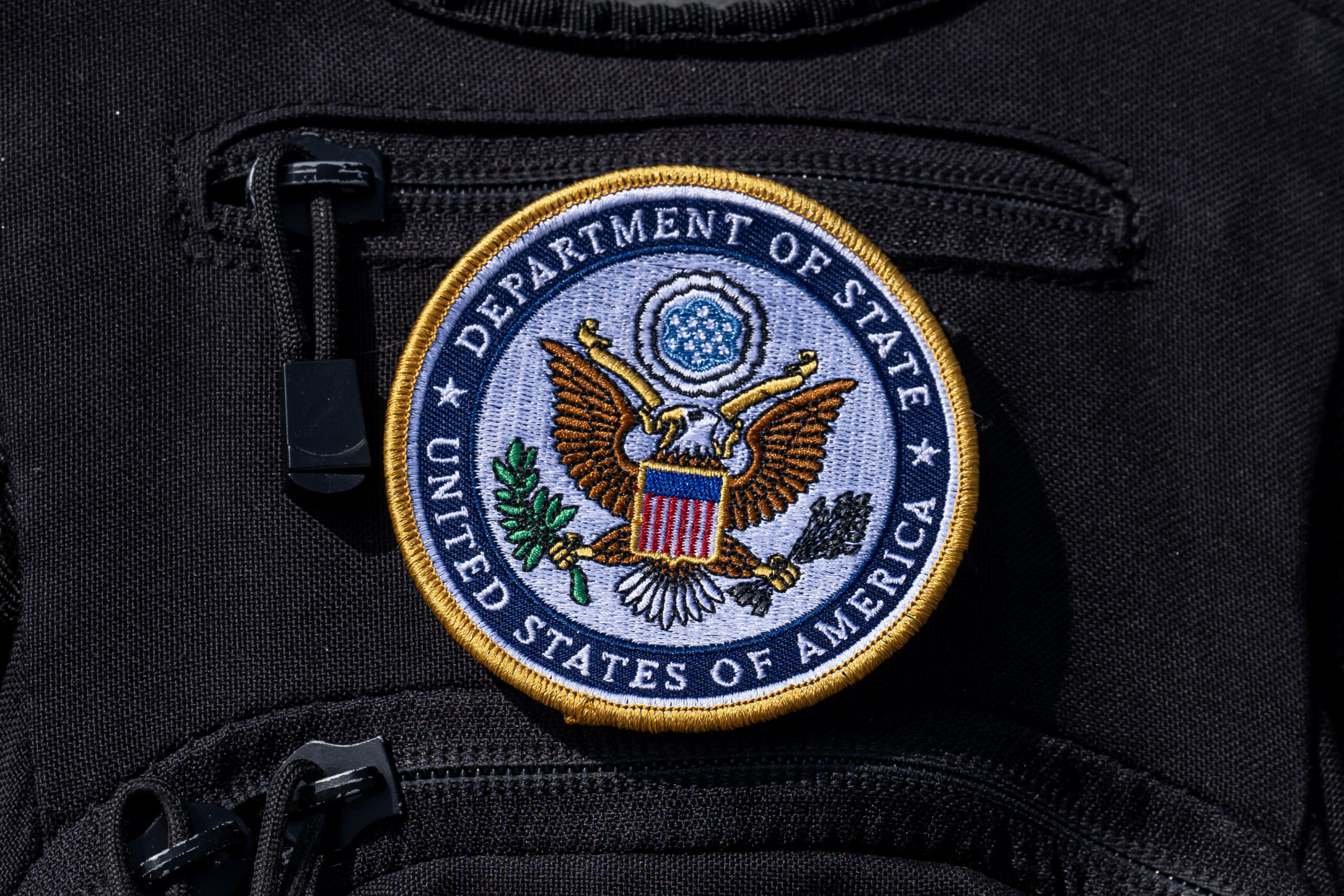
Foreign policy When an entire cabinet department opposes the president, it may find itself irrelevant. Has the State Department gotten the message yet? Let’s consider a hypothetical. You meet a woman at a party. Even while you’ve telling her about your accomplishments she’s looking around the room. She reluctantly gives you her number before disappearing into the crowd. You text her 25 times telling her what a good romantic partner you are and after the first polite non-answers she stops responding. Is your next move to inform her further how essential you are to her life? If you’re the U.S. Department of State—essentially declared irrelevant by the Trump administration, for the second time no less—you definitely go for it. You plan a rally with only Democratic congressmembers a year after 1,350 employees were reduced in force (RIFed) to declare the “cost is almost impossible to ignore.” You don’t offer any specifics about what that cost is besides “um, diplomacy is good.” You plant media puff pieces headlined “State is looking to rebuild,” and whining that instead of rehiring the RIFed old timers the organization is looking for new blood, among former military specifically, because they are not like you. You get MSNBC to write an article worrying about a leadership vacuum abroad as ambassador jobs are left unfilled, and then you cite off-the-grid posts like Moldova, Democratic Republic of the Congo, and Cyprus as critical examples, even when your own career Foreign Service people are left to run them (chargé d’affaires)—apparently inadequate for the jobs, by your own words. You get pieces published about how State cannot respond to the Ebola crisis, without any details of what State might actually have to do with responding to a medical crisis that the UN or others are not already doing. You fill your yearly evaluations with talk about process, what you do, like writing papers and coordinating committees and delivering “strong” messages, without a word about outcomes, what you have actually achieved. And then you complain about new evaluations that require employees to be rated on a numerical scale and for supervisors to provide concise answers to written questions about performance to make the evaluations more data-driven and less clubby and inside-baseball. State can’t cite specifics and won't embrace change. No one in the Trump administration is even listening, but you don't get it. Donald Trump appointed a strong Secretary of State, one who has the chance to be the next president and your next boss’s boss, and you miss the significance that he holds multiple important jobs in the administration, you're just part of his day. A State Department that mattered would not be able to get by with a part-time secretary. You miss that he has created an exoskeleton of chosen advisors around himself, ignoring the bulk of State. The Financial Times writes, "Eighteen months into Trump’s second term the Department is not just sidelined; it appears under siege." You don’t seem to notice that no one outside the Beltway really cares that a large number of embassies abroad have no ambassador (the administration has demonstrated through its actions that ambassadorial vacancies are a far lower priority than previously believed), and that many that do feature political appointees like former athlete Herschel Walker to conduct “diplomacy.” You miss that visa offices you used to run are being closed across Africa. You miss that an influential organization arose dedicated specifically to changing your internal culture. (No such group exists to do the same for any other cabinet agency.) You fail to see the impact of articles like those headlined “While America fights a war, the State Department is focused on dress codes.” It’s not a laugh line; it’s proof no one cares what you have to do with wars. (Which State Department office is in charge of negotiating with Iran? Trick question: none. America’s most important diplomatic task is being done by appointed special envoys, who are also handling Ukraine issues). After helping bungle the evacuation of Americans out of Afghanistan, you complain you weren’t given a big enough role in evacuations before the current Iran War. Why is the Trump administration ghosting the career suits at the State Department? A lot may go back to how State behaved during the first Trump administration. The department basically ignored Trump’s first secretary of state, Rex Tillerson, slow-walking any changes he proposed. In a leaked dissent memo, Foggy Bottom even claimed their boss violated a child-soldier conscription law. The State Department legal office prepared another memo for Tillerson warning of the dangers of leaking by State Department employees, which was then promptly leaked to the Washington Post. State also opposed Trump’s next secretary, Mike Pompeo, until he walled himself off from the institution. One expert said, “Pompeo followed the model of most of his predecessors, whether Democrat or Republican, of ‘doing my thing and letting the department do its thing.’” State personnel took a lead role in the Trump impeachment hearings over Ukraine. Vanity Fair summarized it best: “A hero is born as Ambassador Masha Yovanovitch gives voice to widespread rage at State. ‘I think people are feeling huge pride in Masha,’ says a former ambassador.” Alongside Yovanovitch, the bureaucrat George Kent publicly denounced Trump people he had never met who had ignored his advice. Ambassador Bill Taylor leaked texts with Trump’s political appointees. Taylor’s deputy, David Holmes testified at the impeachment hearing, claiming to have somehow overheard both sides of a phone conversation between Trump and an ambassadorial political appointee, which he then delivered up to the Democrats as red meat. White Houses, Republican or Democrat, cannot function when career officials routinely leak internal deliberations. And nobody likes a snitch. State’s Foreign Service Officers saw themselves as resistance superheroes who would take down Trump I. The organization was auditioning for the role even before the election; a 2016 “dissent” was designed to force the then-antiwar Trump into conflict in Syria. Then another leaked “dissent” by over 900 State employees flirted with insubordination by opposing Trump’s so-called Muslim ban. State was forced to settle with conservative media outlets that sued over department censorship during the Biden administration. That court decree actually mandated training for State employees on their First Amendment obligations to all of the Americans they are supposed to be serving, despite those employees having already sworn allegiance to the Constitution that includes the First Amendment. And of course everyone remembers the department’s delay of the release of the former Secretary of State Hillary Clinton’s emails (after it helped to hide the existence of her private server). The State Department turned a blind eye for years to Clinton’s nepotism, hiring her campaign aide as a make-work State employee. State’s DEI programs, which grew under the Obama and Biden administrations, were declared discriminatory. Maybe the organization is deemed irrelevant by Trump in part because it has betrayed itself to partisan politics. Subscribe Today Get daily emails in your inbox Institutions survive only if political leaders believe they advance elected policy rather than resist it. Too many of State’s employees exist in an adversarial relationship to the Executive, and are proud of themselves for it. No other cabinet department or agency comes even close to that. The State Department’s challenge is not rebuilding its workforce; it is rebuilding the confidence of the elected government it exists to serve. Of course there will always be some role for the State Department overseas at least, primarily in consular staff assisting American citizens and the few traditional diplomats needed to handle the bureaucratic concierge work and VIP logistics that State has always been good at. But we are questioning most of the rest. Being left functionally irrelevant is no fun. But it hurts even more when you slowly learn it was in large part your own fault. Face it: If you were Donald Trump, would you trust the State Department?
Why Does Trump Hate the State Department?
Full Article
Original Source
Read the full article at Theamericanconservative →KhanList aggregates and links to publicly available news content. We do not host full articles from third-party sources. Always verify important information with original sources.