Published Jul 20, 2026, 12:00 AM EDT With a Master’s degree in Air Transport Management, Viviana brings her passion for aviation to Simple Flying, while specialising in managing Time-Critical Aircraft on Ground (AOG) situations. Although American Airlines is often associated with the Boeing 747, the airline had not operated the type for decades. Its last standard 747 left the fleet in 1985, while its two 747SPs were retired by 1992. During the pandemic, many assumed that some of the aircraft American sent to Roswell International Air Center were jumbos, particularly as several airlines parked their 747s there. In reality, American stored 767s and Airbus A330s. Some of those aircraft have since found new roles. Several 767s have been converted into freighters, while eight former American A330s are set to join Vietnam's Sun PhuQuoc in 2026. The real COVID-era 747 boneyard story belongs to airlines such as KLM Royal Dutch, Qantas, and British Airways, whose jumbos joined a saturated secondhand market that the desert climate has quietly preserved ever since. The more interesting question, however, is not whether American sent 747s to Roswell. Rather, it is which of the airline's pandemic-retired widebodies have managed to leave the desert, which are likely to remain there indefinitely, and why the global 747 passenger market collapsed regardless of who flew them last. A Quick Recap Of American Airlines' Fleet History Credit: Wenjie Zheng | Shutterstock American operates one of the largest commercial airline fleets in the world. Looking back to the pre-pandemic period, the airline has undergone several major fleet changes. During the 1970s and early 1980s, American operated 747s, with some aircraft remaining in service into the 1990s. However, after retiring the jumbo jet, the airline shifted its focus towards twin-engine and tri-engine aircraft for its long-haul and widebody operations. Throughout the 2000s, American operated an exclusively Boeing mainline fleet, a strategy that changed on 20 July 2011 when the airline placed a major order for Airbus A320-family aircraft. During the COVID-19 pandemic, American retired several aircraft types to Roswell International Air Center as part of its fleet simplification and modernization efforts. However, the airline did not retire any 747s during this period, as the type had already left the fleet decades earlier. The last 747 from American's original fleet was retired in 1985, while its two 747SP aircraft remained in service until 1992. These changes formed part of the airline’s broader efforts to improve efficiency and reduce operating costs during a challenging period for the aviation industry. Today, the core American Airlines mainline fleet consists of A319, A320, and A321 aircraft, as well as 737 aircraft. American's current widebody fleet includes 137 aircraft, split between 777 and 787 Dreamliner variants exclusively. With approximately 1,029 aircraft in service, American operates one of the largest commercial fleets in the world. According to IBA Insight, the airline’s fleet has an average age of 13.9 years, reflecting a mix of newer aircraft and long-serving fleet members. Why Roswell International Air Center? Many airlines often have designated facilities where aircraft can be stored when they are no longer in active service, whether temporarily or permanently. For American, one of the key locations used during the COVID-19 pandemic was Roswell International Air Center (RIAC) in New Mexico. As travel demand collapsed in 2020 and airlines faced unprecedented disruption, American retired and stored several aircraft at the facility while reassessing its fleet requirements. Roswell International Air Center was an attractive choice for several reasons. Located in Roswell, New Mexico, the site was originally known as Roswell Army Airfield during the Second World War and later served as Walker Air Force Base. Today, the facility is home to a range of aviation-related businesses, including companies specializing in aircraft storage, refurbishment, reclamation, and dismantling. This allows airlines to recover valuable components and engines for reuse or resale before eventually dismantling older airframes. The location itself is also well-suited to long-term aircraft storage. The arid New Mexico climate, characterized by very low humidity (around 4% to 8%) and around 300 rain-free days per year, helps to minimize corrosion and protect aircraft systems. In addition, Roswell offers vast areas of open space capable of accommodating hundreds of aircraft. This was particularly beneficial for American, which operates one of the largest fleets in the world. As a result, the airline retired and stored a significant number of aircraft at Roswell during the pandemic as part of its fleet restructuring efforts. Which Aircraft Ended Up at Roswell? Credit: Shutterstock During the COVID-19 pandemic in 2020, American accelerated the retirement of several aircraft types as part of a broader fleet simplification strategy. The airline retired its 757-200, 767-300ER, and A330-300 fleets, among others, opting instead to focus on newer, more fuel-efficient aircraft. These retirements reflected both the sharp decline in travel demand during the pandemic and American Airlines' long-term objective of modernizing its fleet. The 757-200 played a significant role in American's network, operating both domestic and international routes. Beyond serving numerous destinations across the US, the aircraft was frequently deployed on transatlantic services from New York to cities such as Edinburgh and on routes from Miami to destinations in South America. Following its retirement, many of its responsibilities were assumed by the A321, which offered greater efficiency while maintaining similar operational flexibility. Aircraft Quantity Boeing 767-300ER 17 Boeing 757-200 34 Airbus A330 24 Embraer E190 20 Bombardier CRJ200 15 Boeing 737-800 40 American also retired its 767-300ER fleet, replacing the aircraft with the more modern 787. It offers similar passenger capacity while providing improved fuel efficiency, greater range, and enhanced passenger comfort. Prior to retirement, the 767 operated a variety of domestic routes as well as services to Europe and South America from the airline's eastern hubs. The A330-300 entered American's fleet through the 2013 merger with US Airways. Based primarily in Charlotte and Philadelphia, the aircraft operated a mix of international and domestic routes, serving destinations such as Dublin, London, Munich, Orlando, Honolulu, and San Juan. Although US Airways had originally planned to replace the A330 with the A350, American chose to standardize its widebody fleet around Boeing aircraft and subsequently canceled the A350 order. The retirement of the A330-300 marked the end of widebody operations at American and further streamlined the carrier's long-haul fleet. Which Aircraft Are Escaping Roswell? Credit: Shutterstock American did not simply leave its retired aircraft in Roswell indefinitely. Over the past five years, the airline and other aviation companies have made strategic decisions that have given several of these aircraft a second life. Several of the 767s retired by American during the pandemic have since been acquired for conversion into dedicated freighter aircraft. In 2025, flight tracking data showed a 767-300ER registered as N394AN departing Roswell and flying to Tel Aviv via Wilmington, Ohio. The aircraft is being converted from a passenger aircraft into a cargo aircraft by Israel Aerospace Industries (IAI), a company that has specialized in passenger-to-freighter conversions for decades. The process involves extensive modifications, including installing a large cargo door and removing passenger cabin interiors. Converted 767 freighters have become particularly popular in the e-commerce sector, with companies such as Amazon Air operating large fleets of the type. The aircraft's combination of payload capacity, range, and operating costs has allowed it to remain economically viable long after its passenger service career ended. The A330 fleet stored at Roswell has also attracted new interest. Eight ex-American A330-300s that have been in storage since 2020 are scheduled to enter service with Vietnam's newest airline, Sun PhuQuoc, in 2026. These aircraft were among 24 widebody aircraft retired by American during the early stages of the pandemic. Having spent only a relatively short period in active service before retirement, some of the aircraft are still comparatively young, with limited flight hours and airframe wear. This made them attractive assets for a start-up airline seeking cost-effective long-haul aircraft. Sun PhuQuoc obtained its Air Operator Certificate (AOC) in late 2025 and began operations shortly afterward. For the airline, acquiring former American A330s provides a relatively low-cost route to fleet expansion. For the aircraft themselves, it represents a return to commercial service after spending several years parked in the New Mexico desert. Which Aircraft Aren't as Lucky? Credit: Shutterstock Not all aircraft stored at Roswell are fortunate enough to return to the skies. A significant number of 767-300ERs and 757-200s were sold to aviation parts suppliers such as AAR Supply Chain. Rather than being refurbished and returned to service, the aircraft were disassembled so that valuable components could be reused elsewhere. Nine 757s, along with their Rolls-Royce engines, were specifically acquired to support the active market for 757 freighter aircraft, where demand for spare parts remains strong despite the type no longer being produced. A similar fate awaited many of American's A330-300 aircraft. While some of the younger A330-200 aircraft were sold to foreign carriers and continue to fly today, several of the older A330-300s were dismantled by companies such as VAS Aero Services. Their engines, avionics, landing gear, and other high-value components were removed and redistributed to support active aircraft fleets around the world. The same process affected a number of 737-800s and regional aircraft retired during the pandemic. American's older 737-800s, together with Embraer E190s and CRJ200 regional jets, were handled by specialist operators based at Roswell, including AerSale. Many of these aircraft had their most valuable components removed either to support American remaining fleet or to be sold on the global second-hand parts market. Although these aircraft may never fly again, they continue to play an important role in the aviation industry by providing parts that help keep other aircraft operational. Who Accelerated the Retirement of the Boeing 747 & Why Did the Market Collapse? Credit: Shutterstock The COVID-19 pandemic accelerated the retirement of the 747 across the global aviation industry, but the aircraft's decline had begun long before 2020. The final 747 was delivered to Atlas Air in January 2023, bringing an end to a production run that lasted 54 years and produced 1,574 aircraft. Airlines had increasingly moved away from four-engine aircraft in favor of more efficient twin-engine alternatives such as the 787 and A350. The pandemic simply prompted decisions that many airlines were already considering, as the collapse in passenger demand made operating large aircraft uneconomical. Several major airlines retired their 747 fleets during this period. KLM phased out its remaining 747-400 and 747-400M aircraft, replacing them with 787 and 777s. Qantas retired its iconic 747 fleet after nearly 50 years of service, accelerating a fleet renewal program centered on the 787-9 and A380. Similarly, Virgin Atlantic retired its 747 fleet in favor of newer aircraft such as the 787, A350-1000, and A330-900neo. British Airways, once the world's largest operator of the type, also ended its 50-year relationship with the aircraft, replacing it with A350-1000s and 787s. The collapse of the 747 market reflects broader changes in airline strategy. Modern twin-engine aircraft offer lower fuel consumption, reduced maintenance costs, and greater operational flexibility than four-engine aircraft. At the same time, airlines have increasingly favored point-to-point networks rather than the traditional hub-and-spoke model that originally made very large aircraft attractive. This shift is particularly evident in the US, where airlines have preferred smaller widebody aircraft such as the 787, A330, and A350 instead of investing in newer jumbo jets like the 747-8 or 777X. As a result, demand for passenger jumbo jets steadily declined, bringing an end to the era of the 747.
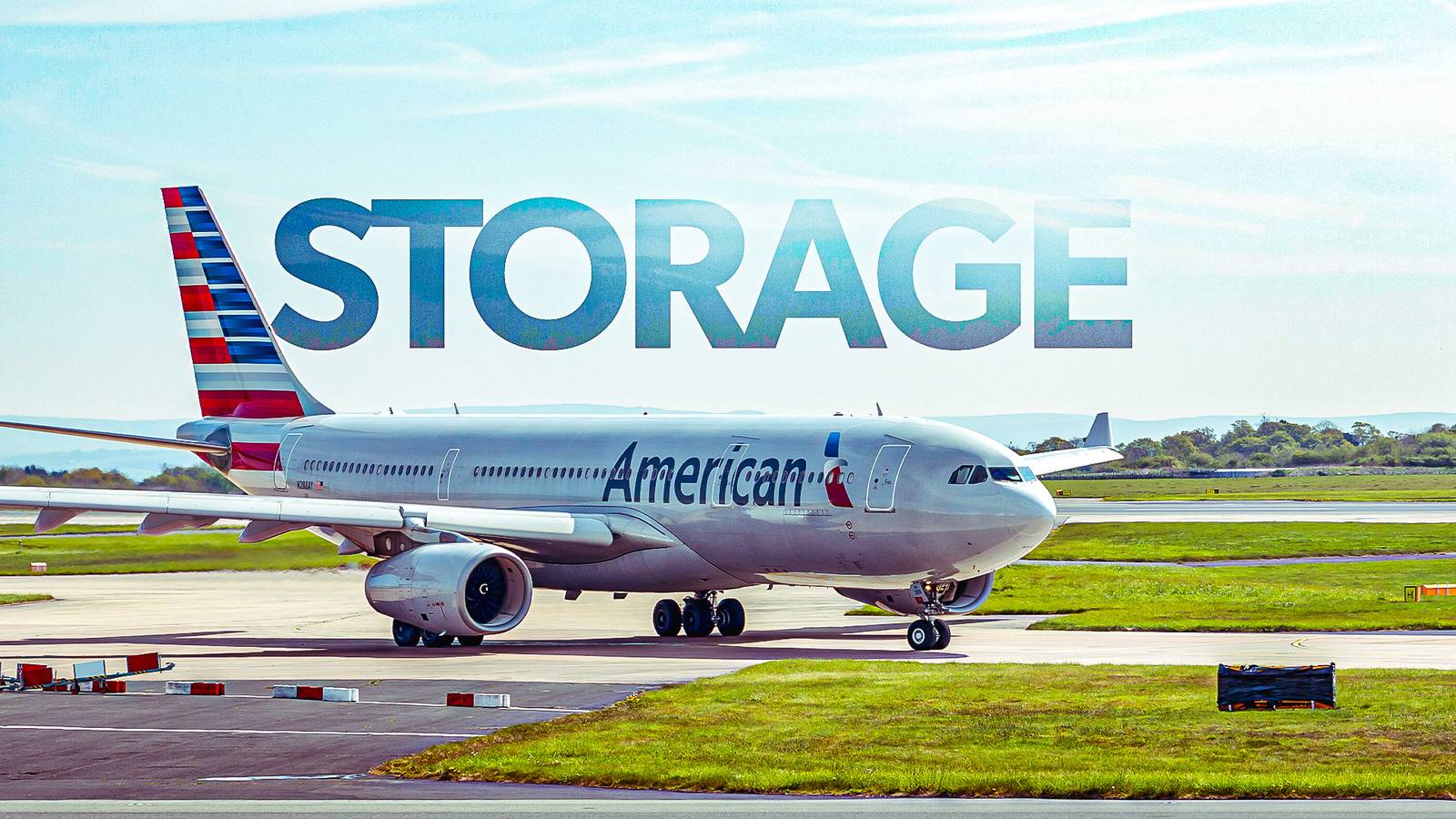
Why American Airlines' COVID-Retired Widebodies Sat In Roswell For 5 Years Before Vietnam Came Calling
Full Article
Original Source
Read the full article at Simpleflying →KhanList aggregates and links to publicly available news content. We do not host full articles from third-party sources. Always verify important information with original sources.