
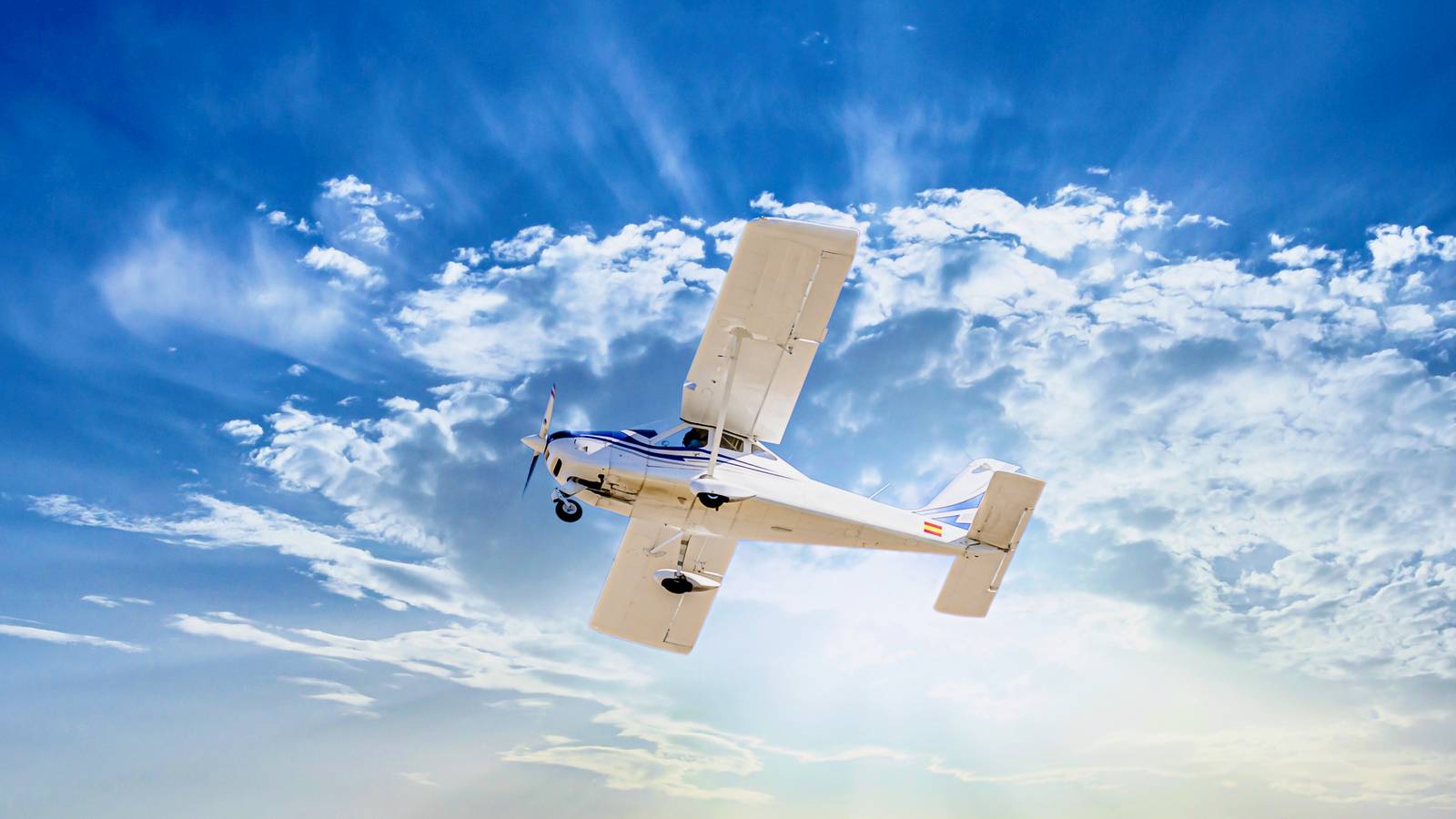
Published Nov 26, 2026, 7:00 PM EST Ethan is an aviation professional with a degree in Aviation Management with Flight from the Florida Institute of Technology. He previously wrote aviation and tourism features for Florida Tech’s student newspaper, The Crimson, where he developed a clear, reader‑focused reporting style. Aviation journalism has remained a consistent priority throughout his career. He currently holds a Restricted ATP and Commercial Multi‑Engine Pilot certificate and works in aviation supply chain and aircraft component repair. Alongside his industry role, he is pursuing his Certified Flight Instructor rating and actively building flight experience. A lifelong aviation enthusiast, Ethan spent countless hours at Raleigh–Durham International Airport’s observation deck studying air traffic and practicing amateur photography and videography. Many people assume that flying any type of aircraft requires extensive training, a pilot certificate, medical approval, and federal registration. While that holds true for most types of licenses, such as a Certified Flight Instructor certificate (CFI) or Airline Transport Pilot (ATP), the Federal Aviation Administration (FAA) has long maintained a narrow exception that allows certain recreational flyers to take to the skies without obtaining a pilot license. The exception falls under FAA Part 103, a section of federal regulations governing ultralight vehicles and the strict limitations placed upon them. While Part 103 is broadly described as allowing someone to fly without a license, the reality is more nuanced. The regulation applies only to a highly specific category of lightweight recreational aircraft that must meet strict performance, weight, and operating requirements. Understanding what qualifies under Part 103 helps explain where the FAA draws the line between recreational freedom and traditional pilot certification requirements. What Is FAA Part 103? The Short Answer Credit: YanuwarAlwan | Shutterstock Yes, you can legally fly an aircraft in the United States without a pilot certificate, but only if the aircraft qualifies as an ultralight vehicle under FAA Part 103. These vehicles occupy a unique regulatory category that exempts operators from requirements including pilot licensing, aircraft registration, airworthiness certification, and medical certification. The exemption was created to support recreational flying while limiting risk through strict aircraft performance restrictions. For powered ultralights, the FAA limits empty weight to 254 lb (115.2 kg), fuel capacity to five gallons (18.9 liters), maximum level-flight speed to 55 knots, and maximum power-off stall speed to 24 knots. Because these aircraft are intentionally small and limited in capability, the FAA regulates them differently than conventional airplanes. The concept dates back decades, when regulators sought a framework that would allow simple recreational flying without imposing the full regulatory burden associated with general aviation aircraft. Rather than focusing on pilot certification, Part 103 controls risk by limiting what the aircraft can do. According to the FAA's regulations, qualifying ultralight vehicles are intended solely for sport and recreational purposes and are limited to carrying a single occupant. What Requirements Must An Aircraft Meet Under Part 103? Credit: JHVEPhoto | Shutterstock A common misconception is that any small aircraft can be flown without a license. In reality, FAA Part 103 sets detailed technical requirements an aircraft must meet to qualify as an ultralight vehicle. The term Ultralight is a specific category issued by the FAA for licensing and certification, such as airplane, rotorcraft, or glider for pilot ratings. While an FAA certificate typically prints the category and class, the lack of a true license requirement omits this display. The most important requirements involve weight, occupancy, fuel capacity, and performance. Powered Ultralights operate on the basis of minimal configurations of these variables. Ultralight aircraft should not be confused with Light Sport Aircraft, the next category up in the FAA's classification; they also have slightly different regulatory requirements, such as a higher speed limit of 250 knots and the ability to carry an additional passenger. These privileges come at the cost of training for a sport pilot certificate, among other requirements as outlined in 14 CFR Part 61, Subpart J, and 14 CFR Part 91.327. Requirement Powered Ultralight Occupants One Empty Weight Less than 254 lb (115.2 kg) Fuel Capacity Maximum 5 gallons (18.9 liters) Maximum Level Flight Speed 55 knots Maximum Stall Speed 24 knots Purpose Sport or recreation only Unpowered ultralights, such as many hang gliders, fall under a different weight limit. Under Part 103, these vehicles must weigh less than 155 pounds (70.3 kg) empty. By restricting both weight and performance, the FAA effectively prevents Part 103 aircraft from evolving into conventional airplanes that would normally require certification and pilot qualification. What Operating Rules Still Apply? Credit: Toni. M | Shutterstock Although operators are exempt from licensing requirements, they are not exempt from federal aviation regulations. FAA Part 103 establishes operational limitations designed to protect both ultralight pilots and the public on the ground. Interestingly enough, Ultralight aircraft are not governed by either 14 CFR Part 61 or Part 91, which is the usual home for general aviation operation guidelines. Among the most important restrictions are where and when ultralights may fly. Operations are generally limited to daylight hours and must avoid congested areas, cities, towns, and open-air assemblies of people. The rules also restrict operations within controlled airspace (Class A, B, C, D, E, and most special use airspace) unless prior authorization has been obtained from air traffic control. These requirements show that the FAA's approach is not deregulation but targeted regulation. Operators may not need a pilot certificate, but they are still responsible for understanding airspace, weather conditions, and applicable operating restrictions before every flight. For many ultralight enthusiasts, voluntary training remains a common safety practice despite the absence of a licensing requirement. What Do Aviation Organizations And Experts Recommend? Credit: Chad Robertson Media | Shutterstock While FAA regulations do not require formal flight training for Part 103 operations, aviation organizations consistently encourage it. Groups such as the Experimental Aircraft Association (EAA) have long promoted structured training programs for ultralight pilots, emphasizing that regulatory exemptions do not eliminate the risks associated with flight. The EAA's Ultralight Sourcebook notes that Part 103 provides significant operational freedom but also places responsibility squarely on the operator. Similarly, many flight instructors and aviation educators recommend dual instruction in two-seat trainers before attempting solo ultralight operations. Pilot Institute has also highlighted that, despite the absence of licensing requirements, knowledge of weather, aerodynamics, and operating limitations remains critical for safe flight. Industry recommendations reflect a broader understanding that flying skills and regulatory requirements are not necessarily the same thing. A pilot may legally operate a Part 103 vehicle without a certificate, but aviation organizations generally view training as one of the most effective safety measures available. Cost is another important variable. While flight training for a Private Pilot License (PPL) can range from $9,000 to $130,000, Ultralight aircraft operation has a less burdensome barrier to entry. Because no official license is required by the FAA, training costs alone are significantly lower. In general, however, ultralight aircraft are much less common in the general aviation landscape than, for instance, a Cessna 172. The good news is that outright ownership of ultralight aircraft is also more accessible. Aerocorner reports that the cheapest new ultralight aircraft in 2026 is the Mini-Max 1103R, a single-seat wood-and-fabric kit that Mini-Max USA lists at $10,899.99 for the airframe. Also available is a finished, ready-to-fly example at about $22,500. How Does Part 103 Compare With Sport Pilot or Private Pilot Rules? Credit: Kevin Hackert | Shutterstock The same restrictions that make Part 103 accessible can also limit its practicality. Ultralight aircraft operation is the strictest modality of aviation under the FAA's jurisdiction. While the qualifications are generally among the most accessible to the public, that accessibility comes with significant compromises. Aircraft designed to remain under the FAA's weight and performance limits generally offer less range, lower speed, and reduced capability compared to certified airplanes. Weather sensitivity is another consideration. Because ultralights are lightweight and often have minimal protection from the elements, operating conditions that might be manageable for larger aircraft can present greater challenges. The single-seat requirement also prevents pilots from carrying passengers or instructors during normal operations. Under Part 103, ultralight vehicles must fly during daytime hours with visual reference to the surface and meet basic Visual Flight Rules (VFR) weather minimums for their prescribed airspace. Reference to published manufacturer minimums is also imperative, particularly with respect to wind. Prospective ultralight pilots should also remember that local airspace considerations still matter. Before operating any Part 103 vehicle, operators should ensure they understand applicable airspace restrictions and any authorization requirements that may apply near busy airports. In the United States, ultralight aircraft cannot fly over congested areas or crowds, and they cannot enter controlled airspace (Class A, B, C, D, or surface Class E) without prior Air Traffic Control (ATC) authorization. Advisory Circular AC-91-36D also suggests that ultralight pilots voluntarily remain above 2000 feet (609.6 meters) above ground level (AGL) wherever possible. Are There Any Drawbacks To Flying Under Part 103? Credit: Piedmont Lens | Shutterstock The short answer is yes: FAA Part 103 allows certain ultralight vehicles to be flown legally in the United States without a pilot certificate, aircraft registration, medical certification, or airworthiness approval. However, that freedom exists only because the FAA imposes strict restrictions on aircraft weight, speed, fuel capacity, occupancy, and operating conditions. Rather than creating a loophole in aviation regulation, Part 103 represents a carefully structured compromise. The FAA permits recreational flyers to avoid many traditional certification requirements while ensuring that the aircraft themselves remain limited in capability and risk exposure. For aviation enthusiasts, Part 103 continues to provide one of the most accessible entry points into personal flight. Yet the regulation's enduring message remains clear: while a license may not be required, safe operation still depends on knowledge, preparation, and respect for the limitations of both the aircraft and the environment in which it flies.
Why A Part 103 Ultralight Needs No Pilot's License In The US & Weighs Under 254 Pounds
Full Article
Original Source
Read the full article at Simpleflying →KhanList aggregates and links to publicly available news content. We do not host full articles from third-party sources. Always verify important information with original sources.