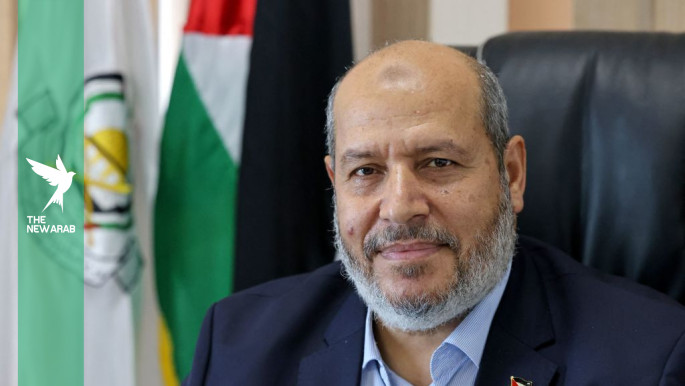
Over the past decade, al-Hayya has become one of Hamas's most prominent political faces. [Getty]The election of Khalil al-Hayya as head of Hamas's political bureau marks more than a routine leadership transition. It comes at one of the movement's most turbulent moments, after more than two years of Israel's genocidal war on Gaza that has decimated much of Hamas's senior leadership through Israeli assassinations and left the group confronting difficult political, military, and organisational challenges. On Monday, Hamas announced that al-Hayya had been elected as head of its political bureau through what it described as an "institutional consultative process", succeeding Yahya Sinwar in what the movement called a transitional leadership arrangement. In a press statement, Hamas said the vote demonstrated that its institutions remained functional despite the war and the continued targeting of its leaders. Al-Hayya, who headed Hamas's negotiating team during indirect ceasefire talks with Israel throughout the war, now assumes leadership at a time when the movement is grappling with rebuilding its command structure, redefining regional alliances, and preparing for an uncertain post-war reality in Gaza. From Hamas founder to chief negotiator Khalil Ismail Ibrahim al-Hayya, widely known as Abu Osama, was born in Gaza in January 1960. He joined the Muslim Brotherhood in the early 1980s and became one of the founding members of Hamas when the movement emerged during the First Intifada in 1987. He studied Islamic law, earning a bachelor's degree from the Islamic University of Gaza in 1983, a master's degree from the University of Jordan in 1989 and a doctorate from the Holy Quran University in Sudan in 1997. Al-Hayya spent three years in Israeli prisons during the early 1990s before returning to Hamas's organisational ranks, gradually rising through the movement's leadership. In the 2006 Palestinian legislative elections, he won a seat in parliament on Hamas's Reform and Change list and later headed the movement's parliamentary bloc. Following Hamas's takeover of Gaza in 2007, he emerged as one of its leading political figures, serving as deputy Hamas chief in Gaza, head of the movement's media office and later deputy to Yahya Sinwar. Over the past decade, al-Hayya has become one of Hamas's most prominent political faces. He led the movement's delegations in indirect ceasefire and prisoner exchange negotiations after the 2014 Gaza war and again throughout the current conflict, eventually relocating to Doha, where he oversaw many of Hamas's diplomatic contacts. Between negotiations and the 'Axis of Resistance' Al-Hayya has long occupied a dual role inside Hamas, acting both as one of its leading political negotiators and as a staunch defender of the movement's military strategy. He became closely associated with Hamas's regional diplomacy, maintaining contacts with Egyptian and Qatari mediators while also strengthening relations with Iran and its regional allies. Political observers generally regard him as one of the Hamas leaders closest to Tehran, particularly compared with former political bureau chief Khaled Meshaal. He accompanied former Hamas leader Ismail Haniyeh during a visit to Iran in 2024, headed the delegation that restored relations with Syria in 2022 after years of estrangement, and held meetings with Hezbollah officials in Lebanon during the war. Throughout the conflict, al-Hayya repeatedly defended Hamas's 7 October attack, arguing that its initial objective had been to capture Israeli soldiers for a prisoner exchange while bringing renewed international attention to the Palestinian cause. At the same time, he played a central role in the indirect negotiations that produced several temporary ceasefire agreements, balancing Hamas's military messaging with its political engagement. Like many senior Hamas officials, al-Hayya has suffered significant personal losses during years of conflict. His home has been targeted several times, while multiple members of his family have been killed in Israeli airstrikes since 2007, including his eldest son Osama, his daughter-in-law and grandchildren during the 2014 Gaza war. Other relatives were also killed during the latest war. A defining moment Sources close to Hamas told The New Arab that the internal elections were among the most difficult the movement has conducted since its founding because of the unprecedented wartime conditions. According to the sources, organising the vote inside Gaza required exceptional security arrangements amid ongoing Israeli military attacks, constant surveillance and efforts to kill Hamas leaders. In the occupied West Bank, the process was complicated by what Hamas describes as Israeli arrest campaigns against its members as well as pressure from the Palestinian Authority's security services. The sources said completing the elections across Hamas's various regional branches despite those conditions was viewed internally as evidence that the movement's institutions remain operational and capable of managing a leadership transition even during wartime. Within Hamas, supporters see al-Hayya's election as a vote of confidence in a leader with decades of organisational experience, close ties to the movement's military wing and a central role in negotiations throughout the conflict. They describe him as more ideologically committed and less willing to make political concessions than some other senior Hamas figures. For his backers, his victory signals the movement's desire to preserve the strategic direction established in recent years while simultaneously pursuing an end to the war and easing Gaza's humanitarian crisis. Others, however, view the result as carrying broader political implications. Ramallah-based political analyst Esmat Mansour told TNA that al-Hayya's election "reflects a deliberate choice within the movement and confirms that Gaza remains Hamas's centre of gravity". He said that the outcome also suggests Hamas is avoiding major shifts in its regional alliances while the war's outcome remains uncertain. Mansour nevertheless rejected portrayals of al-Hayya as simply a hardliner, arguing that he has demonstrated pragmatism in negotiations and maintains credibility with figures inside both the Palestine Liberation Organisation and the Palestinian Authority. "A single, elected and strong leader could accelerate decision-making, particularly on negotiations," Mansour said, while stressing that any major change in Hamas's policies would ultimately depend less on personalities than on wider regional and international developments. Gaza-based political analyst Mustafa Ibrahim said the election, which reportedly concluded after a closely contested race in which al-Hayya defeated Khaled Meshaal by a single vote, highlighted both the intensity of internal competition and the resilience of Hamas's institutional structures despite the severe losses it has sustained. According to Ibrahim, al-Hayya is expected to continue the political approach that has increasingly aligned Hamas with the so-called "Axis of Resistance", relying on a leadership team that includes figures considered close to Yahya Sinwar, many of them former prisoners released in exchanges with Israel. Still, Ibrahim argued that for Palestinians in Gaza, the identity of Hamas's new leader is ultimately secondary to the realities they face. "People are not waiting for new names," he said. "They are waiting for decisions that can stop the war, end the killing, allow aid to enter and begin reconstruction. That is the standard by which the new leadership will ultimately be judged."
Who is Hamas's new leader, Khalil al-Hayya?
Full Article
Original Source
Read the full article at Newarab →KhanList aggregates and links to publicly available news content. We do not host full articles from third-party sources. Always verify important information with original sources.