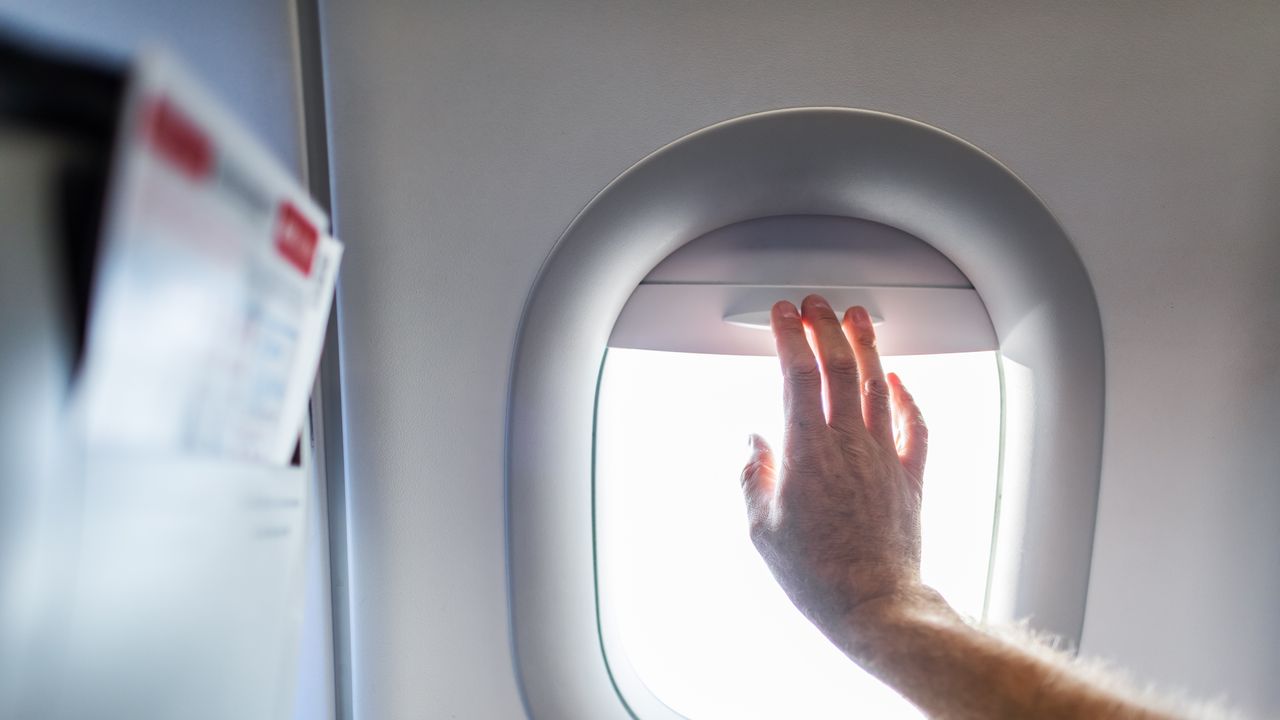
The seatbelt sign dings off. The cabin lights dim. Somewhere overhead, a window shade snaps sharply upward, and instantly, a blade of daylight slices through the darkened cabin.Few moments in air travel provoke such immediate, visceral reactions as an unexpected window shade opening. Yet unlike seat recline or armrest territory, window etiquette is strangely under-discussed, even though it has the power to derail sleep, mood, and, in some cases, the entire flight experience.At first glance, the rules seem simple. According to aviation analyst Gary Leff, control of the window belongs to the person sitting next to it. “If you want control of the window, get a window seat,” he says. But, he adds, that control comes “with great responsibility."That responsibility becomes clearest on overnight flights. When it’s dark in the cabin and bright outside—early morning transatlantic routes are the classic culprit—an open shade floods entire rows with light, jolting sleeping neighbors awake and undoing hours of carefully engineered cabin ambience. In those circumstances, Leff is unequivocal: Keep it closed. If you need a brief glance outside for reassurance, orientation, or anxiety, that’s reasonable. But it should be exactly that: brief.Some passengers long to peer into the world thousands of feet below, regardless of if it floods the cabin with light. Getty ImagesCabin crew, of course, outrank everyone. If they instruct windows to remain closed, they remain closed. On take-off and landing, the opposite often applies, with window shades staying open so eyes can adjust in the event of an emergency.Yet where things get murkier is when the window doesn’t clearly belong to anyone. Those awkward in-between windows—half aligned with one seat, half with another—exist in a kind of no-man’s-land. Leff suggests the default position should prevail; if it’s closed, it stays closed unless both parties agree otherwise. Any adjustment, in that context, becomes a negotiation rather than a right.Yet not everyone sees it that way. Travel writer Keith Jenkins admits he finds permanently closed windows mildly baffling. He asks, “if you’re not going to enjoy the view, why book a window seat?" For Jenkins, the pleasure of flying is still bound up in watching coastlines appear, cloudscapes shift, and cities glow at night. Even on long-haul flights, he’ll occasionally lift the shade for a look, before lowering it again out of courtesy.The tension ultimately isn’t really about the window, but about competing ideas of what flying is. For some passengers, especially frequent flyers, a flight is dead time to be minimized: sleep, work, arrive. Yet for others, it’s still an experience, and an experience worth looking at.That clash becomes most acute when someone reaches forward to close a window that isn’t technically theirs. Luxury travel writer Andy McFarlane takes a pragmatic view. If the person in front is asleep and the light is disruptive, he’ll close it, gently, cautiously, and fully prepared to explain himself if challenged. “I wouldn’t hesitate,” he says, adding that politeness and tone matter more than rigid rules. A brief conversation, he argues, solves most things.And yet, not all conflicts are resolved so easily. Former airline executive David Cochrane recalls a long-haul flight where a fellow business class passenger kept their window fully open for hours, despite the sun tracking directly across his seat. Multiple requests via cabin crew went nowhere. “They saw it as absolute,” he says. “Window seat equals total control, no negotiation required.”So when is it okay to close the window in front of you? There are four situations: when the cabin is dark and the light is intrusive; when someone is sleeping and you’re preventing disruption; when the window is shared and the default state is closed; or when you do it gently with an awareness that someone might object. The view, after all, may be beautiful. But so, for many passengers, is uninterrupted sleep.A version of this story originally appeared in Condé Nast Traveller India.
Who Gets to Control the Plane Window? The Unwritten Rules of Shade Etiquette
Full Article
Original Source
Read the full article at Cntraveler →KhanList aggregates and links to publicly available news content. We do not host full articles from third-party sources. Always verify important information with original sources.