Having just completed months of gruelling treatment for breast cancer, Belle came to me with a question I hear all the time: 'How can I stop the disease from coming back?'Her sister, who had accompanied her to the appointment, had been scrolling through social media and wanted to know if certain supplements could help. Should Belle cut out sugar completely? Were there foods that could stop cancer returning?It's an understandable concern. More younger people are being diagnosed with cancer than ever before. And for those who have already faced the disease, the fear that it might come back can be overwhelming.Unfortunately, social media is awash with advice that ranges from misleading to downright false.The reality is that there isn't a particular diet, supplement or lifestyle change that can guarantee cancer will never return. But there are steps that can reduce the risk.Most of my patients already know the basics. Regular exercise, maintaining a healthy weight and not smoking are all backed by strong evidence – and, generally speaking, people are willing to make those changes. Then I raise the subject of alcohol.In my experience, it's the recommendation that even the most motivated patients find hardest to hear. For many Britons – roughly one in ten in fact – drinking is an everyday occurrence rather than an occasional treatIt's not simply that cutting back on alcohol helps. The uncomfortable truth is that, when it comes to cancer, there is no completely safe level of drinking.It's a fact I believe is still woefully underappreciated.Alcohol increases the risk of at least seven types of cancer, and for some, the risk can be as much as four times higher in heavy drinkers.The encouraging news, however, is that the damage is not necessarily permanent. Research shows that once you stop drinking, your cancer risk begins to fall. Even people who have drunk regularly for decades can eventually reduce their risk to that of someone who has never drunk alcohol.The catch? It can take around 20 years.When I explained this to Belle and her sister, they were horrified.I'm not surprised. In Britain, alcohol is woven into almost every celebration and social occasion. We drink when the sun comes out, when England are playing, at Christmas, on holiday, over Sunday lunch, after work on a Thursday – or simply because it's been a particularly stressful Monday.For many people – around one in ten adults – drinking isn't an occasional treat. It's an everyday habit. Yet while many people know excessive drinking can damage the liver, cause weight gain and leave you with a thumping hangover, far fewer realise alcohol is also one of the world's most well-established causes of cancer.In fact, the World Health Organization classifies it as a Group 1 carcinogen – the same category as smoking and asbestos. It's linked to at least seven types of cancer, including breast, bowel, liver, mouth, throat, oesophageal and laryngeal (voice box) cancer. And the more you drink, the greater the risk.It's a fact I know all too well. As a bowel cancer survivor, I very rarely drink alcohol today – perhaps the occasional cocktail at a wedding or party.What still surprises me, though, is the reaction that decision provokes. Time and again, people respond with disbelief, concern or even horror that I've chosen not to drink.To me, those reactions reveal an uncomfortable truth: despite decades of evidence, far too few people appreciate just how strong the link between alcohol and cancer really is.Of course, not everyone who drinks will develop cancer. But the evidence is clear that drinking less – or not at all – lowers your risk.In the UK alone, alcohol is estimated to cause around 17,000 cases of cancer every year. Perhaps most importantly, the risk doesn't just exist – it rises with every extra drink.Research from the National Cancer Institute shows that just one alcoholic drink a day can increase the risk of mouth and throat cancer by up to 17 per cent, oesophageal cancer by 30 per cent and breast cancer by 14 per cent. As a bowel cancer survivor, I very rarely drink alcohol today, writes Dr Philippa KayeDrinking two to three alcoholic beverages a day, meanwhile, pushes the risk up even further – by as much as 300 per cent for mouth and throat cancer, 400 per cent for oesophageal cancer and almost 60 per cent for breast cancer.The NHS guideline of no more than 14 units of alcohol a week should not be mistaken for a 'safe' limit. Rather, it's a pragmatic target designed to reduce harm – particularly as around one in five adults regularly exceed it.There are several ways in which alcohol increases the risk of cancer.When it is broken down by the body, it produces a toxic chemical called acetaldehyde, which can damage DNA and increase the likelihood of cancer-causing mutations.Alcohol can also interfere with the body's ability to repair damaged cells, allowing abnormal cells to survive and multiply.For women in particular, it raises levels of the sex hormone oestrogen, which has long been linked to an increased risk of breast cancer. But those aren't the only ways alcohol contributes to cancer risk. It can also increase the likelihood of developing other well-established cancer risk factors.Heavy drinking is linked to obesity because alcohol is high in calories and can interfere with the body's ability to burn fat. Obesity, in turn, raises the risk of at least 13 types of cancer, including cancers of the womb and kidney.Alcohol also makes the lining of the mouth and throat more vulnerable to harmful chemicals – particularly those found in tobacco smoke. That's why people who both smoke and drink face a far greater risk of cancers of the mouth, throat and voice box than those who do only one or the other.Yet it's easy to assume these risks don't apply to you. One reason is that many of us underestimate how much we're actually drinking.A pint of beer contains around two to three units of alcohol, while a small 125ml glass of wine contains about 1.5 units. But the wine glasses many of us use at home are much larger, making it easier to think in terms of a bottle of average-strength wine, which contains around ten units.The encouraging news is that the body begins to recover once you stop drinking. While the more alcohol you consume, the greater your cancer risk, reducing – or ideally stopping – your intake lowers it over time.The catch is that it can take years for those risks to return to those of someone who has never drunk alcohol. Head and neck cancer risk, for example, falls to that of a never-drinker around 20 years after quitting, while liver cancer risk takes an average of 23 years.That's why it's worth making changes sooner rather than later.
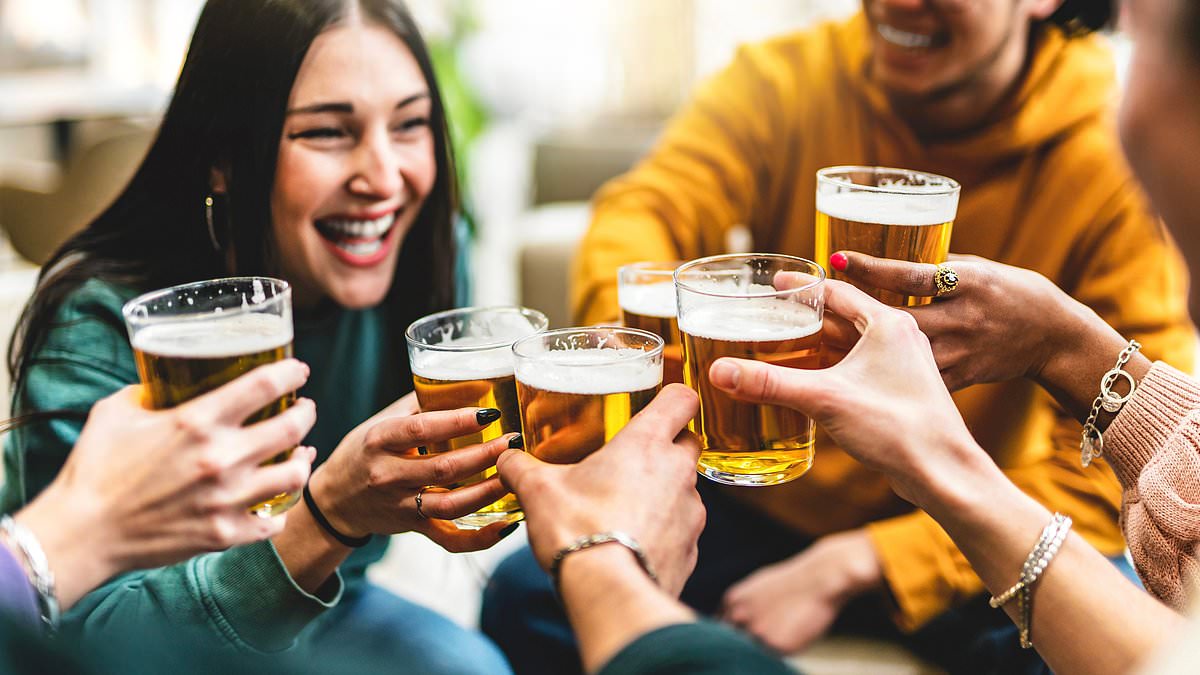
When you must cut down on drinking to escape the risk of cancer: DR PHILIPPA KAYE reveals the truth about 'safe' limits of alcohol - and how long it takes to get your body out of the danger zone
Full Article
Original Source
Read the full article at Dailymail →KhanList aggregates and links to publicly available news content. We do not host full articles from third-party sources. Always verify important information with original sources.