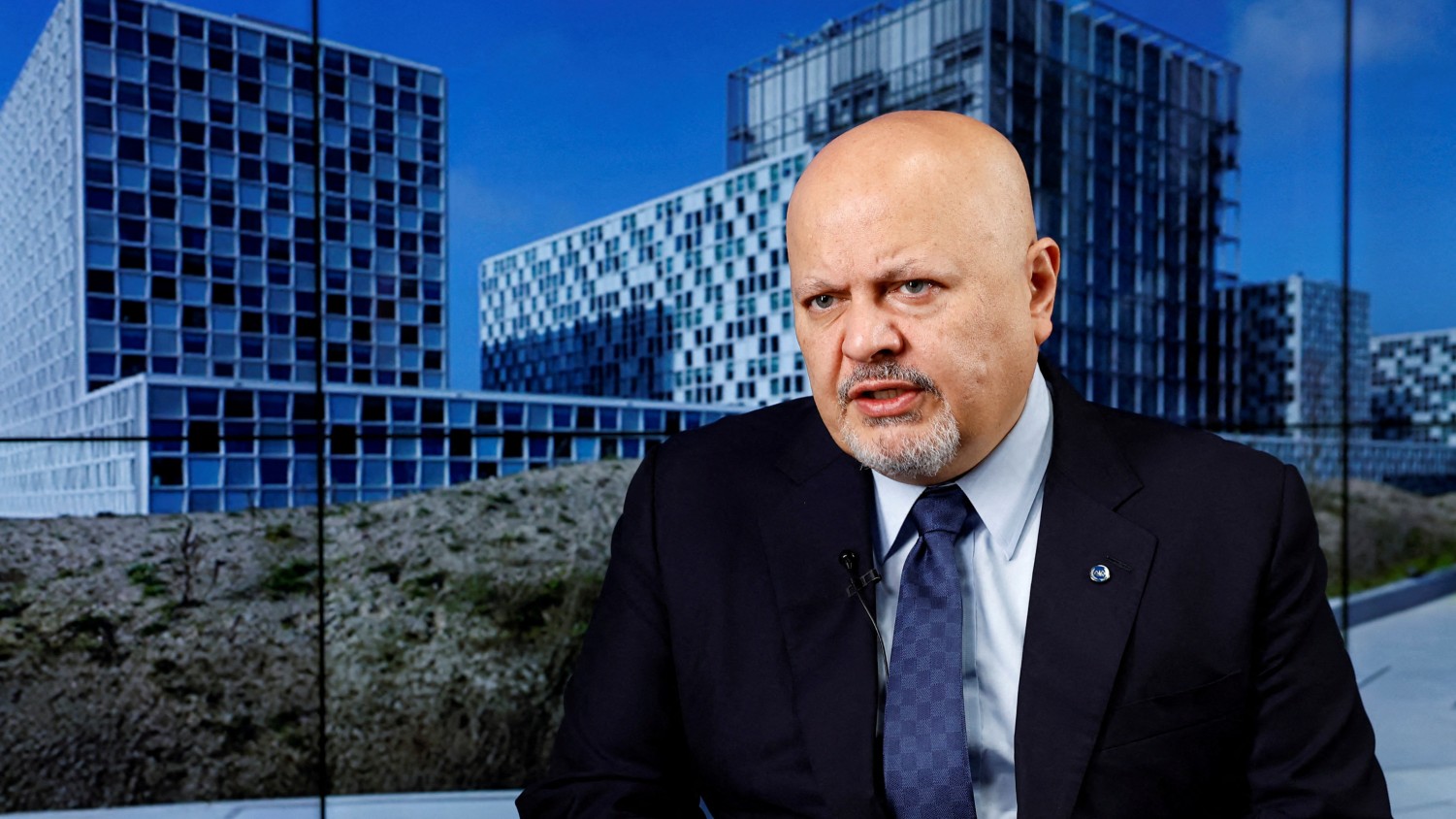
Member states of the International Criminal Court voted on Friday to remove chief prosecutor Karim Khan over misconduct claims, with 82 of the court's 125 members backing dismissal in a secret ballot at the United Nations in New York. It is the first time in the court's 24-year history that a sitting prosecutor has been removed, and it caps an 18-month disciplinary process that Palestinian rights groups, former judges and the prosecutor's lawyers have described as politicised. Khan has denied any wrongdoing. The vote has opened several questions on the fate of the Palestine investigation and who will be elected to be his predecessor. In particular, Khan's departure and Israel's official reaction have prompted questions as to whether it will have any impact on the arrest warrants for Israeli Prime Minister Benjamin Netanyahu and former defence minister Yoav Gallant, which were issued during Khan’s leadership. Israel's Foreign Minister Gideon Saar described Khan's removal as "long-delayed", calling on the court to drop the arrest warrants "immediately", reiterating Israel's debunked claim that it was rushed to distract from sexual misconduct allegations. New MEE newsletter: Jerusalem Dispatch Sign up to get the latest insights and analysis on Israel-Palestine, alongside Turkey Unpacked and other MEE newsletters So, what now? What happens to Khan? The removal decision takes immediate effect, according to the court’s rules. Khan is no longer a member of the court and has been removed from every case in the office's portfolio, including Palestine. His lawyers on Friday said that Khan would challenge "the lawfulness and fairness of the decision through all available legal mechanisms". Khan told Middle East Eye in May that he would take any dismissal to the International Labour Organization Administrative Tribunal (ILOAT), the forum where ICC staff contest employment decisions. The Karim Khan saga: a timeline Read More » His central argument against the decision would likely be that a panel of three judicial experts appointed by the bureau itself concluded unanimously in March that the UN investigators' findings on the allegations "do not establish misconduct or breach of duty under the relevant framework", a conclusion the bureau voted to set aside. MEE also revealed this month that the bureau changed the voting rules, merging a two-stage vote into a single motion and lowering the effective threshold for removal. That is another procedural issue that may be brought before the tribunal. Abdul Koroma, a former judge of the International Court of Justice, has said the prospects of a successful appeal are "considerable". But an ILOAT challenge is untested terrain. As ICC scholars Ezequiel Jimenez and Sergey Vasiliev have noted, ILOAT case law is "calibrated to labour relations within international organisations", and it is "far from settled" whether a political decision by a plenary treaty body to remove an elected official falls within its jurisdiction. Even a favourable award may not translate into reinstatement. By the time ILOAT rules, a successor may already be in post. Proceedings typically take years. Will US sanctions on Khan be lifted? This remains uncertain. Nothing in the executive order provides for automatic removal on leaving office, and the current administration has shown no indication that it intends to lift the sanctions. The US State Department has not responded to a request from MEE for comment on the matter. Khan was the first person designated under Executive Order 14203, signed by President Donald Trump in February 2025 in retaliation for the Netanyahu and Gallant warrants. His assets were blocked, his US visa revoked and his family barred from entry. But there is a precedent for delisting. Although Khan's predecessor, Fatou Bensouda, was sanctioned in September 2020 over the Afghanistan investigation, those sanctions were lifted in April 2021, when the Biden administration revoked the order outright. But Bensouda was still in office at the time, with her term running until June 2021. Her delisting, therefore, followed a change of US administration and policy, not her departure from the court. What happens to the Palestine investigation? Following the removal vote, the ICC’s office of the prosecutor released a statement saying that its work would continue without interruption. In addition to the Palestine investigation, the court has more than a dozen active situations, including Ukraine, Darfur, Libya and Afghanistan. MEE has exclusively reported that the office in April sought an arrest warrant application for Israel’s Finance Minister Bezalel Smotrich, and that another application for National Security Minister Itamar Ben Gvir was being prepared. Khan’s departure may impact how the office prioritises applications or resists external pressures and sanctions. MEE last year reported that the Smotrich and Ben Gvir applications, for example, were ready before Khan went on leave in May 2025, but were shelved for months as the interim prosecutors, as well as the court itself, were under threat of sanctions. Exclusive: ICC prosecutor's office seeks arrest warrant for Israel's Smotrich Read More » Khan played a key role in indicting Israeli leaders after a turbulent 15-year process in which his two predecessors failed to apply for any warrants for Israelis. After his election in 2021, he prioritised the Palestine investigation and dedicated additional resources to it. However, the warrants issued for Netanyahu and Gallant on 21 November 2024 remain in force, and should not be immediately impacted by Khan’s departure. Only judges can withdraw them, and they have repeatedly declined to. Since the warrants were issued, Israel has mounted a series of legal challenges aimed at getting them thrown out. Two are still pending. The most consequential is Israel's argument that the court has no jurisdiction over its nationals at all, since Israel isn’t a state party to the Rome Statute. In April 2025, the Appeals Chamber ruled that the lower chamber had wrongly brushed this aside as premature, and sent it back to be decided properly. More than a year on, that decision has still not come, and whichever way it goes, it will almost certainly be appealed again, pushing a final answer well into 2027. The second is a request filed in November 2025 to disqualify Khan for alleged bias and cancel the warrants he obtained. The call for disqualification falls away now that he has been removed. But whether Israel presses the wider claim, that warrants sought by a prosecutor since found guilty of serious misconduct are themselves tainted, is an open question, and one Israeli officials have already begun to trail publicly. The rest have failed. In December 2025, the Appeals Chamber rejected Israel's claim that referrals filed by seven states after 7 October 2023 amounted to a new investigation, requiring the prosecutor to notify Israel afresh and give it a chance to investigate its own officials instead. The judges held that events after 7 October were already covered by the notice issued in 2021. Had Israel won, the warrants would have fallen and the process would have had to start again. In July 2025, judges refused Israel's request to suspend the warrants and freeze the wider investigation while the jurisdiction question is resolved, ruling that they stand until that question is answered. Who runs the office of the prosecutor now? The office of the prosecutor said on Friday that it "takes note" of the decision to remove Khan, and confirmed that deputy prosecutors Nazhat Shameem Khan, of Fiji, and Mame Mandiaye Niang, of Senegal, "will continue to head the office", as they have done since Khan took leave in May 2025. Nazhat Shameem Khan and Mame Mandiaye Niang formally take office as ICC deputy prosecutors, 7 March 2022 (ICC/Flikr) Both deputies were also sanctioned by the US in August 2025 for maintaining the Netanyahu and Gallant warrants after assuming leadership of the office. Neither is an acting prosecutor. The office is being run by two deputies, not by an interim officeholder, and it has now been without an elected head for more than a year. What's the timeline for electing a new prosecutor? Removal triggers a fresh election under Article 42 of the Rome Statute, the fourth in the court's history. The prosecutor is elected by secret ballot for a nine-year term by an absolute majority of state parties. The 25th session of the Assembly of States Parties runs from 7 to 17 December 2026 at the UN headquarters in New York, a session which will also include the election of six judges. According to Jimenez, the realistic options are folding the prosecutorial election into that session or convening a resumed session in early 2027. 'Nothing bars either sitting deputy [Nazhat Shameem Khan or Mame Mandiaye Niang] from being nominated by a state party' - Ezequiel Jimenez, ICC expert Speaking to MEE, Jimenez argued it should happen as soon as possible, given how long the office has gone without an elected head, and expects the assembly to constitute a working group to address the matter. A new bureau also takes office in December, which will help shape how the process is run. Concerning term length, court rules set a nine-year, non-renewable term "unless a shorter term is decided upon at the time of their election". That gives state parties the option to elect a successor for the remainder of Khan's term (roughly four years) to June 2030, rather than for a full nine. Jimenez suggested that the assembly could go further and narrow the field to the two sitting deputy prosecutors, granting the winner the balance of the term to secure a swift result. That would require consensus, and any state party can nominate its own candidate. The 2020 contest that produced Khan deviated from the pathway the assembly had agreed, with states abandoning the vetted shortlist produced by the Committee on the Election of the Prosecutor. Bensouda, by contrast, was elected by consensus in 2011. She had served as a deputy prosecutor at the time. “Nothing bars either sitting deputy [Nazhat Shameem Khan or Mame Mandiaye Niang] from being nominated by a state party,” noted Jimenez. He added that gender balance and regional rotation might play a role. The post has gone to Latin America (Luis Moreno Ocampo), Africa (Bensouda) and Western Europe (Khan). Asia Pacific and Eastern Europe have never held it. “Will western Europe ask for their 'turn' again? Or will it be someone from Asia or Eastern Europe? These factors will be part of the new election,” Jimenez told MEE.
What next for the ICC and the Palestine investigation after Karim Khan's removal?
Full Article
Original Source
Read the full article at Middleeasteye →KhanList aggregates and links to publicly available news content. We do not host full articles from third-party sources. Always verify important information with original sources.