
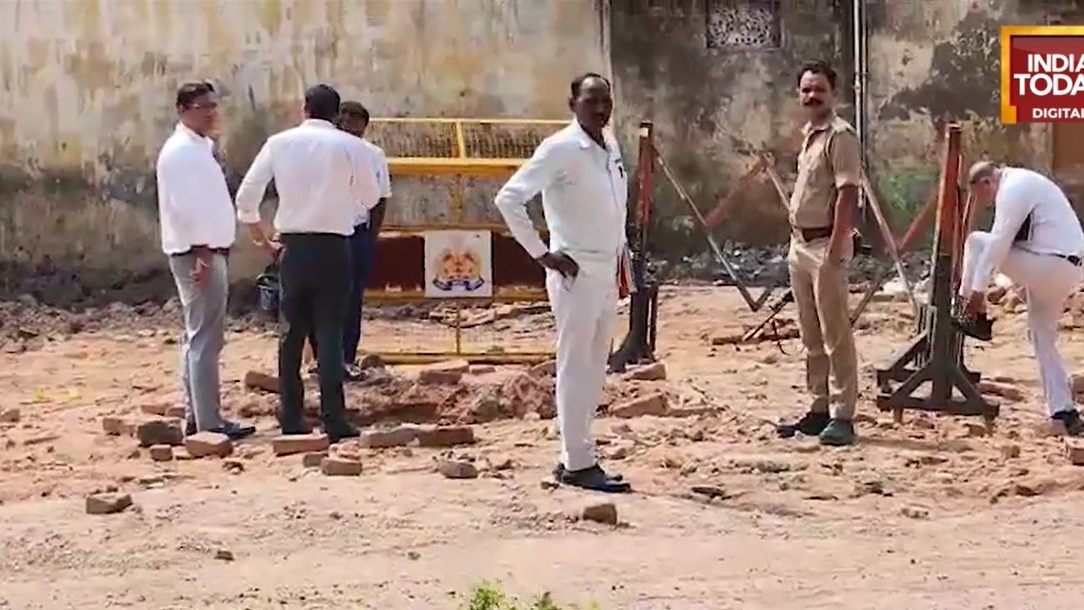
An ASI officer climbed into the structure found beneath a demolished mosque in Saharanpur and said it appears to resemble a well. He said its age, origin and any historical or religious link can be established only through evidence.20 feet below Saharanpur Mosque, ASI finds Lakhori brick structure.The mystery surrounding a structure discovered beneath a mosque in the Saharanpur Collectorate premises has deepened after an Archaeological Survey of India (ASI) official descended nearly 20 feet into it for an on-site inspection.ASI Assistant Archaeological Officer Manoj Kumar Yadav, who arrived from Lucknow on Monday to examine the structure, entered it using a ladder and inspected the site for around 10 minutes.After emerging, Yadav said the structure appeared, at first glance, to be a well-like construction made of Lakhori bricks, a type of thin brick commonly associated with medieval and early modern Indian architecture. However, its exact nature could not yet be established because the interior is filled with debris.The structure was found beneath the mosque after its demolition and is approximately 20 feet deep and three feet in diameter. According to the ASI officer, the bricks used in the construction measure around 20105 centimetres. A deposit of nearly three feet of soil and other material was also found in the upper portion. Based on the Lakhori bricks and the construction technique, the structure appears to be associated with late medieval architecture and could be around 200 to 250 years old.Traces of lime plaster were also visible inside. However, no distinctive shape or clear archaeological evidence has emerged so far because of the debris accumulated within the structure.ASI CAUTIONS AGAINST LINKING STRUCTURE TO SHAHJAHAN ERA The discovery has also triggered speculation about whether the structure could be linked to the Shahjahan period or whether it may have been part of a temple or another religious site. However, Yadav cautioned against drawing historical conclusions without archaeological evidence.He said that linking any structure to a particular ruler or historical period would require authentic evidence such as coins, seals or other archaeological material. Similarly, claims about the structure being connected to a temple or any other religious site can only be made if supporting evidence is found.“History cannot be written on the basis of possibilities,” the officer said, stressing that evidence would be essential before reaching any conclusion.He added that the soil in Saharanpur could potentially contain traces of human activity from different historical periods, but such possibilities would need to be established through scientific investigation.WHAT COULD THE STRUCTURE HAVE BEEN?The ASI official said that if the structure is indeed a well, it may once have served as a source of water. It could have been abandoned after drying up or becoming unusable and subsequently filled with soil before further construction was carried out over it.Determining its actual age and original purpose will require further scientific examination, including a study of the layers of soil around the structure.A decision on whether further excavation will be carried out will be taken by the government, district administration and the concerned departments.For now, the ASI's preliminary assessment is that the structure resembles a well, but its final identity, age and historical significance will be established only after detailed investigation and the discovery of conclusive evidence.- EndsPublished By: Nitish SinghPublished On: Sep 8, 2026 02:28 IST
What lies beneath? ASI probes 20-ft well-like structure under Saharanpur mosque
Full Article
Original Source
Read the full article at Indiatoday →KhanList aggregates and links to publicly available news content. We do not host full articles from third-party sources. Always verify important information with original sources.