
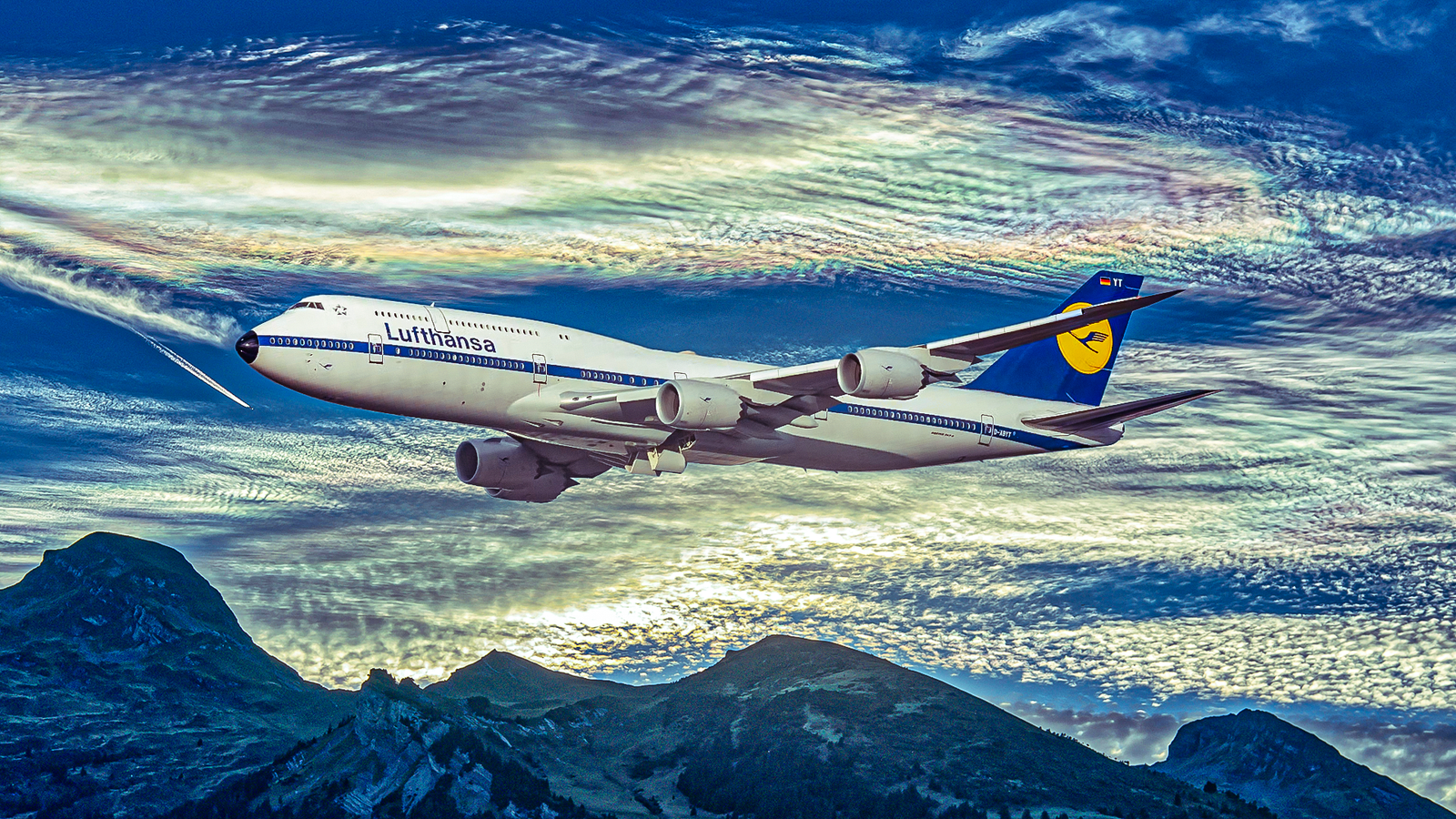
Published Oct 25, 2026, 6:00 PM EDT Airline and Airport Management Graduate, Student Commercial Pilot and Commercial Aviation Writer. Based in London & Nagoya There are not many commercial aircraft that can boast immediate, universal recognition quite like D-ABYT, Lufthansa’s famous retro-liveried Boeing 747-8. Dressed in a striking 1970s blue-and-white scheme with a dark blue cheatline and a vintage black nose cone, the flagship widebody stands out instantly on aprons worldwide. For spotters looking to locate the world's remaining active passenger quad-jets, catching a glimpse of this specific airframe on short final is a top bucket-list priority for many. To understand how intensively Lufthansa uses its long-haul flagship fleet, we used the Simple Flying Flight Tracker over a continuous 72-hour operational window from October 12 to October 15. The telemetry records a relentless flight schedule: five transoceanic sectors bridging Europe, North America, Central America, and South America, covering thousands of miles and accumulating roughly 50 airborne hours in under three days. Where Did The Aircraft Fly Over 72 Hours? The 72-hour operational tracking window began on the morning of October 12 at Lufthansa's main global hub, Frankfurt Airport (FRA). Registered as D-ABYT, the 747-8 pushed back from its gate bound for Chicago O'Hare International Airport (ORD), embarking on an 8-hour and 39-minute transatlantic sector that initiated a nonstop rotation cycle across global time zones. Ground crews in Chicago had under four hours to complete deplaning, deep cabin cleaning, catering replenishment, and fueling before D-ABYT pushed back at 9:54 PM UTC for the overnight eastbound return leg, landing back in Germany early on October 13 after seven hours and nine minutes aloft. With barely seven hours of ground time in Frankfurt for routine transit maintenance checks and crew rotation, the aircraft was dispatched on an 11-hour and 3-minute leg across the Atlantic to Mexico City International Airport (MEX). Reaching Mexico City at 23:33 UTC on October 13, the crew performed yet another rapid turnaround, departing again at 2:21 am UTC on October 14 for the 10-hour return sector to Frankfurt. The final leg of the tracking window saw D-ABYT take on one of the longest routes in the Lufthansa network: LH510 from Frankfurt to Buenos Aires Ezeiza International Airport (EZE), departing Germany at 8:20 PM UTC on October 14 and traversing the equator during a 12-hour and 52-minute marathon flight that touched down in Argentina at 9:13 AM UTC on October 15. This tracking period illustrates the difficult dispatch schedules aircraft such as D-ABYT face across high-density intercontinental corridors. Such schedules require seamless ground support systems operating with clockwork precision for airlines to run them efficiently. Turnaround logistics at key hub facilities must complete fueling, cabin servicing, and mandatory line maintenance checks concurrently to minimize ground idle time and keep ultra-long-haul capital assets generating revenue. Inside Is Just As Impressive The distinctive paint scheme on D-ABYT is a dedicated homage to Lufthansa’s jet-age heritage. Delivered in March 2015 as the German carrier's penultimate 747-8 order, the airframe was named Köln (Cologne) and rolled out of Boeing's Everett facility in a special retro livery commemorating the airline's classic 1970s and 1980s brand identity, according to AirlineGeeks. The livery features a soft off-white upper fuselage accented by a crisp cobalt blue cheatline running along the window line, paired with a bare-metal undersurface visual effect and the iconic yellow-and-blue crane logo enclosed in a blue tail fin, mirroring the paint scheme originally carried by Lufthansa's first Boeing 747-100 and 747-200 fleet during the golden age of widebody travel. Inside the cabin, the aircraft features Lufthansa’s four-class layout, with first class in the main-deck nose section, business class across the main deck and upper deck, premium economy, and economy class. To maintain pilot productivity and fatigue compliance during ultra-long sectors like Frankfurt to Buenos Aires, the aircraft features dedicated secret crew rest areas tucked away above the main passenger deck. Preserving this high-spec interior layout while maintaining an intensive global flying program demands consistent investment in maintenance. Balancing aesthetic nostalgia with modern cabin hardware ultimately gives passengers a chance to enjoy a classic exterior livery and a modern long-haul flight experience inside. Lufthansa has shown that historic visual branding can seamlessly co-exist with top-tier international airline product standards. Keeping The Icon Going Global network carriers like British Airways, KLM Royal Dutch Airlines, Qantas, and United Airlines have permanently retired their passenger 747 fleets in favor of fuel-efficient twinjets. Lufthansa has kept its 747 legacy alive as the world’s largest passenger operator of the 747-8, maintaining an active fleet of 17 airframes alongside its older 747-400s, according to Planespotters. The airline's commitment to the jumbo jet stems from slot-constrained hub capacity and premium passenger economics. At high-density airports like Frankfurt and Chicago O'Hare, acquiring additional landing slots is often impossible, so operating a high-capacity aircraft like the 747-8 lets Lufthansa maximize revenue per slot by offering large first- and business-class cabins without adding extra flight frequencies. Furthermore, economic evaluations examining the cost to run a 747 in 2026 versus 777 & Airbus A350 show that while twin-engine aircraft deliver lower fuel burn per seat, the 747-8's lower-deck belly cargo payload capacity compensates for higher fuel burn on trunk routes with high freight demand. The dual revenue model, combining premium passenger ticket sales on the upper deck with heavy cargo volume below, keeps the four-engine platform profitable. On routes connecting industrial export centers, the 747-8's cargo bay generates substantial yield that offsets the extra fuel burn of four General Electric GEnx-2B67 engines. It may seem conflicting to modern airliner trends, but that sheer volumetric capacity is still a powerful economic asset in global airline hub networks. Bringing The 747 Up To Modern Standards Lufthansa’s long-term fleet transition strategy is based on a deliberate split between its older widebodies and its younger flagships. The airline plans to retire its remaining 747-400s as newer twin-engine flagships arrive, though the 17 active 747-8 aircraft are a much newergeneration with substantial fatigue life remaining. Because these aircraft were delivered between 2012 and 2015, their airframes are structurally sound and fully capable of operating high-cycle international rotations well into the 2030s. To protect this multi-billion-dollar widebody investment, Lufthansa is actively retrofitting its 747-8 fleet with modern cabin hardware, including its latest Allegris business class product across the upper and lower decks. Maintaining these aircraft is a vital strategic buffer against chronic widebody delivery delays currently affecting major airframe manufacturers. A paid-off, highly capable fleet of 747-8s ensures Lufthansa can meet its international capacity commitments and maintain premium schedule integrity even when new twinjet deliveries face multi-year deferrals. However, keeping an aging four-engine fleet competitive against next-generation carbon-composite twinjets is driving an escalating maintenance-cost curve. As engine overhaul intervals approach and global environmental compliance costs rise, Lufthansa will eventually reach a tipping point where the raw fuel-burn penalty of four engines outweighs the slot-capacity and cargo-revenue advantages the 747-8 currently provides. No Real Replacement For long-haul passengers and airline financial analysts alike, D-ABYT's continued operation shows that fleet optimization is rarely a one-size-fits-all equation. While market trends overwhelmingly favor twin-engine efficiency, high-density trunk routes connecting slot-restricted hubs create a unique operational envelope where the 747-8 remains exceptionally hard to replace. Passengers stepping aboard D-ABYT benefit from this economic reality, enjoying an expansive, four-class widebody cabin layout that smaller twinjets struggle to replicate. A concrete demonstration of this dynamic can be seen on Lufthansa's premium-heavy routes to South America and Asia, where high business class demand is paired with dense belly-hold freight requirements. Flying an A350-900 on these specific sectors would mean reducing overall cargo volume or splitting passenger demand across multiple frequencies, an option that is impossible at slot-capped airports like Frankfurt. Now, Lufthansa will need to decide how long this high-capacity balance can be sustained as environmental taxation and sustainable aviation fuel (SAF) mandates increase the cost of burning fuel. Whether the 747-8 completes its intended service life into the late 2030s depends on many variables, but global air freight yields will be a major factor. They will need to remain strong enough to subsidize the four-engine fuel burn penalty; otherwise, Lufthansa has no real reason to keep the 747 going. Defining The Golden Age Of Flight Tracking D-ABYT across 72 hours and nearly 50 airborne hours on the surface shows the day-to-day operations of a truly iconic jet, but it also tells a wider truth about modern network aviation: the Queen of the Skies is not running out the clock on showcase routes, but actively carrying the primary load of a global hub-and-spoke system. Accumulating transoceanic cycles across Chicago, Mexico City, and Buenos Aires in rapid succession shows that high-capacity quad-jets still offer operational advantages that modern twinjets cannot fully match. Over the next several years, Lufthansa will begin to take delivery of its long-awaited 777-9s and additional A350-1000s. Airline executives and network planners will closely monitor whether these massive new twinjets can match the belly-cargo density and upper-deck premium revenue that make D-ABYT’s daily rotations so lucrative. D-ABYT will still continue its relentless intercontinental cycle, banking over airport perimeters in its classic 1970s blue-and-white livery. For spotters, travelers, and aviation historians, every departure of Lufthansa's retro flagship is a living, flying reminder of commercial aviation's golden age, operating at peak modern efficiency.
We Tracked Lufthansa's Retro Boeing 747-8 For 72 Hours: Here's Where It Went
Full Article
Original Source
Read the full article at Simpleflying →KhanList aggregates and links to publicly available news content. We do not host full articles from third-party sources. Always verify important information with original sources.