
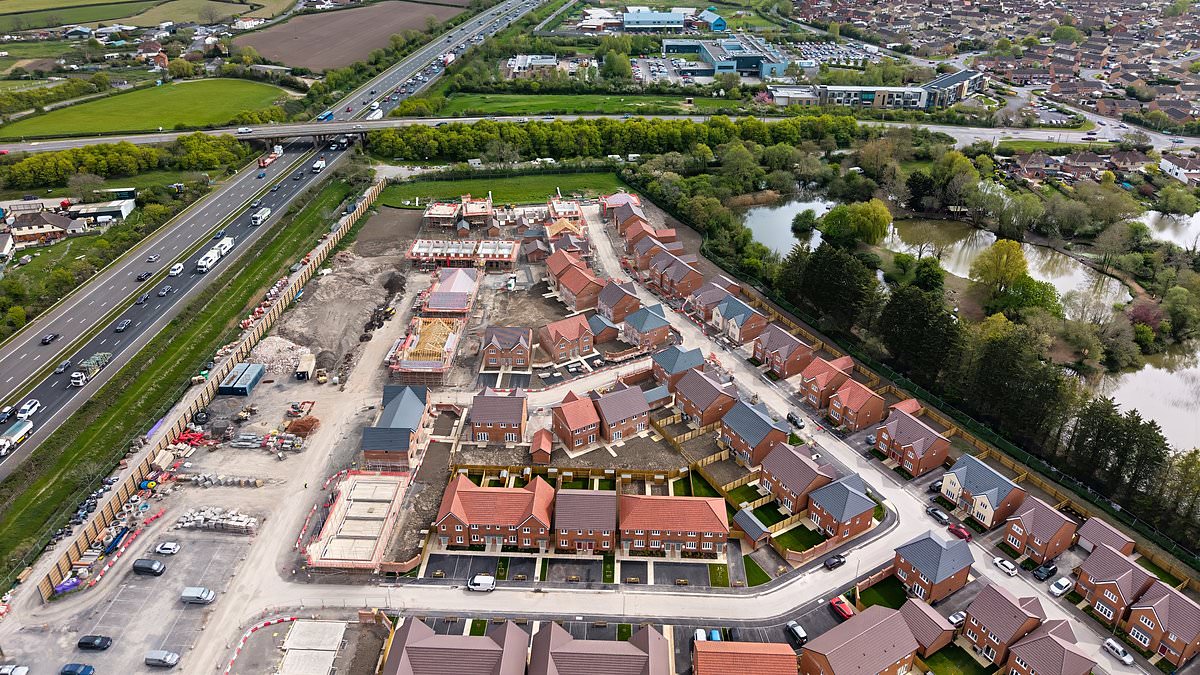
We purchased a new-build house in 2021. A noise assessment was a condition of the planning. After we moved in we discovered no noise assessment had been done and the council discharged the planning. We submitted a complaint to the Local Government Ombudsman and it upheld our case. The council agreed to upgrade our windows, fit mechanical trickle vents and build a four-metre high acoustic fence. We waited for more than four years for the council to supposedly assess the feasibility of the fence.The council recently said the four-metre fence cannot be built, allegedly due to underground services, highway safety and costs.The council has now offered us a two-metre high fence, which will be useless. The noise in our garden is 70 decibels as we live feet away from a 70 miles per hour carriageway. What can we do next? No noise assessment was completed for our new-build site by a 70mph carriageway (stock image)Jane Denton, of This is Money, replies: Noise impact assessments are often required by councils to ensure noise from new developments or industrial plants does not affect potential new residents or existing residents excessively. Once planning permission has been granted by a local authority for a development or project, it is common for noise-related planning conditions to be attached which need to be discharged before any works can start on site. In your case, the noise assessment was needed as a new residential development was being built in a noisy location right by a 70mph carriageway. The noise assessment might specify noise mitigation measures either to protect the development from existing noise or to protect existing areas from a new noise source. In your situation, acoustic fencing, or noise barrier fencing, could help. It is a type of fencing that helps to block sound transmission from one place to another.It is not clear why a noise assessment was not carried out for your development and I wonder if this happens frequently. I asked two solicitors for their thoughts on your problem. Manjinder Atwal, director of housing and property litigation at Duncan Lewis Solicitors, said: I would not simply accept the proposed two-metre fence. The first question is how the original four-metre acoustic fence came to be offered by the council in the first place. If it was agreed as part of the remedy following the Ombudsman’s finding, you would expect appropriate checks to have established that it was technically feasible before that commitment was made.After four years of assessing its feasibility, the council is now saying the fence cannot be built because of underground services, cost and highway safety. That raises a reasonable question about what checks were carried out originally, when these problems were identified and whether alternative solutions were properly considered. Manjinder Atwal is director of housing at Duncan Lewis I would ask the council for a full written explanation, including what assessment was undertaken before the four-metre fence was proposed, what now prevents it being built and what other options have been investigated.The proposed two-metre fence should also be assessed on whether it will actually reduce the noise to a meaningful level, rather than simply whether it can be built. An independent acoustic assessment could help establish this and provide useful evidence when challenging the council’s proposal.You should also establish exactly what the Local Government Ombudsman recommended and what the council formally agreed to do. Keep the Ombudsman’s decision, planning documents, noise assessments and all correspondence, particularly anything showing when mitigation measures were proposed and subsequently ruled out.There may be legal remedies if the council has failed to properly deal with a planning condition, failed to implement an agreed remedy or reached its latest decision without properly considering relevant evidence. Depending on the precise planning history and the nature of the decision, this could potentially include judicial review. This is a specialist remedy with strict time limits, so legal advice should be sought promptly.Four years is a significant delay. The council should now be able to explain what has gone wrong and, crucially, demonstrate why the alternative it is proposing is an effective way of addressing the noise problem.Joanne Ellis, a partner and specialist in dispute resolution at Stephensons, said: It is unclear why the planning condition was discharged despite the apparent absence of a noise assessment. There may have been grounds to challenge that decision at the time it was made. However, as you purchased the property in 2021, it is likely that the time limit for bringing any challenge to the original planning decision has now expired.I note that a complaint has been made to the Local Government Ombudsman and that the council is now maintaining that it is not feasible to implement the agreed fencing solution. The council has provided a number of reasons for this position. Have you been given copies of the reports, assessments and other evidence on which it has relied when reaching that conclusion?Depending on the circumstances, this more recent decision may be capable of challenge by way of judicial review if there is no alternative right of appeal or review. There are, however, two important points to bear in mind.First, judicial review is subject to very strict time limits, meaning urgent legal advice should be sought if you wish to explore this option.Second, the court's role is not to determine whether the council reached the 'right' decision, but whether it reached that decision lawfully and followed the correct process. As a result, even if a judicial review were successful and the decision was quashed, the council could potentially revisit the matter, follow the correct procedure and ultimately reach the same conclusion.For example, if the council failed to obtain adequate evidence regarding underground services before deciding that a four-metre fence was impractical, that failure could render the decision unlawful. However, if the decision were quashed and the council subsequently obtained evidence confirming the presence of underground services that would make such a fence impractical, it could lawfully reach the same outcome. In practical terms, therefore, a successful judicial review would not necessarily result in the fence being installed.In relation to the carriageway itself, it appears that it existed before the houses were constructed, as evidenced by the planning condition, and it was already in place when you purchased the property. On that basis, it is unlikely that there is any direct legal recourse in respect of the carriageway's presence or use.Finally, it would be sensible to review the documentation provided during your purchase of the property to establish whether any representations were made regarding either the carriageway or the planning position. In certain circumstances, a seller may be liable for misrepresentation if inaccurate or misleading information was provided and relied upon when the property was purchased.Have you had a problem with a new build? editor@thisismoney.co.uk Best mortgage rates and how to find them Mortgage rates have shot up again due to inflation triggered by the conflict with Iran reversing hopes that the Bank of England would cut rates. This means those remortgaging or buying a home face higher costs.That makes it even more important to search out the best possible rate for you and get good mortgage advice, whether you are a first-time buyer, home owner or buy-to-let landlord.This is Money's partner L&C can help you with its fee-free mortgage service.> Compare mortgage rates> Find the right mortgage for you To help our readers find the best mortgage, This is Money has partnered with the UK's leading fee-free broker L&C.This is Money and L&C's mortgage calculator can let you compare deals to see which ones suit your home's value and level of deposit.You can compare fixed rate lengths, from two-year fixes, to five-year fixes and ten-year fixes.If you’re ready to find your next mortgage, why not use This is Money and L&C’s online Mortgage Finder? It will search 1,000s of deals from more than 90 different lenders to discover the best deal for you.> Find your best mortgage deal with This is Money and L&C Mortgage service provided by London & Country Mortgages (L&C), which is authorised and regulated by the Financial Conduct Authority (registered number: 143002). The FCA does not regulate most Buy to Let mortgages. Your home or property may be repossessed if you do not keep up repayments on your mortgage.
We live in a new-build house by a 70mph carriageway - can we force the council to erect a tall fence to block out the noise?
Full Article
Original Source
Read the full article at Dailymail →KhanList aggregates and links to publicly available news content. We do not host full articles from third-party sources. Always verify important information with original sources.