
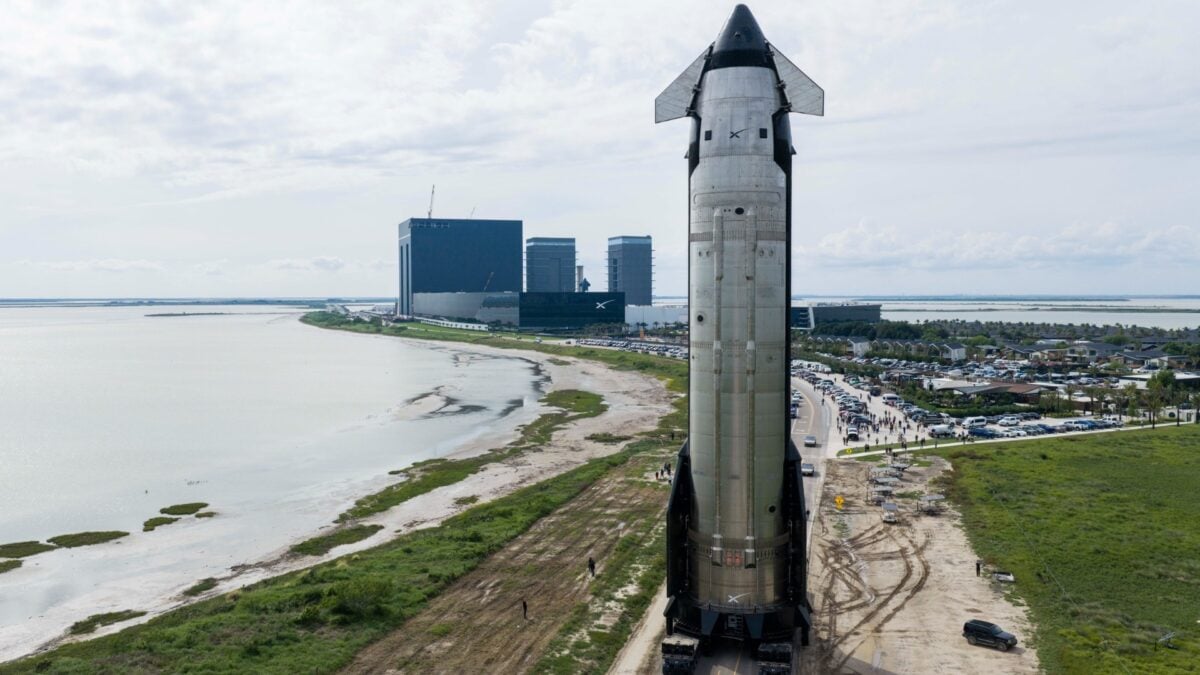
For more than a decade, SpaceX has been developing its Starship megarocket with a single goal in mind: creating the world’s first fully and rapidly reusable launch system. Today, the company aims to clear a major hurdle standing in the way of that goal. Starship Flight 15, scheduled to lift off from Starbase, Texas, this evening, will mark SpaceX’s first attempt to catch both the Starship upper stage and its Super Heavy booster. The launch window opens at 5:45 p.m. ET and will remain open for 75 minutes. SpaceX will kick off a live webcast of the flight about 30 minutes before launch, and you can watch via the company’s website and its X account, as provided below. Watch Starship Flight 15https://t.co/xvmIH2diNA — SpaceX (@SpaceX) November 13, 2026 You can also catch the action at any of the third-party livestreams below. Catch a falling Starship SpaceX has successfully caught the Super Heavy booster on three previous Starship test flights. It does so using the “chopstick” arms on one of the giant “Mechazilla” launch and catch tower systems at Starbase, which snatch the booster from midair during its controlled descent. SpaceX plans to use the same strategy to catch the upper stage on Flight 15, but this will be a bigger challenge. If today’s mission unfolds as planned, Super Heavy will ignite its boosters at T-0 and propel Starship to space. The booster will then separate from the upper stage, perform a flip maneuver and boostback burn to set course for atmospheric reentry, and return to Starbase for the catch attempt. Meanwhile, Starship will ascend to orbit, deploy 26 Starlink V3 satellites, and then enter a coast phase. SpaceX plans for the rocket to complete about 14 orbits around the planet over the course of a more than 22-hour flight. Starship reached orbit for the first time on Flight 14 in September, marking a major milestone for SpaceX. But the mission didn’t exactly go as planned. The rocket was supposed to complete approximately six orbits around Earth over the course of a 10-hour flight, but SpaceX opted to deorbit early due to an engine issue. Remaining in orbit for the planned duration will be crucial for the Flight 15 Starship catch attempt. If the rocket doesn’t reenter the atmosphere at exactly the right point over Starbase, it won’t be aligned with Mechazilla. Assuming SpaceX does not have to bring Starship home early, the rocket will reenter the atmosphere about 22.5 hours after liftoff. It will initially fall back to Earth in a horizontal “belly flop” position before performing a short burn to reduce its speed and flip upright into a vertical tower catch position. Starship will then descend between Mechazilla’s chopstick arms, which will close around the rocket. The upper stage will return to Earth at much higher speed than the Super Heavy booster because it will be descending from orbital altitude, adding another layer of difficulty to the catch attempt. But if SpaceX can pull this off, it will signal the start of a new era in Starship’s development. The ability to recover both the upper stage and booster for eventual reuse is the bedrock of SpaceX’s vision of full and rapid reusability. “The only way that we can extend consciousness beyond Earth on a sustained basis is with a fully reusable orbital launch vehicle,” CEO Elon Musk said during a SpaceX earnings call in October. “So this is, I think, a profound technology milestone in the history of civilization and consciousness.” After a successful Starship catch, the next major hurdle will be demonstrating that a previously flown upper stage can fly again. SpaceX has already re-flown two Super Heavy boosters, so it’s technically halfway to demonstrating Starship’s full reusability. Flight 15 should provide a better sense of how close the company is to achieving that goal.
Watch Live as SpaceX Tries to Catch Both Starship Stages for the First Time
Full Article
Original Source
Read the full article at Gizmodo →KhanList aggregates and links to publicly available news content. We do not host full articles from third-party sources. Always verify important information with original sources.